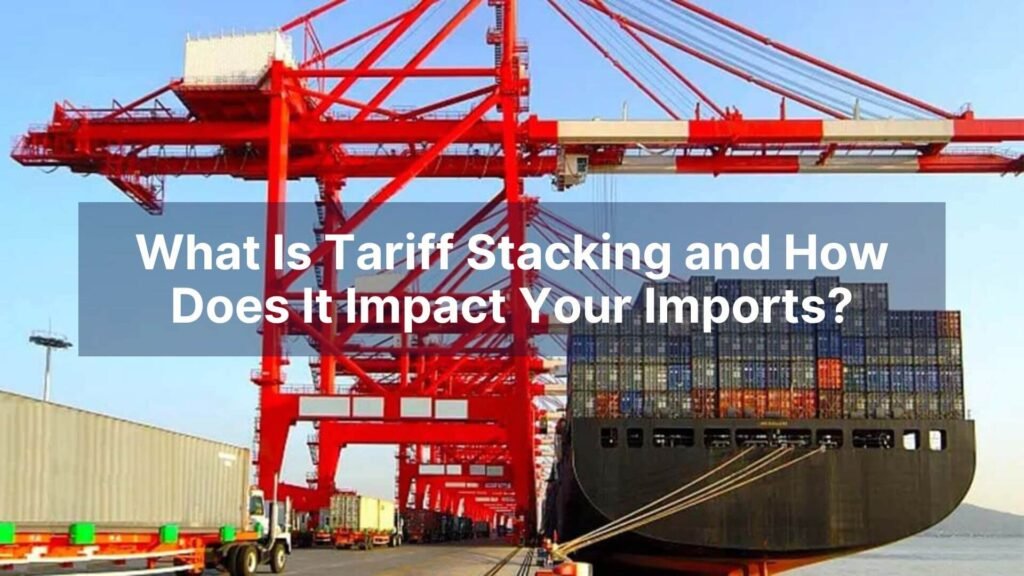
Tariff stacking is a critical topic for importers today. Understanding how multiple duties1 can affect your bottom line helps avoid unexpected costs.
Tariff stacking occurs when more than one duty program applies to the same imported product. In addition to regular customs duties, trade measures such as national security tariffs2 or trade remedy duties3 may be imposed, increasing total landed cost4.

Navigating tariff stacking5 is vital for any importer. Failing to understand this concept can lead to increased costs and compliance risks. I’ve seen many businesses suffer from unexpected duty liabilities because they weren't aware of how different duties could apply to their products.
What Tariff Stacking Is and How Multiple Duty Programs Can Apply to the Same Import?
Tariff stacking can create a complex landscape for importers. It’s important to recognize that more than one duty can apply simultaneously to your imported products. This can significantly increase your total landed cost4.
Products may be subject to standard duties, national security measures, and trade remedy duties3 at the same time. Each program operates under different legal authority and may apply based on product type, material composition, or country of origin.
Understanding how these duties stack is crucial. Let’s look at the duty programs and how they might overlap.
| Duty Program | Basis | Typical Trigger |
|---|---|---|
| Regular Tariff | HTS schedule | Product classification |
| Section 301 | Trade action | Country of origin |
| Section 232 | National security | Material content |
| AD/CVD6 | Trade remedy | Unfair trade findings |
Each of these duties has its own set of rules. For instance, Section 301 tariffs7 target specific countries based on trade actions, while Section 232 duties8 are about ensuring national security. As an importer, being aware of these classifications is essential.
How Section 301, Section 232, AD/CVD6, and Other Duties Can Combine on a Single Product?
When importing products, knowing how duties can stack can make a significant difference in costs. Different duties can apply simultaneously, based on various factors.
Total landed cost includes base duty plus any additional duties under applicable programs. Importers should evaluate classification, origin, and material content to estimate cumulative exposure.
Here’s how you can calculate total landed cost4:
| Cost Element | Example Amount |
|---|---|
| Base customs duty | X% |
| Additional program duty | Y% |
| Other applicable duties | Z% |
| Total duty impact | Combined percentage |
As you can see, proper calculations are vital. Missing even one duty could lead to unexpected costs when your goods reach the U.S. shores.
How Importers Calculate Total Landed Cost When Duties Stack
Calculating total landed cost4 is essential for effective budgeting. Each duty adds to the overall expense of importing goods, so it's crucial to account for each one.
Some trade programs or exclusion processes may provide relief from certain duties. Eligibility depends on product classification, origin, and program criteria.
When considering these duties, keep in mind the potential for exclusions9 or agreements that may lower your costs. For instance, some products might qualify for special treatment under trade agreements10, which could significantly reduce tariff liabilities.
When Exclusions, Trade Agreements, or Special Programs May Reduce Stacked Duties
Exclusions and special programs can be a saving grace for importers. Not every product will face the full brunt of stacked duties.
Errors such as incorrect classification, incomplete material disclosure, or overlooking trade program applicability can lead to reassessments and higher duty bills.

Importers often make mistakes that can lead to unnecessary costs. Here are some common ones:
| Risk Area | Example Issue | Impact | Mitigation |
|---|---|---|---|
| Overlooked program | Missed additional duty | Cost spike | Program review |
| Misclassification | Wrong HTS | Duty reassessment | Technical analysis |
| Origin error | Incorrect country | Penalty risk | Supplier verification |
| Policy change | New duty applied | Unexpected cost | Monitoring system |
A structured approach can help mitigate these risks.
Common Compliance Mistakes That Lead to Unexpected Duty Liabilities
Understanding the importance of compliance is essential. Common mistakes can easily lead to unexpected costs, and importers must be aware of these pitfalls.
A structured workflow helps importers identify all applicable duty programs, file accurate entries, and monitor for changes that could affect duty exposure.
To help you manage tariff risks effectively, here’s a workflow to follow:
- Product Review
- Classification Confirmation
- Duty Program Check
- Cost Estimation
- Entry Filing
- Ongoing Monitoring
Following these steps can help you minimize risks and avoid unexpected costs.
Tariff Risk Management Workflow: Classification Review → Program Applicability Check → Duty Calculation → Entry Filing → Post-Entry Monitoring
In conclusion, understanding tariff stacking5 is vital for any importer. By knowing how multiple duty programs can impact your shipments and how to manage compliance, you can protect your bottom line.
Exploring how multiple duties affect costs can help importers budget effectively and avoid surprises. ↩
National security tariffs can significantly increase costs, and understanding them is vital for importers. ↩
Trade remedy duties can add to the total cost, and knowing their impact is essential for importers. ↩
Calculating total landed cost accurately is key to effective budgeting and avoiding unexpected expenses. ↩
Understanding tariff stacking is crucial for importers to avoid unexpected costs and compliance risks. ↩
AD/CVD duties address unfair trade practices, and understanding them can prevent unexpected liabilities. ↩
Section 301 tariffs can affect costs based on country of origin, making them important for importers to understand. ↩
Section 232 duties focus on material content, impacting costs and compliance for importers. ↩
Exclusions can reduce duty costs, making it important for importers to explore eligibility criteria. ↩
Trade agreements may offer relief from duties, helping importers lower costs and improve profitability. ↩