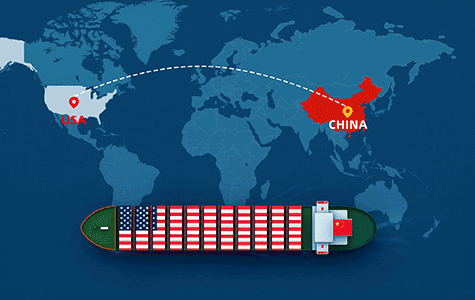
If you’re importing goods from China, choosing the right shipping route to the United States matters more than most importers realize. The route you pick determines:
- How fast your cargo arrives
- Whether you face customs delays
- Your total freight and trucking costs
- How predictable your supply chain becomes
- And sometimes… whether your inventory arrives before the selling season starts
In this guide, I’ll break down the three primary China → USA shipping routes you should consider:
- China → U.S. West Coast
- China → U.S. East Coast
- China → Middle America (via West/East/Gulf)
Each route has different transit times, carriers, ports, compliance steps, and cost levels.
Let’s dive in.
Why the Shipping Route Matters More Than Importers Think
Most importers focus on container rates. But the route you choose impacts far more:
• Transit time (8–40 days depending on coast)
• Port congestion + local drayage delays
• Customs release timing
• Final delivery cost (West Coast trucking = expensive and long; East Coast = closer to population centers)
• Risk of demurrage/detention
• Ocean carriers used (COSCO, MSC, Maersk, Evergreen, CMA-CGM)
• Whether the route requires Panama/Suez Canal
So instead of asking:
“What’s the cheapest rate?”
The better question is:
“What shipping route aligns with my customer base, timeline, and customs strategy?”
Let’s break it down coast by coast.
PART 1 — China to the U.S. West Coast
(Fastest Transit Time | Most Common Route | Best for West/Midwest Delivery)
The China → West Coast lane is the busiest, fastest, and most commonly used route for U.S. importers. If you’re shipping to California, Nevada, Arizona, Utah, Washington, Oregon, or Western states, this is your go-to option.
Top West Coast Ports
1. Port of Los Angeles (POLA)
- Largest port in the U.S.
- Massive container handling capacity
- Strong rail network for inland transport
2. Port of Long Beach (POLB)
- China-focused trade lanes
- Strong infrastructure + automation
- Major gateway for e-commerce cargo
3. Port of Oakland
- Good for Northern California
- Strong agricultural export connections
4. Port of Seattle / Tacoma (NW Seaport Alliance)
- Strategic gateway for Pacific Northwest
- Reliable and less congested than L.A./L.B.
Transit Time: China → West Coast
Average depending on origin:
| China Port | U.S. West Coast | Transit Time |
|---|---|---|
| Shanghai | Los Angeles | 11–15 days |
| Ningbo | Long Beach | 12–16 days |
| Shenzhen/Yantian | Los Angeles | 13–17 days |
| Qingdao | Seattle | 14–18 days |
👉 This is the fastest ocean freight lane to the United States.
Advantages of West Coast Routing
- Fastest shipping time overall
- Strongest rail connections
- Best for tight deadlines
- Most vessel sailings per week
- Best for time-sensitive cargo (e-commerce, retail replenishment)
Disadvantages
- Higher drayage (California truck costs)
- Port congestion spikes frequently during peak season
- Storage costs high
- Environmental restrictions increase trucking cost (CARB rules)
- Long inland trucking to Midwest or East Coast
Rail Connections (West Coast to Middle America)
MARAD reference: https://www.maritime.dot.gov/
Goods arriving at LA/LB can move inland via:
- BNSF Railway (https://www.bnsf.com/)
- Union Pacific (UP) (https://www.up.com/)
These rail giants connect to:
- Chicago
- Dallas
- Kansas City
- Memphis
- Denver
- Minneapolis
This is how West Coast cargo reaches Middle America quickly and cost-effectively.
When to Choose the West Coast Route
✔ You want fastest transit
✔ Your warehouse or customer base is in Western states
✔ You need predictable weekly sailings
✔ You want to re-route cargo quickly via rail
✔ You’re shipping Amazon FBA (West Coast has high-capacity FBA hubs)
PART 2 — China to the U.S. East Coast
(Longer Transit | Lower Port Congestion | Closer to 70% of U.S. Consumers)
The East Coast route has become extremely popular in recent years—thanks to lower congestion, growing deepwater ports, and the expansion of the Panama Canal.
Two Major Route Options
1. Via Panama Canal (Most Common)
Route: South China → Pacific → Panama Canal → U.S. East Coast
Time: 25–30 days
2. Via Suez Canal (For Northern China)
Route: Qingdao / Tianjin → Indian Ocean → Suez → Atlantic → U.S. East Coast
Time: 32–40 days
Top East Coast Ports
1. Port of New York / New Jersey
- Largest East Coast port
- Essential for Northeast regional distribution
- Strong CBP presence for fast clearance
2. Port of Savannah
- Fastest-growing port in the U.S.
- Excellent for e-commerce and retail DCs
- Massive warehouse ecosystem
3. Port of Charleston
- Deepwater harbor
- Very efficient operations
- Great for Southeast/Mid-Atlantic importers
4. Port of Norfolk (Virginia International Gateway)
- One of the deepest East Coast ports
- Strong rail network via Norfolk Southern & CSX
Transit Time: China → East Coast
| Route | Transit Time |
|---|---|
| China → NYC (Panama) | 26–30 days |
| China → Savannah (Panama) | 28–32 days |
| China → Norfolk (Suez) | 32–38 days |
| China → Charleston | 27–33 days |
Advantages of East Coast Routing
- Closer to 70% of U.S. population
- Lower trucking cost vs West Coast
- Less congestion than LA/LB
- Larger DC network for big-box retailers (Walmart, Target, Home Depot)
- Better for heavy cargo → lower overweight fines
- Excellent for East Coast Amazon FBA hubs
Disadvantages
- Longer transit time (25–40 days)
- Canal fees increase ocean rates
- Weather risk (hurricane season)
- Less frequent sailings than West Coast
- Choke points: Panama & Suez Canal disruptions
When to Choose the East Coast Route
✔ Your customers are East Coast or Southern states
✔ You want lower drayage & trucking cost
✔ You prefer less port congestion
✔ You ship heavy cargo (East Coast weight rules more flexible)
✔ You want closer access to major retail DC networks
PART 3 — Shipping From China to Middle America
(Hybrid Strategy: West Coast, East Coast, or Gulf With Rail)
“Middle America” covers major inland hubs like:
- Chicago
- Dallas
- Houston
- Kansas City
- Memphis
- Atlanta (partially)
- St. Louis
- Indianapolis
- Denver
These regions don’t have ocean ports, so importers have three choices:
Route 1: China → West Coast → Rail to Midwest
Most common and fastest.
Steps:
- Container lands in LA/LB or Seattle
- Rail (BNSF or UP) moves it inland
- Container arrives at an inland port (ICD)
- Final trucking to warehouse
Transit:
- Ocean: 13–17 days
- Rail: 3–7 days
Total: 18–24 days
Best for:
✔ Fastest delivery to Chicago, Dallas, Kansas City, Denver
✔ High container volume
✔ Stable weekly service
Route 2: China → East Coast → Rail/Truck to Midwest
Ideal for cargo destined for:
- Pennsylvania
- Ohio
- Tennessee
- Indiana
- Kentucky
Transit:
- Ocean: 25–35 days
- Rail: 3–5 days
Best for importers who value:
✔ Lower trucking cost
✔ Predictable port operations
✔ Avoiding West Coast congestion
Route 3: China → Gulf Coast Ports (Houston, New Orleans)
The rising star for Middle America supply chains
Gulf ports have become extremely influential:
1. Port of Houston
- Fast-growing container gateway
- Huge petrochemical & machinery imports
- Great for serving Texas, Oklahoma, Arkansas, Louisiana
2. Port of New Orleans
- Strong inland river connections
- Good for bulk + limited container shipping
Transit from China:
- 28–33 days
Advantages:
- Lower congestion
- Strong rail links (BNSF, UP, CN, KCS)
- Excellent for Texas & Midwest markets
- Weather-stable vs East Coast hurricanes
How Importers Should Choose Their Route (Simple Framework)
Here’s a quick way to pick the right lane:
Choose West Coast if you need…
✔ Fastest ocean time
✔ Quick replenishment
✔ Strong rail to Chicago/Dallas
✔ Huge import volume & sailing frequency
Choose East Coast if you need…
✔ Lower domestic trucking cost
✔ Closer access to major population centers
✔ Strong DC networks (Walmart, Target, Amazon, Costco)
✔ Lower port congestion than LA/LB
Choose Gulf Coast if you need…
✔ Direct access to Texas + Central U.S.
✔ Lower-cost inland distribution
✔ Avoiding congestion and weather issues
✔ Balanced transit time/cost
Cost Comparison: West vs East vs Gulf Routes
| Route | Ocean Cost | Transit | Drayage | Best For |
|---|---|---|---|---|
| West Coast | $1415 | Fastest | High | Speed |
| East Coast | $1750 | Medium–Slow | Low | DC networks |
| Gulf Coast | $1750 | Medium | Low | Texas/Midwest |
Customs Impact on Shipping Routes
(Where CBP clearance delays really happen)
Customs is governed by CBP (U.S. Customs & Border Protection):
https://www.cbp.gov/trade
Ports with the fastest clearance:
- Los Angeles
- Savannah
- Houston
- Norfolk
Ports with stricter examination rates:
- New York / New Jersey
- Long Beach
- Seattle (for certain goods)
Route selection can impact:
- X-ray holds
- Contraband enforcement
- Agriculture inspections (USDA)
- FDA inspections for food/contact goods
- CPSC exams for kids’ products
How Our Company Helps Importers With Route Planning
We specialize in China → USA DDP shipping, and we help importers select the best route based on:
✔ Transit time
✔ Duty optimization (cutting taxes up to 50%)
✔ Port exam likelihood
✔ Drayage and final delivery cost
✔ Warehouse proximity
✔ SKU sensitivity (electronics vs apparel vs machinery)
✔ Peak season congestion patterns
We provide:
- Full container (FCL) and LCL consolidation
- Multiple-factory consolidation in China
- Pre-clearance for faster port exits
- U.S.-registered customs brokerage
- Door-to-door delivery (FBA, 3PL, DC, or your warehouse)
Our goal:
👉 To help U.S. importers avoid delays, cut duty, and streamline their China–USA supply chain.
Conclusion
Shipping from China to the United States is not “one route fits all.” The best lane depends on:
- Where your customers are
- How fast you need inventory
- Your tolerance for trucking cost
- Customs exam risk
- Seasonal congestion patterns
If you want speed, choose the West Coast.
If you want lower domestic trucking cost, choose the East Coast.
If you want a rising, balanced option, choose the Gulf Coast/Middle America routes.
With the right shipping strategy—and the right logistics partner—you can reduce cost, speed up arrival, and build a smoother supply chain from China to anywhere in the USA.