Importing gun parts feels like a minefield. One small paperwork mistake can lead to seized goods1, huge fines2, and even legal trouble3. Understanding the rules is the key to success.
Many gun accessories like grips, slings, and mounts are legal to import with low scrutiny. However, critical components4 like frames, receivers, barrels, and conversion kits are heavily regulated by the ATF and require permits. The fastest way to trigger a seizure is to misclassify or misdescribe5 a part.

Navigating the rules for importing gun parts can feel overwhelming. You have multiple government agencies, complex regulations, and severe penalties for getting it wrong. It's not just about what you import, but how you import it. The details on your commercial invoice6 and customs entry7 can make the difference between a smooth delivery and a seized container. In this article, I will break down exactly what you need to know, which agencies are involved, and how to import your products safely and legally.
What Gun Parts and Accessories Are Legal to Import Into the U.S. and Which Ones Trigger Federal Firearms Scrutiny?
You think you are importing simple metal accessories. But CBP flags8 the shipment, and now your container is stuck pending an ATF review9. Knowing the difference between categories is critical.
Generally, non-essential accessories like grips, slings, and standard optics mounts are legal and face less scrutiny. However, critical components4 like frames, receivers, barrels, and conversion kits are heavily regulated by the ATF and will always trigger a federal review. Misidentifying a part is the fastest way to seizure.
Dive Deeper
The assumption that "it's just a part" is a dangerous one for importers. A simple piece of polymer might be a pistol grip (low scrutiny) or it could be a stock for a rifle, which falls under different rules. The U.S. government doesn't see "metal parts"; it sees components with specific functions. CBP uses automated systems that scan import documents for keywords like "gun," "rifle," "receiver," "barrel," and "firearm." Using these words, even for a legal part, will likely flag your shipment for a secondary inspection. This is where the trouble often begins.
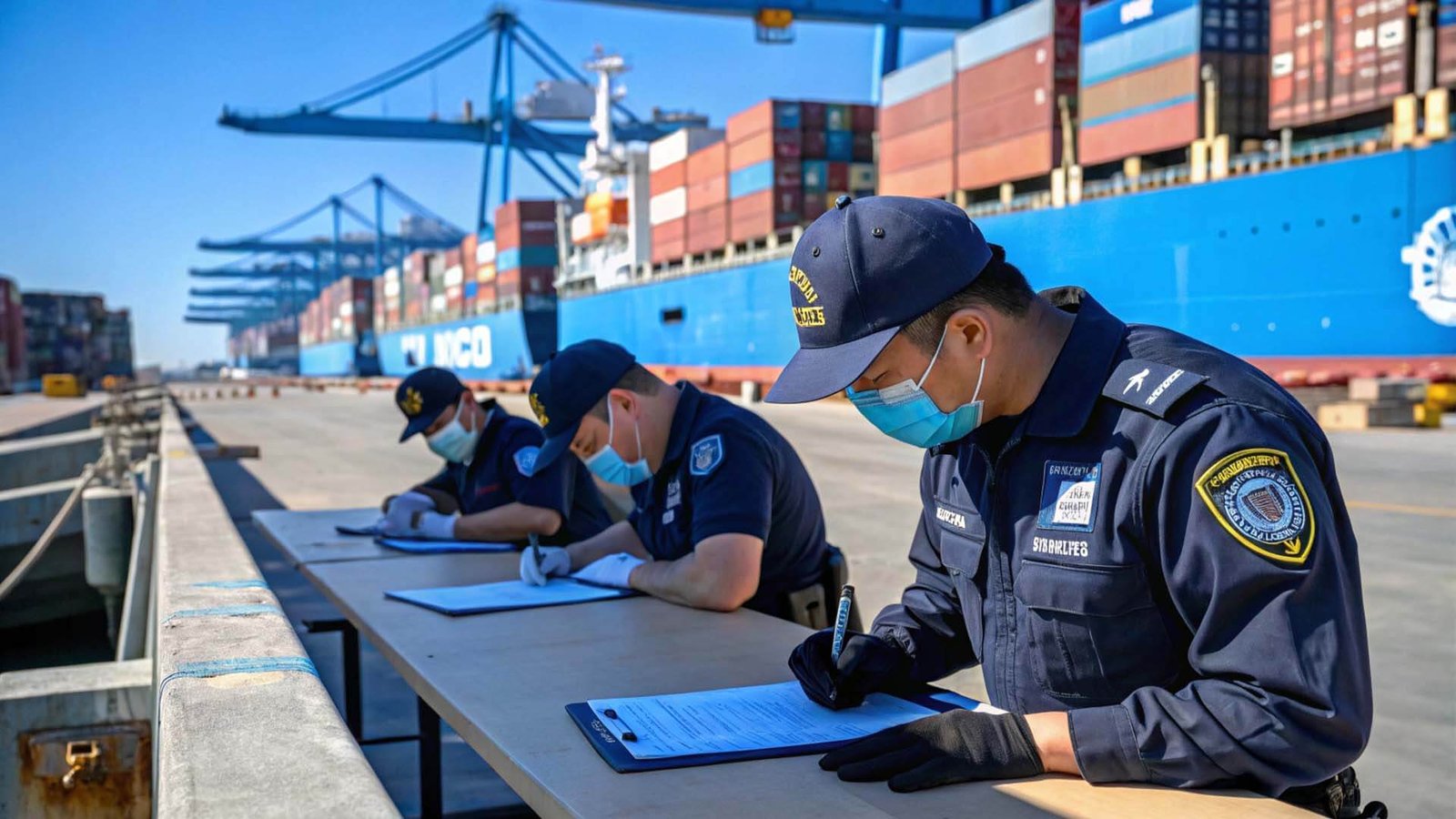
I once handled a shipment for a client from China to Los Angeles under DDP terms10. The supplier in China created a commercial invoice6 that described the goods as "metal accessories" to simplify the process. This vague description11 was an immediate red flag for CBP. The container was pulled for an intensive exam12, which then triggered a hold by the ATF to verify the parts. The shipment contained perfectly legal optics mounts and rails, but the poor description caused a six-week delay. We had to work directly with CBP to provide detailed product spec sheets and images to prove the items were not controlled. The shipment was eventually released, but the delay and exam fees cost the importer thousands. A precise description from the start would have prevented this.
How ATF, CBP, and the State Department Regulate Gun Parts Differently—and Why Importers Get Caught in the Middle?
You followed one agency's rules completely. But another agency seizes your shipment anyway, leaving you confused and frustrated about what you did wrong. You need to understand each agency's role.
The ATF determines if a part legally constitutes a "firearm." CBP enforces all import laws at the border and can hold or seize items based on paperwork. The State Department controls military-grade items under ITAR13. Importers get stuck when these jurisdictions overlap and disagree.

Dive Deeper
Many importers mistakenly believe the ATF and CBP are one and the same. They are not, and they have different jobs. This misunderstanding is a primary reason importers get into trouble.
Here is a breakdown of how it works:
- ATF (Bureau of Alcohol, Tobacco, Firearms and Explosives): The ATF is the subject matter expert. Their job is to determine if an item is a firearm, a regulated firearm part, or a machine gun component under federal law. They decide what is legal to possess and what requires a permit to import.
- CBP (Customs and Border Protection): CBP is the police force at the border. Their job is to enforce all U.S. import laws. They inspect cargo and paperwork for accuracy, valuation, and compliance. If they see something suspicious, like a vaguely described "gun part," they will detain the shipment and ask the ATF for an opinion.
- State Department (DDTC): The Directorate of Defense Trade Controls regulates defense articles under ITAR13 (International Traffic in Arms Regulations). Certain advanced optics, night vision, or specialty components may fall on the U.S. Munitions List (USML) and require a State Department license14 to import.
Importers get caught in the middle because a shipment must satisfy all of them. The ATF might say a part is legal, but if your paperwork is wrong, CBP will still stop it. This overlap causes delays, confusion, and frustration.
Which Gun Parts Trigger ATF Form 615, Import Permits, or 922(r) Compliance Requirements?
Your parts are completely legal to own in the United States. But your container is seized at the port because you did not get a pre-import permit. You must know which parts need prior approval.
Any part that the ATF defines as a "firearm" itself, such as a frame or receiver, requires an approved ATF Form 615 before it can be shipped. Barrels for certain firearms also need it. 922(r) compliance16 applies to assembling certain rifles from imported parts, which affects your import strategy.

Dive Deeper
Legality to own is not the same as legality to import. This is a critical distinction that many importers miss. Certain parts, even if widely available in the U.S., require specific permission from the federal government to cross the border.
Here are the key triggers:
- ATF Form 615: This is an "Application and Permit for Importation of Firearms, Ammunition and Implements of War." It is mandatory for any item the ATF legally defines as a "firearm." This most importantly includes frames and receivers—the part with the serial number. You must apply for and receive an approved Form 6 before the goods leave the foreign port. Importing without one is a guaranteed seizure.
- 922(r) Compliance: This federal law makes it illegal to assemble a non-sporting semi-automatic rifle or shotgun from more than 10 imported core parts. While this is an assembly rule, it directly impacts importers. If you are importing parts for these types of firearms, you must be aware of which parts count toward the 922(r) limit.
A client learned this the hard way. They imported a full container of firearm components from China to New Jersey under DDP terms10. The parts included components that required an ATF Form 615, but neither the importer nor their Chinese supplier knew this. They assumed that because the parts were for legal firearms, the import would be fine. The shipment was flagged and seized by CBP upon arrival. The importer lost the entire container of goods. The lesson was expensive: just because a part is legal does not mean it can be imported without the correct permit.
Common Reasons Gun Parts Shipments Are Held, Seized, or Rejected at U.S. Ports (Even When Importers Think They’re Legal)?
You did all your research and believe your parts are legal. Yet, your container is held at the port, costing you thousands in demurrage fees. Most seizures are from simple paperwork errors.
The most common reasons are not illegal intent but simple mistakes. Vague product descriptions like "metal parts," incorrect HTS codes17, missing permits like Form 6, or a mismanaged DDP shipment where the foreign supplier handled the paperwork poorly are the top causes for holds and seizures.

Dive Deeper
In my experience as a customs broker, very few importers are actively trying to break the law. Most seizures happen because of preventable mistakes that create suspicion. CBP officers are trained to look for anomalies, and any one of these can trigger an exam.
Here are the top offenders I see every week:
- Vague Product Descriptions: Calling an optics mount "hardware" or a handguard "aluminum tube" is the number one red flag. The supplier in China often does this thinking it will make customs easier, but it does the opposite.
- Incorrect HTS Classification: The Harmonized Tariff Schedule (HTS) code is how CBP identifies your product. Using the wrong code, either by mistake or to find a lower duty rate, is a compliance violation that can lead to holds, fines, and future scrutiny.
- Missing Permits: As we discussed, importing a receiver without an approved ATF Form 615 is an automatic seizure. There is no way around it.
- Mismanaged DDP Shipments: When you let your overseas supplier manage a DDP (Delivered Duty Paid) shipment, you are trusting them with your U.S. customs compliance. They don't know U.S. law and are not liable for mistakes—you are, as the Importer of Record18. Their sloppy paperwork puts your business at risk.
Gun Parts Import Risk Matrix (CBP & ATF Scrutiny Levels)
| Category | Examples | Scrutiny Level | Typical Risk |
|---|---|---|---|
| Low Risk | Optics mounts, grips, holsters, slings, cleaning kits | Low | Documentation errors, misclassification. |
| Medium Risk | Triggers, stocks, barrels, handguards, bolt carriers | Medium | ATF review9 holds, 922(r) compliance16 checks. |
| High Risk | Receivers, frames, conversion kits, machine gun parts | High | Mandatory permits, seizure, penalties, criminal investigation. |
How Product Description, HTS Classification, and Declared Use Affect Gun Parts Clearance and Duty Treatment?
You're importing a simple, non-regulated aluminum rail. But you described it incorrectly on the invoice, and now it's flagged by CBP as a controlled firearm part. Your words matter more than the metal.
How you describe your product on the commercial invoice6 is critical. Vague or incorrect descriptions trigger automatic CBP holds. The HTS code must be precise. "Parts of rifles" has a different code and scrutiny level than "optical sight mounts," even if they look similar.
Dive Deeper
The data you provide to U.S. Customs is everything. It determines whether your shipment is cleared in minutes or held for weeks. You must be precise, accurate, and truthful.
- Product Description: Be specific. Instead of "gun rail," write "Anodized aluminum Picatinny rail for mounting telescopic sights, 7 inches." Give CBP a clear picture of what the item is and what it is not. This proactive clarity prevents them from having to guess, which always leads to an exam.
- HTS Classification: Gun parts fall under Chapter 93 of the HTS codebook, which is a highly scrutinized chapter. However, there are many different codes within it. A rifle stock has a different code than a pistol grip. An accessory like an optics mount may even be classifiable outside of Chapter 93. Getting this right is a job for a professional customs broker, as misclassification can lead to penalties.
- Declared Use: Never misrepresent the end use. Claiming firearm parts are for "airsoft" or "toys" is a common but illegal tactic that CBP is very familiar with. If caught, it can lead to seizure and even criminal charges for fraud.
We recently handled a DDP shipment of optics and mounts from China to Houston for a client. Even though these are low-risk accessories, we took no chances. Before the container shipped, we reviewed their entire product list and commercial invoice6. We replaced vague terms with precise descriptions and verified every HTS code. Because all the documentation was perfect, we were able to pre-clear the shipment with CBP. It was released from the port within hours of arrival, with no ATF hold. This is the power of controlling the compliance data.
How U.S. Importers Can Safely Import Gun Parts Under DDP Using Broker-Controlled Compliance and Pre-Clearance Strategy?
DDP shipping sounds easy, with the supplier handling everything. But this gives up all your control, putting your business at the mercy of their mistakes. You must use a broker-controlled DDP model19.
A safe DDP shipment requires you, the U.S. importer, to control the customs entry7. Use a U.S. customs broker to review all documents before shipping, file the entry, and manage communications with CBP and ATF. This separates freight from compliance, ensuring accuracy and control.

Dive Deeper
The biggest mistake I see U.S. importers make is choosing a standard DDP shipping term for regulated goods. When your Chinese supplier arranges DDP, they hire their own freight forwarder and U.S. customs broker. That broker works for the supplier, not for you. Their goal is to get the shipment cleared as cheaply as possible, not as compliantly as possible. If there is a problem, the legal and financial liability falls on you as the official Importer of Record18.
The solution is a broker-controlled pre-clearance strategy20. Here’s how it works:
- You still arrange DDP freight with your supplier.
- However, you instruct them that we, your designated U.S. customs broker, will handle the U.S. customs entry7.
- Before the goods ship, you send us the commercial invoice6, packing list, and part specifications.
- We review everything for accuracy and compliance, identify any red flags, confirm HTS codes17, and check for permit requirements.
- We prepare and file the customs entry7 with CBP while the vessel is still on the water.
This model gives you the best of both worlds: your supplier handles the freight cost, but you maintain full control over your U.S. customs compliance. It isolates your risk and is the single most effective way to import sensitive goods safely.
"Before You Ship" Gun Parts Import Compliance Checklist
| Checklist Item | Why It Matters |
|---|---|
| Confirm part category | Determines if the part is a low-risk accessory or a highly-regulated component. |
| Verify ATF Form 6 requirement | Importing a "firearm" part like a receiver without a permit guarantees seizure. |
| Review 922(r) implications | Ensures the parts you import are legal for their intended assembly in the U.S. |
| Use precise product descriptions | Vague descriptions are a primary trigger for CBP holds and ATF exams. |
| Confirm correct HTS classification | Prevents customs holds, penalties, and ensures you pay the correct duty rate. |
| Identify Importer of Record | This person or entity is legally and financially responsible for the import. It's you. |
| Use a U.S. customs broker | Puts a licensed expert in control of your compliance, protecting your interests. |
| Avoid vague DDP promises | Standard DDP gives up control and exposes you to the supplier's mistakes. |
Conclusion
Importing gun parts from China is possible, but it cannot be done casually. Most problems come from simple paperwork errors, not illegal intent. The safest path is a broker-controlled pre-clearance strategy.
Understanding the consequences of seized goods can help you avoid costly mistakes and legal trouble when importing gun parts. ↩
Knowing the potential fines for mistakes in importing gun parts can motivate you to ensure compliance and avoid financial penalties. ↩
Exploring legal troubles related to gun parts importation can help you understand the risks and take preventive measures. ↩
Identifying critical components helps you understand which parts require special attention and permits during importation. ↩
Learning about the impact of misclassification can prevent shipment delays and seizures, ensuring smooth importation. ↩
A precise commercial invoice is key to avoiding customs issues, ensuring your shipment is processed smoothly. ↩
Understanding customs entry requirements can help you avoid delays and ensure compliance with regulations. ↩
Knowing why CBP flags shipments can help you avoid common mistakes and ensure your goods are not delayed or seized. ↩
Understanding what triggers an ATF review can help you prepare your shipment to avoid unnecessary scrutiny. ↩
Understanding DDP terms can help you manage your importation process and avoid compliance issues. ↩
Avoiding vague descriptions can prevent customs holds and ensure your shipment is processed efficiently. ↩
Learning about intensive exams can help you understand the process and avoid costly delays in your shipments. ↩
Understanding ITAR regulations is crucial for importing military-grade gun parts legally and safely. ↩
Knowing when a State Department license is needed ensures compliance with ITAR regulations and prevents legal issues. ↩
Knowing about ATF Form 6 helps you understand the permit requirements for importing certain gun parts legally. ↩
Understanding 922(r) compliance is essential for legally assembling firearms from imported parts. ↩
Correct HTS codes ensure your shipment is classified properly, avoiding delays and penalties. ↩
Understanding the responsibilities of the Importer of Record helps you manage compliance and avoid legal issues. ↩
A broker-controlled DDP model ensures compliance and control over your shipment, reducing risks and delays. ↩
Implementing a pre-clearance strategy can streamline your importation process, ensuring faster and safer delivery. ↩