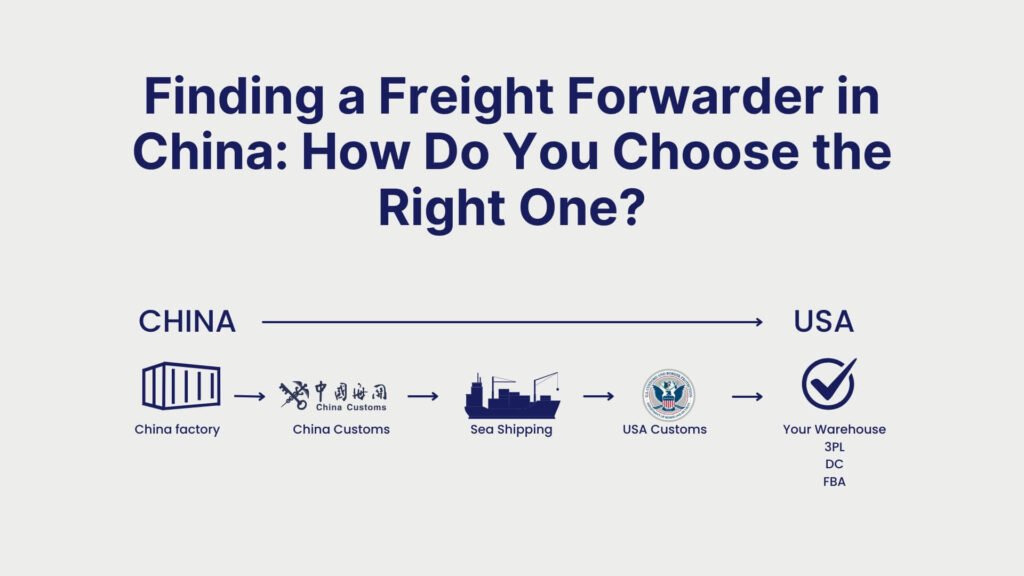
Choosing a China freight forwarder1 feels overwhelming. The wrong choice leads to costly delays and surprise fees. I will show you how to find a reliable partner and protect your business.
Choosing the right China freight forwarder1 is a critical risk-management decision2. It's not just about price. You must verify their licenses, operational control, and how they handle U.S. customs. A real partner ensures transparency, compliance, and predictable delivery, protecting your investment and supply chain.
I've seen too many U.S. importers get burned by choosing the wrong partner in China. They focus only on the initial quote and end up paying far more in the long run. The choice you make before your cargo ever leaves the factory determines who controls your shipment, your costs, and your delivery timeline. It's the single most important decision for managing your supply chain risk3. Let's break down how to get it right from the start, so you can avoid the common pitfalls and build a resilient shipping process.
Why Choosing the Right Freight Forwarder in China Directly Impacts Cost, Compliance, and Delivery Risk?
Your profit margins are tight. A sudden, massive bill for destination charges can wipe them out. You need a forwarder who prevents these problems, not one who causes them.
A China freight forwarder1 controls booking, export handling, and documentation. The wrong forwarder increases your risk of delays, hidden fees4, customs issues5, and even cargo loss. Choosing correctly is a risk-management decision2 that protects your landed cost, not just a simple pricing decision.
The forwarder you pick in China is your operator on the ground. They are responsible for everything from booking space on a vessel to filing the correct export documents. A small mistake here can cause a huge problem later. A cheap quote often means the forwarder is cutting corners. They might not have a direct contract with the shipping line or might use inexperienced staff. This is where failures happen.
Where Failures Occur
Most problems start at the origin. If your forwarder fails to book space correctly, your container gets rolled to the next vessel, causing a one or two-week delay. If they file export paperwork incorrectly, your container can be held by China customs. The cheapest quote often leads to the most expensive outcome because it hides these risks. You end up paying for delays, extra storage, and re-booking fees. Remember, as the U.S. Importer of Record (IOR)6, you are legally responsible for everything, even if your forwarder made the mistake.
Case Study 1: The High Cost of a "Cheap" Agent
An importer of consumer goods shipping an FCL container to Los Angeles chose a China agent based on the lowest price. The agent, who was just a middleman, subcontracted the booking. The cargo was delayed for weeks with no updates. When it finally arrived, the importer was hit with thousands in surprise destination charges. The missed retail window and lost margin made this "cheap" shipment incredibly expensive.
Which Licenses, Capabilities, and Local Presence a Reliable China Freight Forwarder Must Have?
You found a forwarder online with a nice website. But are they a real, licensed operator or just a virtual office? Entrusting your cargo to an unlicensed entity is a massive gamble.
A legitimate China freight forwarder1 holds required operating licenses, like an NVOCC registration, and has real local teams. They need a physical presence at ports, direct carrier contracts7, and fluent English-speaking staff to control operations and documentation properly. These are non-negotiable requirements for a trustworthy partner.
When I talk to new clients, I always tell them to ask for the paperwork first. A real freight forwarder will be happy to show you their licenses. It's a sign of professionalism and legitimacy. These documents are your first line of defense against fraud and incompetence. Without them, you have no idea who is actually handling your valuable cargo.
Required Licenses and Capabilities
A reliable forwarder in China must have a few key things. First, look for their NVOCC (Non-Vessel Operating Common Carrier) license8. In China, this is often coupled with a Class A freight forwarding license. These licenses prove they are registered and regulated. Second, they need a real local presence. This means they have their own staff and preferably their own warehouses at major ports like Shanghai, Ningbo, and Shenzhen. This is different from a company that just has a mailing address. Finally, ask about their carrier contracts7. A forwarder with direct contracts has more control over space and pricing than one who is just reselling space from another company.
| Capability | What to Look For | Why It Matters |
|---|---|---|
| Licensing | China NVOCC License | Proves they are a legal, regulated entity. |
| Local Teams | Offices and staff at major ports | Ensures hands-on control of your cargo. |
| Carrier Access | Direct contracts with shipping lines | Provides better access to space and more stable pricing. |
| Communication | English-speaking operations staff | Crucial for clear communication and avoiding errors. |
How to Tell the Difference Between a Real Freight Forwarder and a Booking Agent or Middleman?
Your contact in China is responsive and gave you a great price. But what happens when there's a problem? A middleman will disappear, leaving you to solve a crisis alone.
Many "forwarders" in China are just booking agents reselling space with no operational control. A real forwarder issues their own Bill of Lading and manages the shipment directly. They are the ones who solve problems, while a middleman will pass the blame and leave you stranded.
The key difference comes down to one word: control. Who is actually in control of your container? A middleman, or booking agent, simply finds a real freight forwarder and adds a markup. They don't manage the booking, the trucking, or the documentation. When your container gets held for a customs inspection or the vessel schedule changes, the middleman has no power to help you. They just relay messages back and forth. A real forwarder, on the other hand, has the relationships and the authority to resolve issues directly.
Who Is in Control?
The easiest way to tell the difference is to ask: "Will you be issuing the Bill of Lading?" A real NVOCC forwarder issues their own House Bill of Lading (HBL)9. This document is the title to your goods, and the party who issues it has control. A middleman cannot issue an HBL. They will give you an HBL from the actual forwarder they hired. This means you have no direct relationship with the company that is physically moving your freight.
Case Study 2: The DDP Middleman Trap
An electronics importer shipping to New Jersey was promised a seamless DDP service. The "forwarder" was actually a middleman who had no U.S. entity or customs brokerage license. When the cargo arrived, U.S. Customs found issues with the import declaration. The middleman couldn't act as the Importer of Record. The shipment was stuck, and the U.S. importer was forced to step in, hire a customs broker last-minute, and face unexpected duties and penalties.
What Red Flags U.S. Importers Should Watch for When Comparing China Freight Forwarders?
That ultra-low quote seems too good to be true. It probably is. Falling for it means you will likely face surprise charges and delays that cost you far more in the end.
Look for red flags before you commit to a shipment. Vague or suspiciously cheap quotes, no clear contract terms, a refusal to name their U.S. partners, poor communication, and high-pressure sales tactics are all major warning signs of an unreliable and potentially risky operator.
I've learned over the years that problems rarely appear out of nowhere. The warning signs are almost always there from the very beginning. An importer who is focused only on getting the lowest number on a spreadsheet will miss them. A professional forwarder is transparent. They will provide a fully itemized quote and explain their process clearly. An unreliable agent will be vague and evasive. They count on you not asking the tough questions. You have to be diligent during the vetting process.
Vetting Tools for Importers
To help our clients, we developed a simple checklist. If you get a "No" on any of these questions, you should see it as a major red flag.
"Should You Trust This China Freight Forwarder?” Importer Checklist
| Question | If No → High Risk |
|---|---|
| Can they show valid China freight licenses? | Do not proceed. This is a basic requirement. |
| Do they issue or control the Bill of Lading? | High middleman risk. You have no direct control. |
| Do they have real China operations staff? | High operational risk. Who is managing your cargo? |
| Can they explain their DDP process clearly? | Red flag. They may not handle it legally. |
| Is U.S. customs clearance broker-controlled? | Your business is exposed to compliance risks10. |
| Are all quotes fully itemized? | Hidden fees are almost guaranteed. |
| Will they put all service terms in writing? | High accountability risk. Verbal promises are worthless. |
You can also use a scorecard to compare potential partners more objectively.
China Freight Forwarder Vetting Scorecard
| Evaluation Area | Poor | Acceptable | Strong |
|---|---|---|---|
| Licensing | Unclear / missing | Partial info | Fully verified NVOCC |
| Local Presence | Virtual office only | Limited staff | Real teams at key ports |
| Carrier Access | Reseller only | Mixed | Direct contracts |
| Transparency | Vague quotes | Some detail | Fully itemized quotes |
| U.S. Customs Control | None / Agent-controlled | Partner broker | In-house / Direct control |
| DDP Capability | Marketing claim only | Partial / Risky | Proven, compliant execution |
| Communication | Slow / Unclear | Adequate | Proactive & clear English |
How U.S. Importers Can Safely Work With a China Freight Forwarder Using Broker-Controlled Clearance and DDP?
DDP shipping sounds simple, but it is filled with legal traps. Many China forwarders offer DDP without being legally able to perform it, exposing you to massive risk with U.S. Customs.
The safest structure separates China operations from U.S. customs control. Use a vetted China forwarder11 for the export and ocean freight, but ensure the U.S. customs entry is managed by your own U.S. customs broker. This is "broker-controlled clearance12."
This is the model we use and recommend because it gives you, the importer, the most protection. When your China forwarder also controls your U.S. customs clearance, you have a conflict of interest. Their goal is to clear the shipment as quickly and cheaply as possible, which might not be in your best compliance interest. By separating these duties, you create a system of checks and balances. Your China forwarder handles what they do best: managing freight in China. Your U.S. customs broker handles what they do best: protecting you and ensuring compliance with U.S. law.
Broker-Controlled Entry vs. Agent-Controlled Entry
With agent-controlled entry, the China forwarder's designated U.S. agent files the customs entry. You have little to no visibility or control over this process. If they make a mistake in classification or valuation, you are still the one legally liable. With broker-controlled entry, your chosen U.S. customs broker manages the entire import process. They work for you. This ensures the customs filing is done correctly and in your best interest. This structure works perfectly with DDP (Delivered Duty Paid) shipping, as long as it's done correctly. A proper DDP service means the forwarder has a legal U.S. entity to act as the Importer of Record or works directly with your broker to ensure a compliant entry is filed on your behalf.
Case Study 3: The Safe DDP Success Story
An importer of industrial products needed a predictable FCL DDP solution for a shipment to Houston. They carefully vetted our China NVOCC license and confirmed we had a U.S. customs brokerage license. We provided a transparent, itemized DDP quote. Our China team managed the export, and our U.S. team managed the customs clearance under our direct control. The result was a predictable, on-time delivery with a stable landed cost and zero compliance surprises.
Conclusion
Choosing a China forwarder is a critical risk decision, not a simple sourcing task. The safest importers choose partners with verified licenses, operational transparency13, and a broker-controlled U.S. clearance process.
Understanding the role of a China freight forwarder is crucial for managing your supply chain effectively and avoiding costly mistakes. ↩
Learn how selecting the right freight forwarder can mitigate risks and protect your business from unexpected costs and delays. ↩
The right forwarder can minimize supply chain risks, ensuring smooth and timely delivery of goods. ↩
Avoiding hidden fees is crucial for maintaining your profit margins and ensuring predictable shipping costs. ↩
Understanding customs issues helps you prepare and avoid delays and additional costs in your shipping operations. ↩
Knowing the responsibilities of the U.S. Importer of Record helps you understand your legal obligations in the import process. ↩
Direct carrier contracts provide better access to shipping space and stable pricing, crucial for cost-effective logistics. ↩
An NVOCC license is a key indicator of a legitimate and regulated freight forwarder, ensuring compliance and reliability. ↩
Understanding who issues the House Bill of Lading helps you identify whether you're dealing with a real forwarder or a middleman. ↩
Compliance risks can lead to legal issues and financial penalties, making it essential to choose a knowledgeable forwarder. ↩
Vetting a forwarder ensures they have the necessary licenses and capabilities to handle your shipments effectively. ↩
Broker-controlled clearance ensures compliance and protects you from legal risks during the import process. ↩
Transparency in operations builds trust and ensures you are aware of all processes and potential issues. ↩