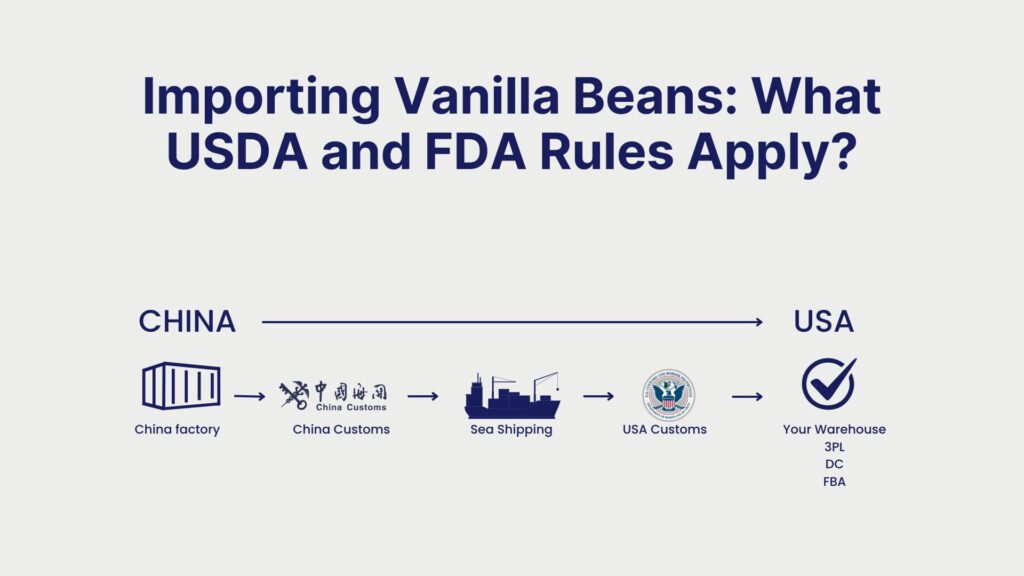
Vanilla beans are a prized ingredient in many food products. However, importing them into the U.S. is not a straightforward process. Understanding the regulations is crucial.
Vanilla imports are jointly regulated by the Food and Drug Administration (FDA) and USDA APHIS, with enforcement at the border by U.S. Customs and Border Protection. FDA oversees food safety1 and prior notice, while APHIS focuses on plant health and pest risk for raw agricultural products.
It’s important to navigate these regulations carefully. A misstep can lead to delays or refusals, affecting your business. Let's dive into the specific rules and requirements for importing vanilla beans.
Which U.S. Agencies Regulate the Import of Vanilla Beans and What Each One Enforces?
The FDA and USDA APHIS play distinct roles in regulating vanilla imports. The FDA is responsible for food safety. They ensure that food products, including vanilla, comply with federal food safety laws. Meanwhile, USDA APHIS focuses on the plant health aspects. They monitor agricultural products to prevent pests and diseases from entering the U.S.
Whole vanilla beans face stricter scrutiny2 than processed products due to pest and contamination risk. Crushed, dried, or further-processed vanilla generally has fewer plant-health restrictions. Importers must classify the product correctly, as raw versus processed status directly affects permit requirements, inspection frequency, and clearance risk.
When you import vanilla, be aware that both agencies may require you to submit various documents. You need to comply with FDA regulations for food safety, and APHIS regulations for plant health. This dual oversight ensures that the product is safe for consumption and free of harmful pests.
How Import Rules Differ for Whole Vanilla Beans, Crushed Pods, and Processed Vanilla Products?
Understanding the differences between whole, crushed, and processed vanilla products is essential. Whole vanilla beans are classified as raw agricultural products. They are subject to stringent regulations due to their potential to carry pests. Crushed or processed vanilla usually faces different requirements.
Importers must ensure the foreign supplier is FDA-registered and submit FDA Prior Notice3 for every vanilla shipment before arrival. FDA does not pre-approve foods but enforces registration, notice, and labeling compliance. Missing or incorrect filings can result in holds or refusals at the port.

When importing whole vanilla beans, expect a higher level of inspection. These products may require an APHIS permit based on their origin and processing level. On the other hand, processed vanilla products might not need as rigorous oversight. Importers should always classify their products accurately. Misclassifying can lead to compliance issues and potential delays.
What FDA Registration, Prior Notice, and Facility Requirements Apply to Vanilla Imports?
The FDA has specific registration and notice requirements for food imports, including vanilla. Importers need to ensure their foreign suppliers are registered with the FDA. They also must submit a Prior Notice for each shipment before it arrives in the U.S.
Raw vanilla beans may require APHIS authorization depending on origin, processing level, and pest risk. APHIS evaluates whether the product could introduce plant pests or diseases. Importers should verify permit requirements before shipment, as arriving without approval can result in immediate refusal or destruction.
Failure to comply with these requirements can lead to significant issues at the port of entry. Missing or incorrect Prior Notices can result in shipments being held or refused. To avoid these complications, ensure all documentation is accurate and submitted timely.
When USDA or APHIS Permits Are Required for Importing Raw Vanilla Beans?
USDA and APHIS permits are crucial for importing raw vanilla beans. Depending on the country of origin and the level of processing, you may need additional permits. APHIS assesses each shipment to determine the risk of introducing pests or diseases.
Upon arrival, vanilla shipments may be inspected for documentation accuracy, pest presence, contamination, and labeling compliance. Raw products face higher inspection rates. If discrepancies are found, shipments can be held, sampled, re-exported, or destroyed, making pre-shipment compliance critical for importers.
To ensure smooth importation, verify permit requirements before your shipment's arrival. This step is essential to avoid immediate refusals or destruction at customs. Working with experienced customs brokers can streamline this process, ensuring compliance with all federal regulations.
How Vanilla Bean Shipments Are Inspected, Held, or Released at U.S. Ports of Entry?
Once your vanilla shipment arrives in the U.S., it goes through a thorough inspection process. Customs officials check for proper documentation, pest presence, and compliance with food safety regulations.
Common errors include misdeclaring raw vanilla as processed, missing FDA Prior Notice3, unregistered foreign facilities, and ignoring APHIS permit requirements4. These mistakes frequently lead to holds or refusals, especially for high-value vanilla shipments where timing and documentation precision are critical.
If your shipment has discrepancies, it may be held for further inspection or sampling. In severe cases, shipments can be rejected or destroyed. Therefore, maintaining accurate and complete documentation is crucial for importers.
What Common Compliance Mistakes Cause Delays, Refusals, or Seizures of Vanilla Imports?
Importers face several compliance pitfalls that can lead to delays, refusals, or even seizures of vanilla shipments. Common mistakes include misclassifying raw vanilla as processed, failing to submit FDA Prior Notice3, and not ensuring the foreign facility is registered with the FDA.
Importers should always classify their products accurately. Misclassifying can lead to compliance issues and potential delays.
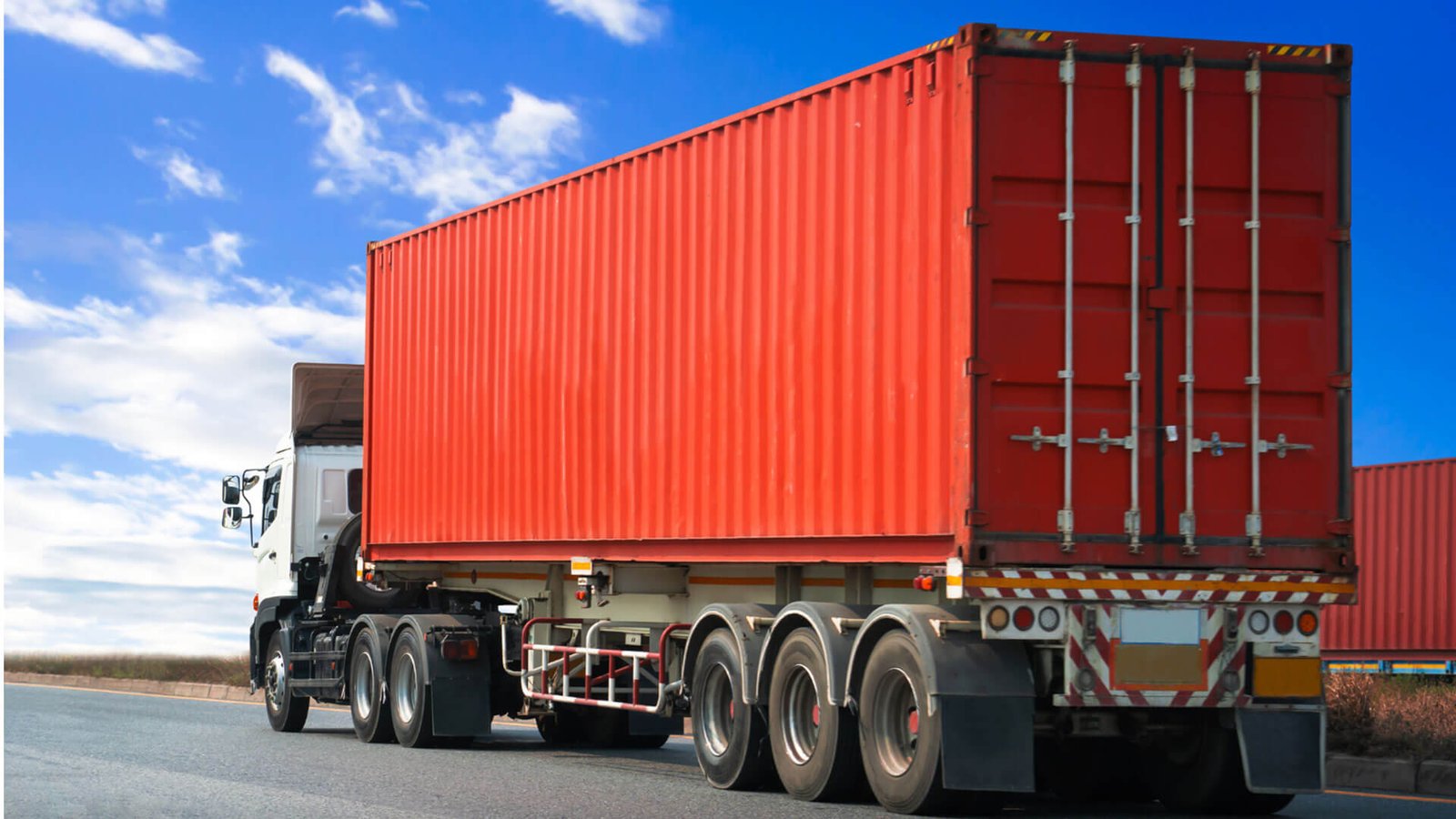
These errors often result in significant problems during the import process. Understanding the regulations and working with a compliance expert can help mitigate these risks and streamline the import process.
Conclusion
Navigating USDA and FDA regulations for importing vanilla beans is critical for successful shipments. Understanding compliance requirements can save importers from costly delays and refusals.
Learn how the FDA ensures that vanilla imports comply with food safety laws, which is vital for consumer safety and legal compliance. ↩
Explore why whole vanilla beans are subject to more stringent regulations, impacting import strategies and compliance. ↩
Understand the importance of FDA Prior Notice in the import process to prevent shipment holds or refusals. ↩
Learn about APHIS permit requirements to ensure smooth importation and avoid immediate refusals or destruction. ↩