Importers need to understand the complexities of CBP’s feeder vessel guidance1. The rules can seem daunting, but knowing them can save you from unexpected costs.
CBP clarified that cargo moving on feeder vessels2 may not qualify for the in-transit exception3 for certain reciprocal tariffs4 if the cargo was not loaded on the final U.S.-bound vessel5 before the tariff effective date. The key issue is timing and documentation6: feeder movement alone does not prove “in transit” eligibility for the U.S. import.
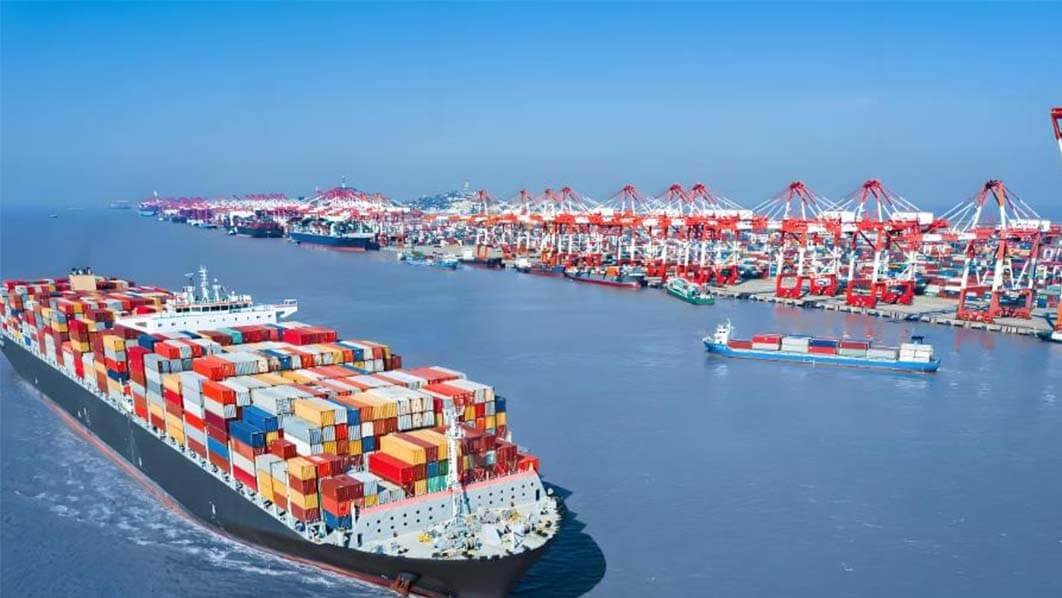
Feeder vessels often serve as a link in the supply chain. However, they may complicate tariff exemptions. Understanding the CBP guidance is crucial for importers. This leads us to consider how feeder vessels2 impact tariffs and what that means for your bottom line.
Explain CBP’s feeder vessel guidance1 and why cargo loaded on a feeder vessel may be disqualified from the IEEPA reciprocal tariff in-transit exception3?
When it comes to feeder vessels2, the background is essential. A feeder vessel is used to transport cargo between a hub and a larger "mother" vessel. However, not all cargo transported this way is eligible for tariff exemptions.
CBP clarified that cargo moving on feeder vessels2 may not qualify for the in-transit exception3 for certain reciprocal tariffs4 if the cargo was not loaded on the final U.S.-bound vessel5 before the tariff effective date. The key issue is timing and documentation6: feeder movement alone does not prove “in transit” eligibility for the U.S. import.
Importer impact: higher duty exposure7 + denied exemptions + retro billing risk
Where importers get hurt: transshipments8, relay routes, short-sea feeder legs
Best response: control routing9 + prove final vessel lading date

Define which “tariff date” controls eligibility (the lading date on the final U.S.-bound vessel5, not the feeder vessel departure date) and what importers must document.
The rules are specific when it comes to eligibility dates. The tariff date that matters is the date on the final U.S.-bound vessel5. This is not the same as the feeder vessel's departure date.
For tariff “in-transit” eligibility, CBP focuses on the date of lading/onboard on the final vessel bound for the United States—not the date cargo departed on a feeder leg. Importers must document the final U.S.-bound vessel5, the lading/onboard date, and the continuous movement evidence10 to support the claim during entry and audit.
Final-Lading Date Proof Checklist:
- final U.S.-bound vessel5 name + voyage
- onboard/lading confirmation (carrier)
- bill of lading showing onboard date (or carrier onboard record)
- transshipment routing details
- booking confirmation and routing instruction
- carrier arrival/departure milestone logs
- proof cargo was committed to final U.S.-bound transport before effective date
| Date type | Where it appears | CBP accepts it? | Notes |
|---|---|---|---|
| feeder departure date | Bill of lading | No | Not used for eligibility |
| transshipment arrival date | Carrier logs | No | Only relevant to identify routing |
| final vessel onboard/lading date | Bill of lading | Yes | This is the critical date |
| manifest filing date | ACE entry11 | No | Not applicable for eligibility |
| ETA/ETD estimates | Carrier documents | No | Used for planning, not eligibility |
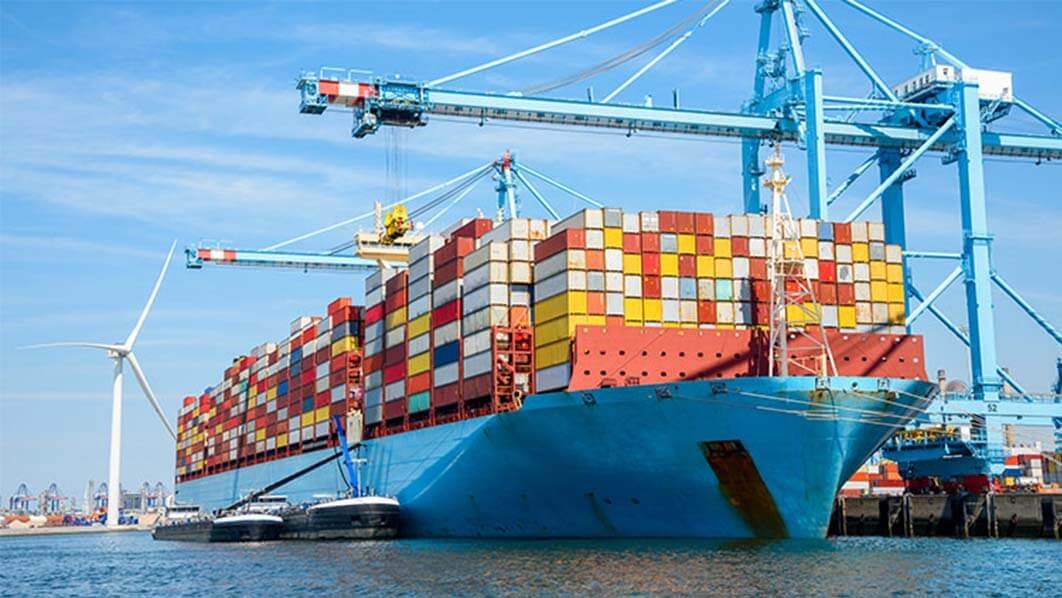
Map common transshipment scenarios12 (feeder → mother vessel, feeder → relay → U.S. vessel) and how to determine the final mode of transit for CBP purposes.
Transshipping cargo can complicate your tariffs. The final vessel carrying the cargo into the U.S. is what matters.
Transshipment networks create multiple vessel legs, but CBP eligibility depends on the leg that actually carries the cargo into the United States. Importers must identify the final conveyance, confirm when the cargo was loaded onboard that final U.S.-bound vessel5, and maintain a route narrative showing continuous movement from origin to the U.S. port of entry.
| Scenario | Example route | What date controls | Biggest risk | Best practice |
|---|---|---|---|---|
| feeder → mother vessel → U.S. port | Feeder to Mother to U.S. | Final vessel's onboard date | Missing proof of final onboard date | Confirm all documents are accurate |
| feeder → hub port → relay vessel → U.S. port | Feeder to Hub to Relay to U.S. | Final vessel's onboard date | Delays causing missed dates | Track all timings closely |
| feeder → multiple hubs → U.S. port | Feeder to Multiple Hubs to U.S. | Final vessel's onboard date | Increased complexity in tracking | Maintain a clear chain of custody |
| rollovers13 (missed mother vessel) | Feeder to Mother missed connection | Final vessel's onboard date | Disqualification risk due to date | Alert system for missed connections |
| split shipments14 (partial onboard dates) | Feeder split into parts | Final vessel's onboard date | Confusion over documentation | Ensure consistent documentation |
Rollover warning: Rollovers can move the final onboard date beyond the tariff effective date, disqualifying the in-transit exception3 even if the feeder leg started earlier.
Provide an importer/broker compliance workflow for proving in-transit eligibility (carrier paperwork, booking confirmations, onboard/lading records) and filing correctly in ACE.

It's vital for importers to treat their in-transit claims meticulously. Every piece of information matters.
Importers should treat in-transit claims like an audit file: the broker must have the correct vessel details and onboard/lading proof at the time of entry. CBP expects documentation that ties the cargo to the final U.S.-bound vessel5 and confirms eligibility dates. A standardized workflow prevents denied claims, delayed release, and post-entry disputes.
Feeder Vessel In-Transit Decision Flow:
- Is cargo subject to reciprocal tariff?
- Was it loaded on final U.S.-bound vessel5 before effective date?
- Do we have onboard/lading proof?
- Did any rollover change final vessel/date?
- If YES: proceed with claim + keep file
- If NO/uncertain: model duty cost + consider alternate entry strategy
How to File (Importer → Broker → ACE):
- Identify subject shipments + routing
- Confirm final U.S.-bound vessel5 and onboard/lading date
- Compile proof package (B/L + carrier onboard evidence + route narrative)
- Send broker instructions + documentation before entry
- Broker files entry with correct tariff logic and notes
- Audit entry summary + retain documentation for recordkeeping
- Exception handling if CBP questions eligibility
| Failure reason | What CBP sees | Business impact | Prevention |
|---|---|---|---|
| no final onboard proof | Incomplete documentation | Claim denied, increased duties | Collect all necessary proof before filing |
| rollover not tracked | Missing dates | Loss of exemption | Implement tracking systems |
| wrong vessel/voyage | Incorrect information | Duty exposure | Double-check vessel details |
| inconsistent documents | Documentation mismatch | Claims disputed | Standardize documentation procedures |
| entry filed before proof ready | Inadequate evidence | Delayed release | Ensure documentation is complete before filing |
| poor recordkeeping | Lack of audit trail | Increased scrutiny from CBP | Maintain organized records |
Give an importer risk plan to avoid retroactive duty exposure15 (shipment cut-off planning16, routing decisions17, exception handling18, and SOP updates19 for forwarders and carriers).
To minimize risks, importers must have a solid plan in place. Retroactive duty exposure can be costly.
The biggest importer risk is retroactive duty exposure15 when feeder/transshipment routes push the final onboard date beyond the tariff effective date. Importers should control this with routing rules, cut-off planning, rollover alerts, and clear broker escalation SOPs. A risk plan protects margin by preventing tariff surprises on cargo already in motion.
Importer Risk-Control Scorecard (Monthly):
- % feeder shipments with final vessel proof collected pre-arrival
- rollover rate (feeder → mother vessel misses)
- denied in-transit claim rate
- duty variance vs forecast
- exception resolution cycle time
- documentation completeness rate (audit score)
| Action | Owner | Priority | Evidence |
|---|---|---|---|
| define affected products/lanes | Compliance | High | List of products |
| publish routing rules (avoid risky hubs/relays during tariff changes) | Operations | Medium | Routing guidelines |
| require carrier onboard proof before filing | Compliance | High | Proof of onboard shipment |
| implement rollover alert process | Operations | Medium | Alerts for missed connections |
| update forwarder/broker SOP templates | Compliance | Medium | Updated SOP documents |
| create shipment-level tariff risk flag in tracking dashboard | Operations | High | Flag in tracking system |
| audit sample entries monthly | Compliance | Low | Monthly audit reports |
Supplier → Export Booking → Feeder Vessel → Transshipment Hub → Final U.S.-Bound Vessel (Onboard Date) → U.S. Arrival → Customs Entry Filing → CBP Review → Release → Delivery → Recordkeeping/Audit
One Sentence Rule: Feeder vessel departure does not control the in-transit tariff exemption; the final U.S.-bound vessel5 onboard/lading date controls eligibility.

FAQ
What is a feeder vessel and why does it matter for tariffs?
A feeder vessel transports cargo between a hub and a larger mother vessel. Its importance lies in how it affects tariff eligibility, particularly regarding in-transit exemptions.
What date does CBP use for in-transit tariff eligibility?
CBP uses the lading date on the final U.S.-bound vessel5 for determining in-transit eligibility. The feeder vessel departure date is not relevant for this purpose.
How do rollovers13 impact the in-transit exception3?
Rollovers can change the final onboard date. If the final onboard date surpasses the tariff effective date, the in-transit exemption may be lost, leading to increased duties.
What documents prove the final onboard/lading date?
Proof includes the bill of lading showing the onboard date, carrier onboard records, and transshipment routing details. All documentation must be consistent and accurate.
What should importers change in SOPs to reduce tariff risk?
Importers should implement clearer routing guidelines, requirement for onboard proof before filing, and establish alert systems for rollovers13. Regular audits of entries can also improve compliance.
Conclusion
For U.S. importers, understanding feeder vessel guidance and transit tariff dates is key to avoiding unexpected duty bills. Reach out for an in-transit eligibility review for current shipments, set up your documentation package, and create a tariff risk routing plan today.
Understanding CBP's feeder vessel guidance is crucial for importers to avoid unexpected costs and ensure compliance with tariff regulations. ↩
Feeder vessels play a crucial role in the supply chain, and understanding their impact on tariffs can help in strategic planning. ↩
Learn about the in-transit exception to understand how it can impact your tariff eligibility and potentially save on duties. ↩
Reciprocal tariffs can significantly impact import costs. Understanding them helps in planning and cost management. ↩
The final U.S.-bound vessel date is critical for determining tariff eligibility, impacting duty costs. ↩
Proper timing and documentation are key to proving tariff eligibility and avoiding unexpected duty costs. ↩
Reducing higher duty exposure is essential for cost management. Learn strategies to minimize this risk. ↩
Transshipments can complicate tariff exemptions. Understanding their risks helps in better planning and compliance. ↩
Controlling routing is a proactive approach to avoid tariff issues and ensure smooth import operations. ↩
Continuous movement evidence is vital for proving in-transit eligibility and avoiding duty disputes. ↩
Understanding ACE entry is crucial for importers to ensure correct filing and compliance with customs regulations. ↩
Understanding transshipment scenarios helps in planning and managing potential risks in shipping. ↩
Rollovers can impact tariff eligibility by changing the final onboard date, leading to potential duty increases. ↩
Split shipments can complicate documentation and tariff eligibility, requiring careful management. ↩
Avoiding retroactive duty exposure is key to managing costs and preventing unexpected tariff charges. ↩
Shipment cut-off planning helps in managing timelines and avoiding delays that could impact tariff eligibility. ↩
Routing decisions can significantly impact tariff costs, making strategic planning essential for importers. ↩
Exception handling is crucial for managing unexpected issues in import processes, ensuring compliance and cost control. ↩
Regular SOP updates ensure that import processes remain compliant with current regulations, reducing risks. ↩