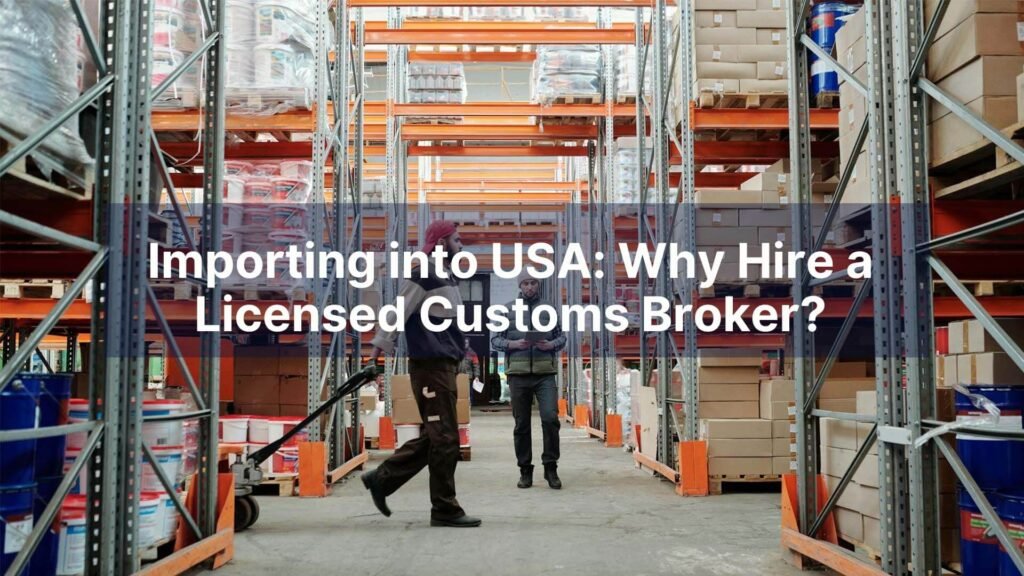
The world of importing can be complex and overwhelming. Many businesses struggle to navigate customs regulations effectively. This is where hiring a licensed customs broker1 can significantly simplify the process for U.S. importers.
A licensed customs broker1 helps importers file accurate CBP entries2 by validating classification (HTS)3, declared value4, country of origin5, and required compliance data6. While importers remain responsible for correctness, brokers reduce risk by using established filing processes, compliance checks, and documentation controls—helping prevent errors that lead to penalties, delays, or audits.
To understand the full value of hiring a customs broker, let’s dive into key reasons that underscore the necessity of their services when importing goods into the United States.
A licensed customs broker1 reduces importer liability7 by ensuring CBP entry filing accuracy (HTS, valuation, origin, and compliance data6)?
The complexities of importing can cause significant liability for businesses. Many importers face potential penalties due to mistakes made during customs entry filing8. A licensed customs broker1 provides much-needed expertise in navigating these complexities.
Importers remain legally responsible for the accuracy of their customs entries. However, a customs broker reduces risk through established controls and experience. They ensure that critical areas are accurate, such as HTS, valuation, and country of origin5. Missteps in these areas can lead to high financial exposure.
| Data Element | Why It Matters | Common Error | Impact | Broker Prevention Action |
|---|---|---|---|---|
| HTS | Determines duty rates9 | Incorrect classification | Higher duties | Regular classification reviews |
| Declared Value | Affects duty assessment | Understated value | Penalties and audits | Accurate documentation checks |
| Country of Origin | Essential for compliance | Misrepresentation | Import bans | Verification of COO documentation |
| Parties | Identifies responsible parties | Incorrect party listed | Liability issues | Clear agreements with suppliers |
| Incoterms | Defines responsibilities for delivery | Misunderstanding responsibilities | Shipping delays | Training on Incoterms usage |
| PGA Flags | Indicates additional compliance needs | Missing flags | Delays in clearance | Compliance screening by broker |
A broker helps prevent the most expensive clearance problems (customs holds, exams, penalties, and post-entry corrections)?
Customs holds and exams can be costly and time-consuming. They can disrupt supply chains and impact delivery schedules. A licensed customs broker1 plays a crucial role in preventing these issues.
Most costly customs delays stem from preventable issues, such as missing data, incorrect classification, and incomplete PGA requirements. A licensed broker proactively reviews documents and files timely, accurate entries to prevent these problems. This not only protects inventory availability but also helps avoid costly rework.
| Delay Reason | What It Means | Fast Fix | Prevention SOP | Owner |
|---|---|---|---|---|
| Missing Invoice Details | Delays in processing | Provide complete invoices | Ensure documentation is complete | Importer |
| Mismatched Consignee/IOR | Causes holds | Verify documents | Pre-arrival checks by broker | Broker |
| Wrong HTS | Incorrect duty assessment | Classify correctly | Regular training on HTS updates | Importer/Broker |
| PGA Missing | Leads to compliance issues | Add required info | Compliance checks at entry | Broker |
| Late ISF (ocean) | Triggers holds | File ISF on time | SOPs for timely ISF filing | Importer |
| Bond Issue | Prevents clearance | Confirm bond status | Check bond before shipment | Broker |
A broker improves landed cost control10 by managing classification strategy11, duty/tariff exposure, and customs bond requirements12?
Understanding landed costs is critical for effective budgeting and cost management. A customs broker can assist in this area by managing key components of landed cost.
Hiring a licensed broker enhances landed cost predictability by improving classification governance and identifying potential tariff exposure. Importers often overlook various costs until it’s too late. Brokers provide structures and controls to minimize unexpected expenses.
| What It Is | When It Applies | Typical Driver | How to Reduce Risk |
|---|---|---|---|
| Base Duty | Standard duty assessment | Product value | Accurate HTS classification |
| Additional Tariffs | Section 301 tariffs | Trade disputes | Consult broker for options |
| MPF | Merchandise Processing Fee | Entry filing | Include in budgeting |
| HMF | Harbor Maintenance Fee | Ocean transport | Factor into total costs |
| Customs Bond | Required for all imports | Clearance necessity | Determine bond type strategically |
| Broker Filing Fee | Cost of broker services | Professional management | Compare broker fees ahead of time |
A broker creates repeatable importing SOPs13 for scaling shipments14 (document control, ISF workflow, PGA compliance, and audit-ready recordkeeping15)?
As businesses grow, consistent importing practices become vital. A customs broker can help develop standard operating procedures (SOPs) necessary for efficient scaling.
With increased volume, the risk of errors rises due to inconsistent data and poor document control. A broker helps standardize processes for invoices, packing lists, ISF data, and compliance screenings. This creates a manageable, audit-ready operation and supports predictable performance.
| Process Step | Importer Role | Broker Role | Documents/Data | KPI |
|---|---|---|---|---|
| Supplier Onboarding | Verify supplier reliability | Assist in compliance checks | Supplier documentation | Onboarding time |
| Document Control | Ensure accuracy | Validate documents | Invoices, packing lists | Error rate |
| HTS Governance | Maintain classification standards | Provide classification support | HTS codes | Classification accuracy |
| ISF Process | Prepare ISF data | File ISF | ISF documentation | ISF filing time |
| Entry Filing | Provide necessary documentation | File customs entry | Entry data | Filing compliance |
How to decide whether hiring a broker is worth it (risk level16, shipment frequency17, product regulations, and self-filing limitations18)?
Determining if hiring a customs broker is worth it requires evaluating several factors like risk, frequency of shipments, and product regulations.
Whether a broker is “worth it” often depends on compliance complexity, shipment frequency17, and duty exposure. Self-filing might be feasible for straightforward shipments, but most importers find value in the accuracy and risk controls that a broker provides.
| Scenario | Self-filing Feasible? | Broker Recommended? | Why | Risk Level |
|---|---|---|---|---|
| First-time Importer | Yes | No | Limited experience | High |
| Regulated Goods (FDA/CPSC) | No | Yes | Complexity and compliance need | Very High |
| High Duty/Tariff Exposure | No | Yes | Financial implications | High |
| Frequent Shipments | Yes | Yes | Need for consistency | Medium |
| Multiple Suppliers/Unclean Documents | No | Yes | Increased risk of errors | High |
| Tight Delivery Deadlines | No | Yes | Urgency requires experience | Very High |

Conclusion
Hiring a licensed customs broker1 can simplify the importing process, reduce liability, and enhance cost control. Their expertise is invaluable for navigating U.S. customs regulations effectively.
Understanding the role of a licensed customs broker can help you decide if their services are essential for your importing needs. ↩
Learn about CBP entries to ensure compliance and avoid penalties when importing goods into the U.S. ↩
Discover how proper classification (HTS) affects duty rates and compliance in the importing process. ↩
Understanding declared value can help you avoid penalties and ensure accurate duty assessments. ↩
Learn why the country of origin is crucial for compliance and how it impacts import bans and duties. ↩
Ensure you have all necessary compliance data to prevent delays and penalties in the importing process. ↩
Explore ways to minimize liability and avoid costly mistakes when filing customs entries. ↩
Understand the customs entry filing process to ensure accuracy and compliance with U.S. regulations. ↩
Learn how duty rates are calculated and how they affect the cost of importing goods. ↩
Discover how a customs broker can assist in managing landed costs for better budgeting and cost management. ↩
Learn how a classification strategy can minimize tariff exposure and improve cost predictability. ↩
Understand the necessity of customs bonds and how they facilitate the clearance of imported goods. ↩
Explore how standard operating procedures (SOPs) can streamline importing processes and reduce errors. ↩
Learn strategies for scaling shipments while maintaining compliance and efficiency in importing. ↩
Ensure your importing processes are compliant and ready for audits with proper recordkeeping practices. ↩
Assess how different risk levels influence the decision to hire a customs broker for importing. ↩
Explore how frequent shipments can affect your importing strategy and the need for a customs broker. ↩
Understand the challenges of self-filing and when it might be beneficial to hire a customs broker. ↩