If you’re new to importing from China, you’ve probably heard people say:
“Just find a good freight forwarder.”
“Let your forwarder handle it.”
“Ask your forwarder about DDP.”
But if you’re honest, you might still be wondering:
👉 What exactly does a freight forwarder do?
👉 How do they help importers in the U.S.?
👉 And how does freight forwarding actually work from China to the USA?
This guide breaks it all down in simple, practical language—no jargon, no fluff.
By the end, you’ll know how freight forwarding works, what services you actually need, and how a forwarder helps you save time, reduce cost, and avoid customs headaches.
Let’s jump in.
What Is Freight Forwarding? (Simple Definition)
Freight forwarding is the planning, organizing, and managing of your international shipment from origin (China) to destination (USA).
Think of a freight forwarder as your shipping manager, compliance advisor, and problem-solver all in one. They coordinate the entire journey of your cargo, including:
- Picking up cargo from your factory
- Consolidating multiple suppliers
- Export customs clearance in China
- Booking space on a vessel
- Managing ocean freight
- Handling import customs in the U.S.
- Paying duties/taxes (if DDP)
- Scheduling trucking to your warehouse
- Delivering to your final destination
In short:
👉 They make international shipping simple, predictable, and cost-effective for importers.
Why Freight Forwarding Matters for U.S. Importers Sourcing From China
Importing is not only about cheap product cost. It’s also about:
- Predictable transit times
- Smooth customs clearance
- Avoiding delays at U.S. ports
- Lower duty rates
- Consolidating suppliers
- Reliable trucking after arrival
- Avoiding detention/demurrage fees
If you choose the wrong freight forwarder, you might face:
- Port holds
- Incorrect HS codes
- Overweight container fines
- Customs exams
- Demurrage fees of $200–$350/day
- Warehousing delays
- Missing Amazon FBA appointments
A professional freight forwarder prevents all these issues.
What Does a Freight Forwarder Actually Do? (Step-by-Step Breakdown)
Let’s walk through the full workflow.
1. Planning Your Shipment (Before Cargo Leaves China)
Before anything moves, your forwarder will:
✔ Confirm order details
Product type, HS code, Incoterms (FOB, EXW, DDP, etc.).
✔ Calculate shipment weight and volume
To determine whether FCL or LCL is better.
✔ Check compliance
Making sure your products follow U.S. regulations:
- CBP import rules: https://www.cbp.gov/trade
- FDA for food-contact items, cosmetics, medical
- CPSC for children’s products
- EPA for chemicals or devices
✔ Book vessel space
Forwarders negotiate with major carriers like COSCO, EMC, MSC, CMA CGM, ONE, etc.
✔ Prepare shipping documents
- Commercial Invoice
- Packing List
- Bill of Lading
- Certificate of Origin
- HS code classification
- AMS/ISF filing
ISF must be filed 24 hours before vessel departure—and CBP fines can reach $5,000 per violation.
2. Coordinating With Your Factory in China
If your forwarder is based in China, they will:
- Pick up goods from multiple factories
- Consolidate everything into one container
- Inspect packaging
- Count cartons
- Weigh pallets
- Label cartons correctly
- Avoid overweight mistakes
- Prevent mis-declaration problems
Good forwarders also advise your suppliers on:
- How to load the container
- How to balance pallet weight
- How to avoid customs red flags
- How to prepare export documents
3. Export Customs Clearance in China
Before your cargo leaves China, it must pass through China Customs.
Your forwarder handles:
- Export declaration
- Commodity inspection (if needed)
- Customs documentation
- Terminal handling charges
- ISF and AMS filing for the U.S.
If your forwarder has partnerships with carriers, they get better loading priority and better rates.
4. Ocean Freight (China → USA)
Next, your cargo is loaded onto an ocean vessel and begins its journey to America.
Typical transit times:
| Route | FCL Transit Time |
|---|---|
| China → West Coast | 12–16 days |
| China → East Coast | 22–30 days |
| China → Gulf / Middle America | 25–35 days |
During this stage, your forwarder:
- Tracks container status
- Monitors vessel ETA
- Handles documentation
- Manages unforeseen issues (port congestion, rollover, rerouting, etc.)
Authoritative maritime resource:
U.S. MARAD (Maritime Administration):
https://www.maritime.dot.gov/
5. U.S. Customs Clearance (The Most Important Step for Importers)
When the vessel arrives in the U.S., your cargo enters the CBP clearance process.
This is where many importers get stuck.
Your freight forwarder (or their U.S. customs broker partner) must:
✔ File the customs entry
Includes HS codes, value, duties, taxes, and importer info.
✔ Make sure your goods meet U.S. regulations
- FDA prior notice
- CPSC certificates
- EPA approvals
- FSMA food safety rules
- FCC for electronics
- USDA for plant/wood products
✔ Pay duties (or include in DDP shipping)
Some forwarders can legally reduce your duty rate by classifying correctly and using tariff engineering.
✔ Resolve customs holds
Examples:
- VACIS exam
- CET exam
- USDA inspection
- Intensive exam
Missing even one document can delay your cargo for days or weeks.
That’s why using a forwarder with U.S. customs expertise is crucial.
6. Port Handling & Container Release
Once cleared:
- The terminal releases the container
- A drayage trucker is assigned
- Your forwarder manages port appointments
- Avoids demurrage/detention fees
- Schedules empty return for chassis
Forwarders work with ports via:
- FMC (Federal Maritime Commission): https://www.fmc.gov/
- Individual port authorities (LA/LB, NY/NJ, Savannah, Houston, etc.)
Each port has different rules, fees, and appointment systems.
7. U.S. Trucking & Final Delivery
Finally, your cargo must reach its final destination:
- Your warehouse
- Amazon FBA
- 3PL facility
- Distribution center
Your forwarder arranges:
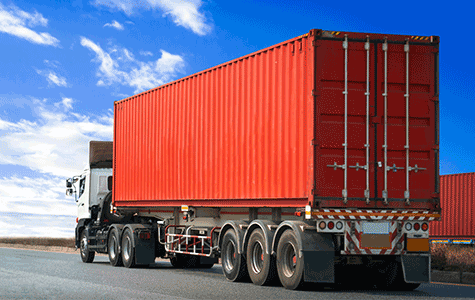
- FCL drayage
- LTL trucking
- FTL trucking
- Cross-docking
- Repacking
- Appointment scheduling
They’ll also ensure:
- HOS regulations are followed (FMCSA)
- Truck weight limits are not exceeded
- TWIC requirements are met
FMCSA safety rules:
https://www.fmcsa.dot.gov/
8. If You Use DDP Shipping (The Simplest Option for New Importers)
Under DDP (Delivered Duty Paid):
Your forwarder handles everything:
- China-side paperwork
- Consolidation
- Container loading
- Ocean freight
- U.S. customs clearance
- Duty & tax payment
- Final U.S. delivery
This is the best option for new importers because:
- No need to hire your own customs broker
- No dealing with CBP
- No bond needed
- No ISF filing
- No trucking coordination
- No worrying about duty/tax surprises
We specialize in DDP shipping from China → USA, which is why many new importers choose us for their first shipments.
What a Freight Forwarder Doesn’t Do
This part surprises many importers.
A freight forwarder does not:
- Buy products for you
- Pay your supplier (unless agreed)
- Guarantee factory quality
- Act as a customs attorney
- Take legal ownership of your goods
Their job is to manage transportation and compliance, not sourcing.
How Freight Forwarders Help You Save Money
A professional forwarder helps you reduce cost by:
✔ Consolidating multiple factories into one shipment
Lower freight cost, lower duty, easier logistics.
✔ Avoiding customs fines
Correct HS codes = lower duty + fewer holds.
✔ Preventing demurrage/detention fees
These can reach $300–$500/day at busy ports.
✔ Advising factories on proper packaging
Avoid overweight containers.
✔ Helping calculate the cheapest route
China → West, East, or Gulf Coast depends on:
- Transit time
- Destination
- Container availability
- Current rates
- Port congestion
✔ Using a U.S.-registered customs broker
U.S. brokers can legally optimize duty and avoid unnecessary charges.
Why Working With a China–U.S. Specialist Matters
Not all forwarders are equal.
You want someone who:
- Has teams in both China & the U.S.
- Understands CBP compliance
- Knows how to reduce duty legally
- Can pre-clear cargo before arrival
- Handles trucking + customs + delivery internally
- Offers stable pricing
- Knows the problems new importers face
This is exactly how we operate:
- China consolidation + export clearance
- 13–15 day China→USA lanes
- U.S. registered customs brokerage
- 50% duty reduction through correct classification
- Door-to-door DDP service
We make the entire freight forwarding process fast, predictable, and stress-free.
Conclusion
Freight forwarding is the backbone of importing.
If you’re sourcing from China and selling in the U.S., a good forwarder becomes your most important partner.
They help you:
- Book vessels
- Clear customs
- Reduce duties
- Handle compliance
- Avoid delays
- Deliver to FBA or warehouse
- Save money
- Reduce stress
Whether you’re importing 1 CBM or 10 containers a month, understanding how freight forwarding works helps you avoid costly mistakes—and gives you a competitive edge.