If you want to understand the U.S. economy, there’s one thing you can’t ignore: imports. From everyday consumer products to the critical components that keep American factories running, imports fuel growth, innovation, and competitiveness. And for global traders, this creates massive opportunities.
Imports are essential to the U.S. economy because they keep prices low, supply American manufacturers with vital components, support millions of jobs, and maintain strong consumer demand. For global traders, the U.S. remains the world’s most profitable and stable import market.
Now let’s dive deeper into why imports matter — and how businesses around the world can tap into this multi-trillion-dollar opportunity.
Why Imports Matter to the U.S. Economy
The U.S. is the world’s largest importer — purchasing more than $3.1 trillion worth of goods annually.
(Source: U.S. Census Bureau).
Here’s why that matters:
- Imports keep U.S. prices stable. Without global sourcing, everyday goods would cost much more.
- Imports support American production. U.S. factories depend on imported components, machinery, and raw materials.
- Imports fuel jobs. Logistics, warehousing, customs brokerage, transportation, retail — all heavily depend on international shipments.
- Imports power innovation. From electronics to pharmaceuticals, U.S. businesses rely on global suppliers to stay competitive.
In short: imports are a pillar of the U.S. economy.
How Imports Support U.S. Consumers and Businesses
Walk into any U.S. home, store, or factory — you’ll see the impact of global trade everywhere.
Affordable Consumer Products
Most electronics, apparel, furniture, toys, and household items are imported.
These goods keep American living costs manageable and help businesses remain profitable.
Critical Components for U.S. Manufacturers
U.S. factories depend on imported:
- microchips
- auto parts
- plastics
- industrial machinery
- batteries
- metals
This global supply chain allows U.S. manufacturers to build finished products efficiently.
Anchoring U.S. Competitiveness
According to the U.S. International Trade Commission, access to imported materials makes American companies more competitive in global markets.
Without imports, the U.S. economy would slow dramatically — from higher prices to reduced production capacity.
What the U.S. Imports the Most (Trend Overview)
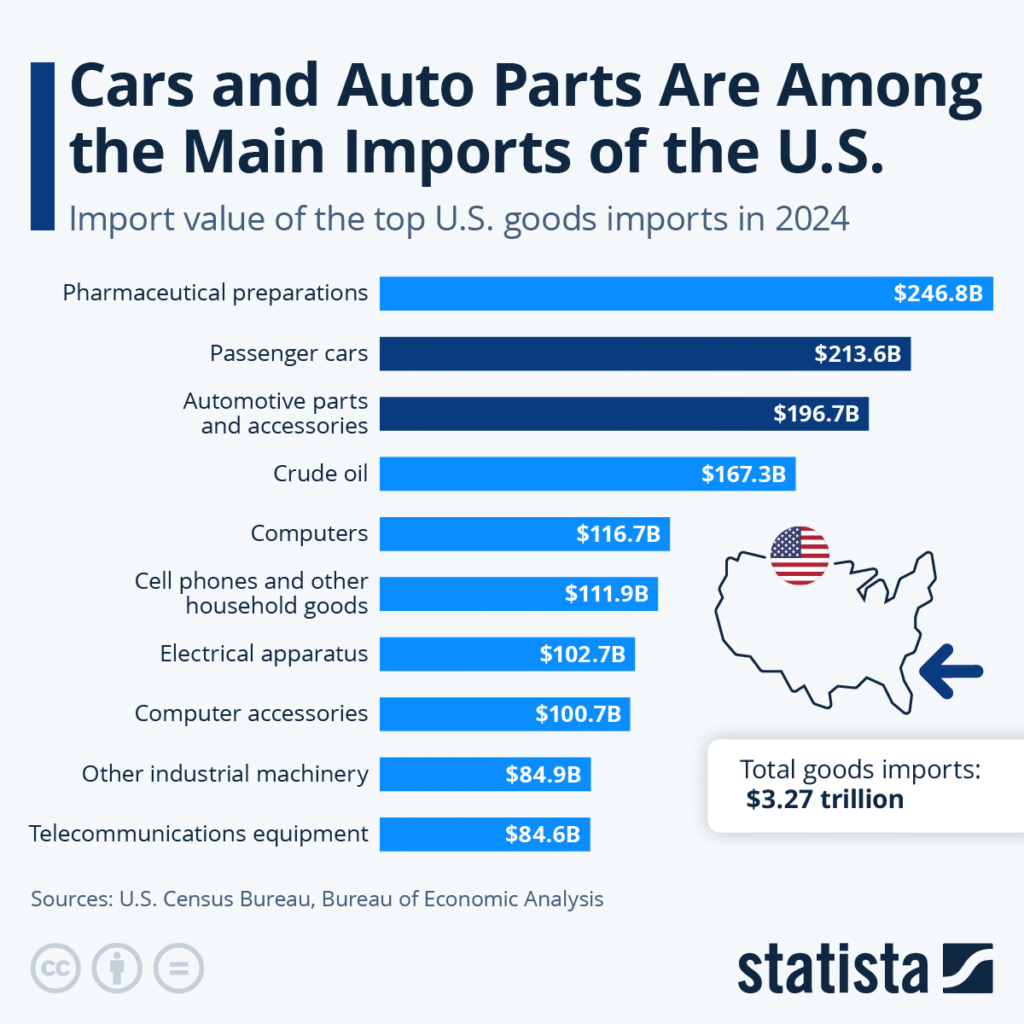
Based on data from the U.S. Census Bureau and WTO, America imports the following categories the most:
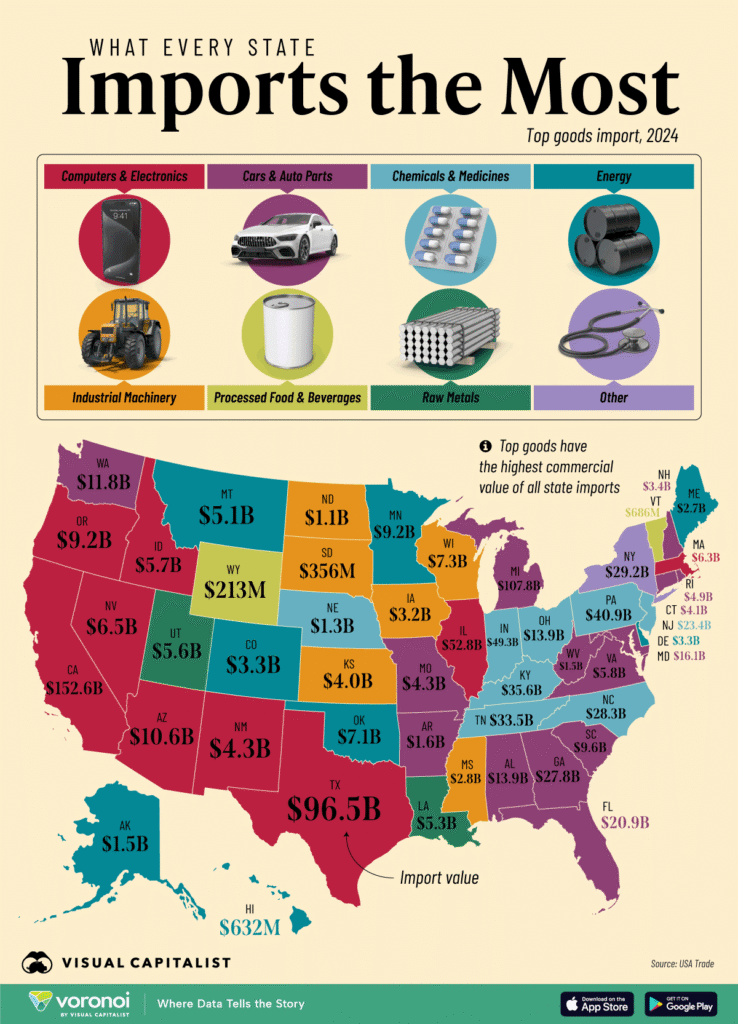
Top U.S. Import Categories
- Electronics (phones, laptops, components)
- Machinery
- Furniture
- Plastics & manufactured goods
- Vehicles and auto parts
- Pharmaceuticals
- Consumer goods (retail products)
Where They Come From
- China (still #1 overall)
- Mexico
- Canada
- Vietnam
- South Korea
- Germany
Even with “nearshoring” trends, Asia remains the powerhouse of U.S. imports, especially for electronics, machinery, and consumer products.
How Global Trade Creates Opportunity for International Businesses
If you’re a global supplier, manufacturer, logistics provider, or trading company, the U.S. market offers unmatched potential.
Here’s why:
- High, stable consumer demand
- Strong purchasing power
- Diverse product demand across every category
- Continuous reliance on overseas manufacturing
This makes the U.S. one of the most predictable and profitable markets for international trade.
Opportunities for Global Traders
- Export finished goods to the U.S.
- Supply components for U.S. manufacturers
- Provide consolidation and freight services
- Support e-commerce fulfillment
- Offer specialized DDP or door-to-door logistics solutions
Why Efficient Shipping Matters in the U.S. Import Ecosystem
Imports only work when logistics runs smoothly.
The Pain Points U.S. Importers Face
- Port congestion
- Customs delays
- ISF/AMS filing errors
- High duty costs
- Poor visibility and tracking
- Demurrage/detention fees
That’s why efficient shipping solutions are more important than ever.
What Importers Want Today
- Fast transit times (13-day China–USA lanes are becoming key differentiators)
- Clear customs compliance
- Duty savings
- Transparent, predictable door-to-door service
Authoritative reference:
CBP Importing Guidelines
The Role of Customs Brokerage in Supporting Trade
You can’t talk about imports without talking about customs clearance.
A strong customs broker helps importers:
- File ISF, AMS, and entry documentation
- Avoid penalties
- Classify products correctly (HTS)
- Reduce duty legally
- Comply with FDA, EPA, USDA, CPSC regulations
- Speed up container release at the port
- Manage OGA requirements
Authoritative references:
Opportunities for U.S. Importers in Today’s Global Trade Landscape
For U.S. importers, the global market is full of untapped potential.
1. Cheaper Sourcing From Asia
China, Vietnam, India, and the Philippines offer competitive pricing and high-quality output.
2. Duty Engineering & Cost Reduction
Correct classification can cut import costs by 20–50% legally.
Many importers are overpaying and don’t even know it.
3. Faster Sea Freight Options
Optimized routes can bring China → USA transit times down to 13–16 days.
4. Consolidation for Multi-Factory Shipments
This reduces freight cost and simplifies customs entry.
5. DDP & Door-to-Door Solutions
Highly attractive for e-commerce brands and SMEs that want predictable landed cost.
How Logistics Partners Help U.S. Importers Win
A reliable logistics partner becomes a strategic advantage, not a vendor.
They help U.S. importers:
- Pre-clear customs to avoid delays
- Reduce duty and tax costs
- Consolidate multiple suppliers into a single shipment
- Track shipments in real time
- Prevent detention/demurrage
- Deliver straight to warehouses, 3PLs, or FBA centers
- Cut total landed cost significantly
For example, a U.S. registered customs broker can cut importing cost by up to 50% through accurate classification, pre-clearance, and optimized shipping models.
Final Thoughts
Imports are the backbone of the U.S. economy — and they’re only becoming more important.
For global traders, the U.S. remains a massive opportunity.
For U.S. importers, the right supply chain and customs strategy can become a true competitive edge.
If you optimize your shipping, compliance, and landing cost, you’re not just moving freight — you’re unlocking the full potential of international trade.