Are your shipping timelines from Shenzhen to Houston1 unpredictable? These delays can disrupt your entire supply chain, costing you time and money. Let's clarify the real door-to-door schedule2.
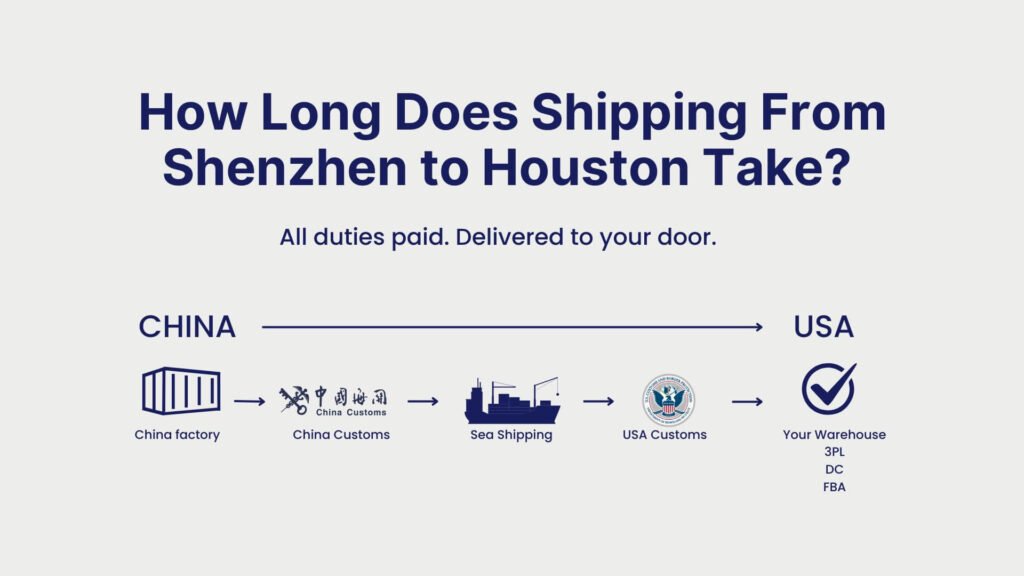
Shipping a full container (FCL) from a Shenzhen factory to a Houston warehouse typically takes 40 to 60 days door-to-door. This total time includes origin handling3, ocean transit4, U.S. customs clearance5, and final inland delivery6, not just the time spent at sea.
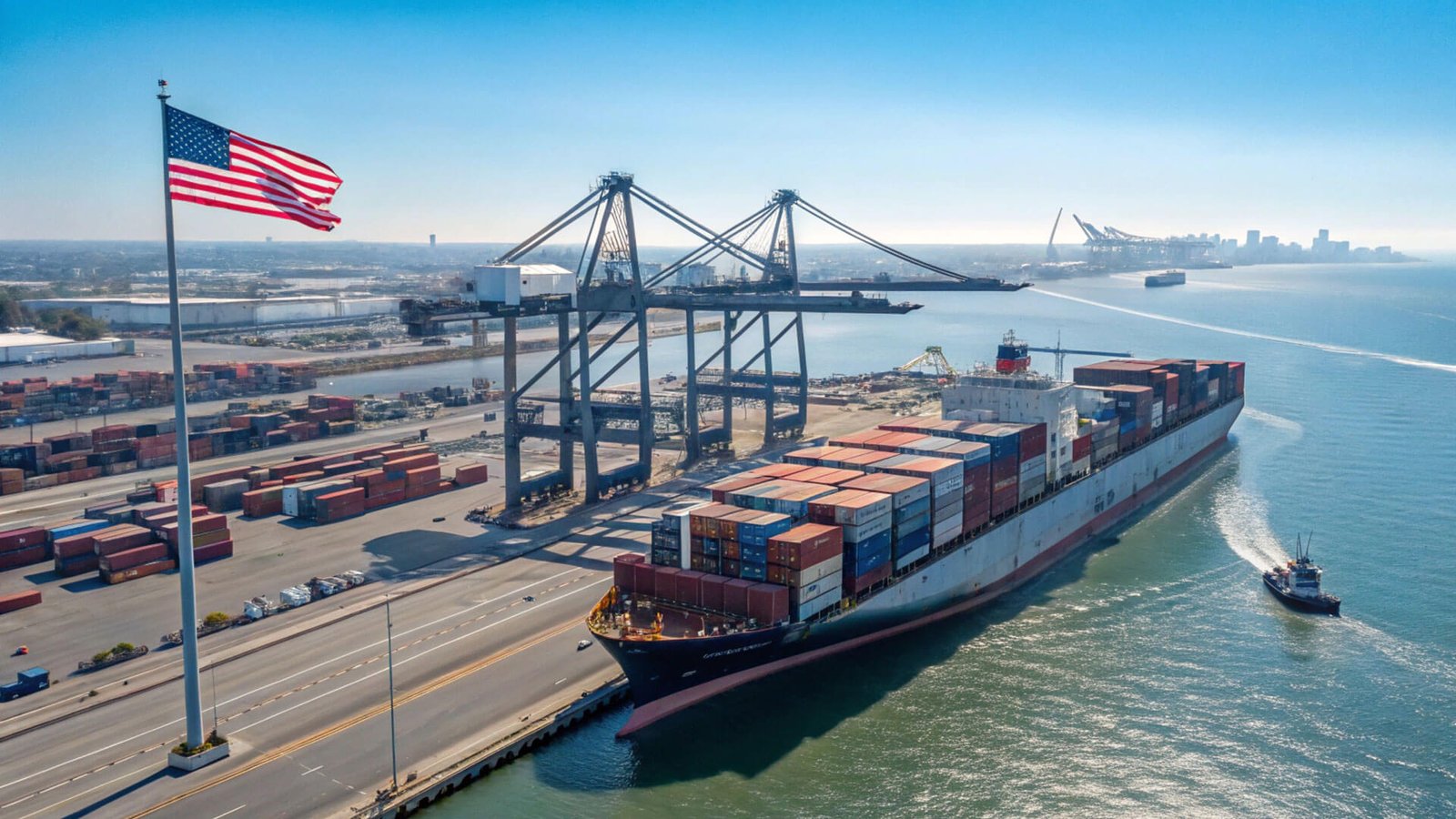
You see, many importers focus only on the days a ship is on the water. But that's just one piece of a much larger puzzle. To get accurate delivery estimates, you need to understand every step of the journey, from the factory floor in China to your warehouse door in Texas. Let's break down each component so you can plan your inventory with confidence.
How Long Does Ocean Freight From Shenzhen to Houston Take?
Are you confused by the port-to-port transit times carriers quote? These numbers often don't match reality, making it hard to plan. Let's look at the actual ocean transit4 schedules.
Port-to-port ocean transit4 from Shenzhen to Houston for a Full Container Load (FCL)7 is typically 28 to 35 days. Less than Container Load (LCL)8 is slower, often taking 35 to 45 days due to the extra steps of consolidation and deconsolidation.
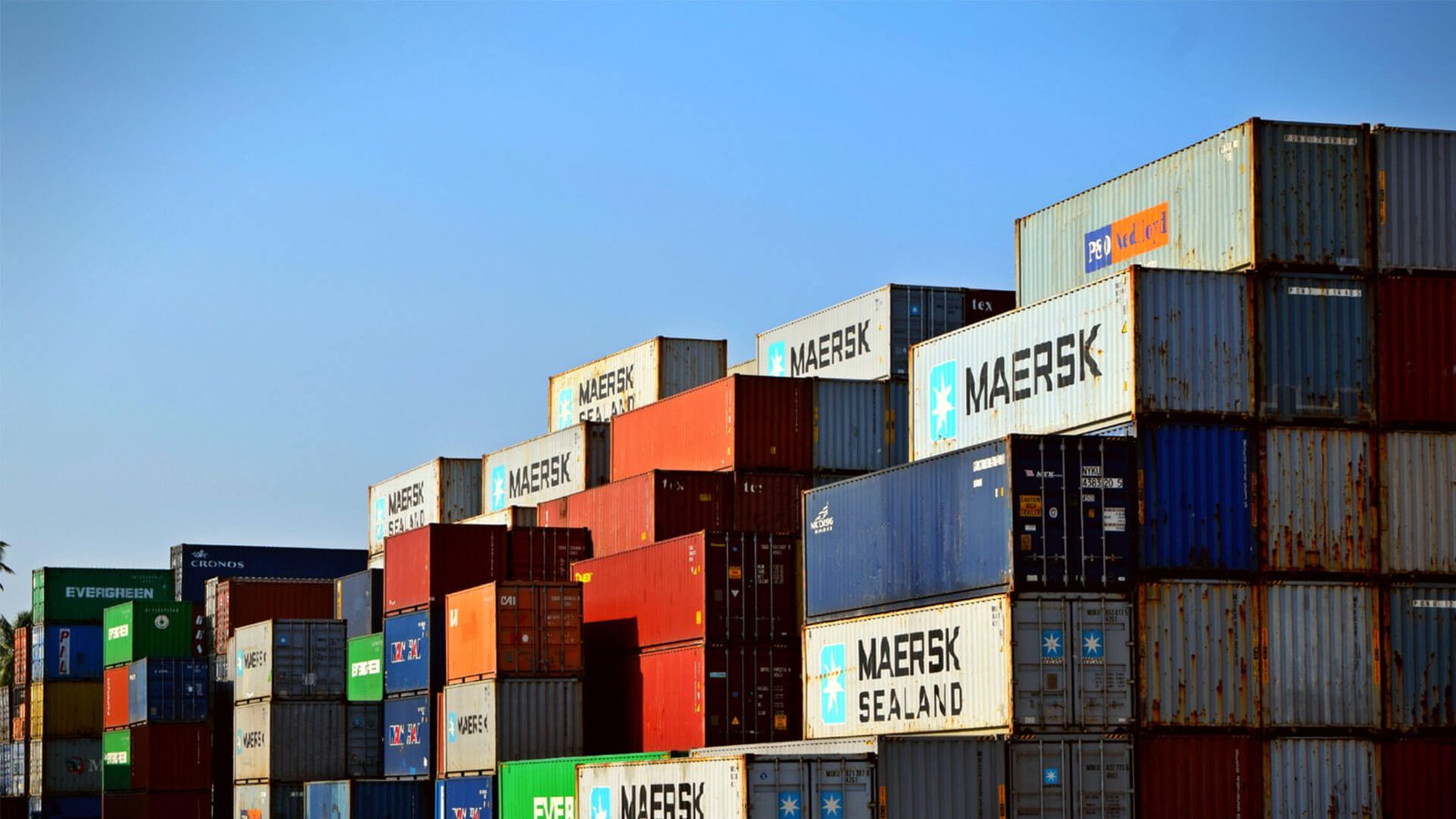
When we talk about ocean freight time, it's crucial to distinguish between FCL and LCL shipments. For my clients like Mark, who ship full containers, the process is more direct. The container is sealed at the factory and remains sealed until it reaches its destination. This FCL shipment travels on a direct service from a Shenzhen port (like Yantian or Shekou) to the Port of Houston. LCL is a different story. Your goods are grouped with other shippers' cargo at a warehouse in China. This consolidation process takes time. The container might also make more stops. Once it arrives in Houston, it must be taken to another warehouse to be deconsolidated, or separated. Each of these extra steps adds time and increases the chance of delays, making LCL less predictable than FCL.
| Shipping Mode | Port-to-Port Transit Time | Key Factors |
|---|---|---|
| FCL (Full Container Load) | 28 - 35 Days | Direct routing, no consolidation delays. |
| LCL (Less than Container Load) | 35 - 45 Days | Slower due to cargo consolidation and deconsolidation. |
What Shipping Routes Do Containers Take From Shenzhen to Houston?
Does choosing the wrong shipping route add weeks and risk to your shipment? It certainly can. Let's explore the main options to find the most reliable path for your cargo.
Containers from Shenzhen mainly reach Houston via a direct all-water service9 through the Panama Canal. Alternatives include transshipping at another port or using an intermodal route10: shipping to a U.S. West Coast port like Los Angeles and then moving the container by rail to Houston.
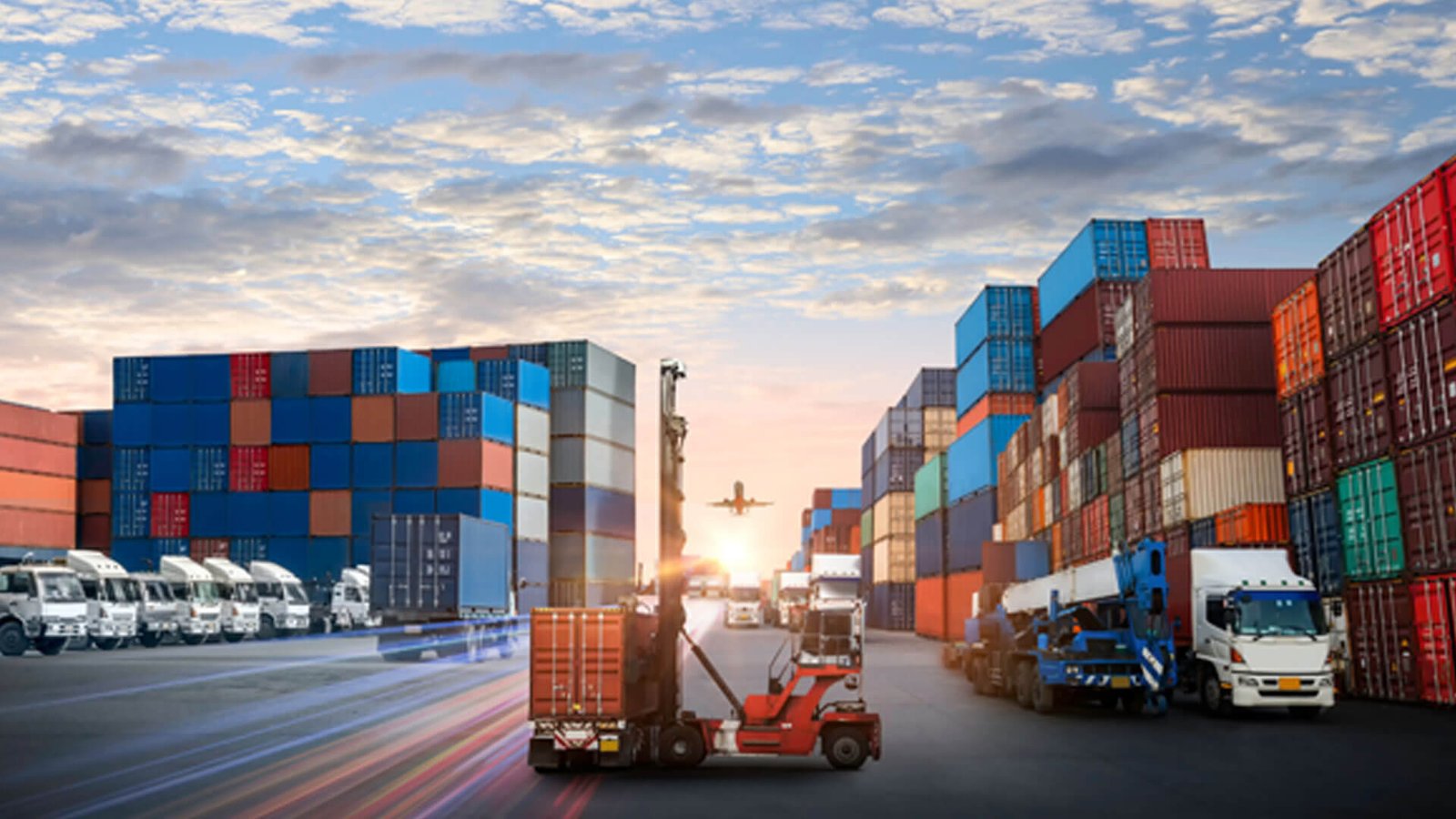
Understanding the route is key to managing your timeline. The most common and often most predictable option is the direct all-water service9. The vessel sails from Shenzhen, across the Pacific Ocean, and through the Panama Canal directly to the Port of Houston. While the ocean journey is longer, it involves the least amount of handling, which means less risk of damage or delays. Another option is a transshipment11 service, where your container is moved from one vessel to another at a major hub port, perhaps in the Caribbean. This can sometimes be a cheaper option, but it adds a significant risk of delay during the transfer. The final major route is intermodal. The container ships to a West Coast port like Los Angeles, gets unloaded, and is put on a train to Houston. This might have a faster ocean leg, but it exposes your shipment to potential rail congestion and transfer delays on the U.S. side.
| Route Option | Typical Time Impact | Risk Profile |
|---|---|---|
| Direct All-Water | Most predictable schedule | Low (less handling) |
| Transshipment | Adds 5-10+ days | Medium (risk of missed connection) |
| Intermodal (West Coast + Rail) | Variable (risk of rail delays) | High (multiple handoffs, rail congestion) |
What's the Total Door-to-Door Time from a Shenzhen Factory to a Houston Warehouse?
Are you only focusing on the time your container is at sea? This common mistake ignores major parts of the timeline that cause delays. Let's map out every single step.
The total door-to-door timeline from a Shenzhen factory to a Houston warehouse is typically 40 to 60 days. This comprehensive schedule includes factory pickup, origin port handling, ocean transit4, U.S. customs clearance5, port drayage, and final warehouse delivery.

The "transit time" a carrier gives you is not your "delivery time." The total journey has many stages, and each one takes time. I always walk my clients through this full breakdown so there are no surprises. First is the origin handling3 in China, which takes about 5-10 days. This includes booking the container, trucking it to the factory for loading, returning it to the port, and clearing export customs. Next is the ocean transit4 itself, which we've seen is about 28-35 days. Once the vessel arrives in Houston, the destination handling begins. This final leg can take anywhere from 7 to 15 days, or even longer. It includes the vessel berthing and unloading, U.S. Customs clearance, securing a truck for drayage out of the port, and the final drive to your warehouse. As you can see, almost half of the total time can be spent on land, not at sea.
- Origin (China): 5-10 Days
- Ocean Transit: 28-35 Days
- Destination (USA): 7-15+ Days
What Causes Delays on the Shenzhen–Houston Shipping Lane?
Do unexpected shipping delays disrupt your inventory and frustrate your customers? Knowing the common delay points is the first step to planning around them and avoiding costly surprises.
Common delays on the Shenzhen-Houston route include port congestion12 at both ends, Panama Canal transit issues13, U.S. Customs exams14, rail bottlenecks15 for intermodal route10s, weather events like hurricanes in the Gulf, and simple documentation errors.

I've seen it all when it comes to delays. A client recently had a container stuck for an extra two weeks because of a customs hold. The biggest factor is often something you can control: paperwork. A simple error on the Bill of Lading or an incorrectly filed Importer Security Filing (ISF) can stop your container cold. Beyond that, we face external factors. Port congestion in Shenzhen or Houston can mean your vessel has to wait at anchor for days before it can even dock. U.S. Customs and Border Protection (CBP) can flag any shipment for an exam, which can be a quick X-ray or a full "intensive exam" where they unload the entire container. This alone can add 7-14 days. And for Houston, we always have to watch the weather. During hurricane season, the port can shut down completely, creating a huge backlog that takes weeks to clear.
How Can Importers Reduce Transit Time and Delays on Shenzhen to Houston Shipments?
Do you feel powerless against shipping delays? It can feel like your supply chain is at the mercy of others, but you can take control with smart planning and the right services.
Importers reduce delays by choosing a reliable DDP (Delivered Duty Paid) service. This consolidates all steps under one provider, allowing for customs pre-clearance16, optimized routing, and booking FCL shipments which are faster and more predictable than LCL.
The secret to a faster, more reliable delivery isn't finding a faster ship. It's about eliminating the delays between each step of the journey. This is where we excel. By managing the shipment under DDP terms and acting as your U.S. customs broker, we control the process from end to end. The most powerful tool we have is customs pre-clearance16. We can file all the necessary import documents with U.S. Customs while your container is still on the water. In many cases, we can get customs release before the ship even arrives in Houston. This means that as soon as the container is offloaded, it's ready for immediate pickup. There's no waiting for paperwork to be processed. This single step can shave 3-5 days off the total time. It prevents delays at the terminal and avoids costly demurrage fees17. For my client Mark, this completely changed his business by giving him the predictable inventory flow he needed.
Conclusion
The fastest Shenzhen-to-Houston route isn't the shortest sea voyage. It's the one with coordinated DDP shipping, expert customs clearance, and seamless inland delivery for maximum predictability and control.
Understanding the shipping timelines helps in planning and managing supply chain effectively, reducing unexpected delays. ↩
Knowing the complete door-to-door schedule ensures you can plan inventory and logistics without surprises. ↩
Origin handling is crucial for timely shipping; understanding it helps in anticipating potential delays. ↩
Ocean transit time is a major part of shipping; knowing it helps in accurate delivery planning. ↩
Understanding customs clearance can prevent delays and ensure smooth entry of goods into the U.S. ↩
Knowing the final delivery process helps in planning the last leg of the supply chain efficiently. ↩
FCL shipping is often faster and more reliable; understanding its benefits can optimize shipping choices. ↩
LCL shipping can be slower and less predictable; knowing its challenges helps in making informed decisions. ↩
Direct all-water service is often the most predictable; understanding it can help in choosing the best route. ↩
Intermodal routes can be complex; understanding them helps in managing potential delays and risks. ↩
Transshipment can add delays; knowing its risks helps in planning more reliable shipping routes. ↩
Port congestion can cause significant delays; understanding its impact helps in planning around it. ↩
Panama Canal issues can delay shipments; knowing them helps in anticipating and mitigating risks. ↩
Customs exams can delay shipments; understanding them helps in preparing and avoiding unnecessary delays. ↩
Rail bottlenecks can delay shipments; knowing their impact helps in planning more reliable logistics. ↩
Customs pre-clearance can significantly reduce delays; knowing its benefits helps in faster delivery. ↩
Demurrage fees can increase costs; understanding how to avoid them helps in reducing shipping expenses. ↩