Your competitors might be watching your every move. They know your suppliers and customers. This happens through public shipping records1, but you can protect your valuable trade data.
The best way to keep your shipping manifest confidential is to file a formal Manifest Confidentiality Request2 with U.S. Customs and Border Protection (CBP). This process legally shields your name, address, and your shipper's identity from being sold to third-party data providers.
For over 15 years, I've helped U.S. importers protect their supply chains. The biggest leak I see comes from something most businesses overlook: the cargo manifest3. This document, required by law for all ocean freight entering the U.S., can become a public roadmap for your competitors. They can see who you buy from, what you ship, and how often. This article is for B2B importers using FCL (Full Container Load)4 or LCL (Less than Container Load)5 shipping. I will show you how to manage this risk and keep your sensitive data private. Let's get started.
Are Shipping Manifests Public — and What Import Data Is Actually Exposed?
Are you worried that your shipping details are public information? Data aggregators buy and sell this information, revealing your suppliers and shipment volumes to any competitor willing to pay for it.
Yes, certain data from U.S. import shipping manifests is considered public information by default. Unless you request confidentiality, data aggregators6 can purchase and publish details like shipper and consignee names, addresses, and cargo descriptions, exposing your supply chain to competitors.

When your container is loaded onto a vessel bound for the U.S., your carrier or freight forwarder files key information into the Automated Manifest System (AMS)7. U.S. CBP uses this for security screening8, but they also have regulations that allow for the sale of this data to third-party companies. These companies then package it into searchable databases for market research. For your competitors, it's a goldmine. They can see exactly who your suppliers are in China, what products you're importing, and how frequently you receive shipments. I've seen clients lose their competitive edge because a rival discovered their exclusive manufacturer through these public records. The term "public" doesn't mean it's on a government website for anyone to see; it means it is legally available for commercial purchase9. This puts every B2B importer at risk if they don't take proactive steps.
What Data Is at Risk?
| Data Element | Publicly Available by Default? | Can It Be Kept Confidential? |
|---|---|---|
| Shipper Name & Address | Yes | Yes |
| Consignee Name & Address | Yes | Yes |
| Notify Party10 Name & Address | Yes | Yes |
| Cargo Description | Yes | No (but can be generalized) |
| Quantity (Packages) | Yes | No |
| Weight/Volume | Yes | No |
| Vessel Name & Voyage # | Yes | No |
| Port of Lading/Unlading | Yes | No |
What Is a Shipping Manifest in Customs Clearance — and Who Can Access It?
Confused about who sees your manifest? Multiple parties, from carriers to customs, handle this document. This creates many potential points for data leaks if you aren't careful.
A shipping manifest is a legal document submitted to CBP that lists all cargo on a vessel for a specific voyage. It's used by customs to screen for security threats and assess duties. Legal access is restricted to the carrier, customs broker11s, port authorities, and CBP.
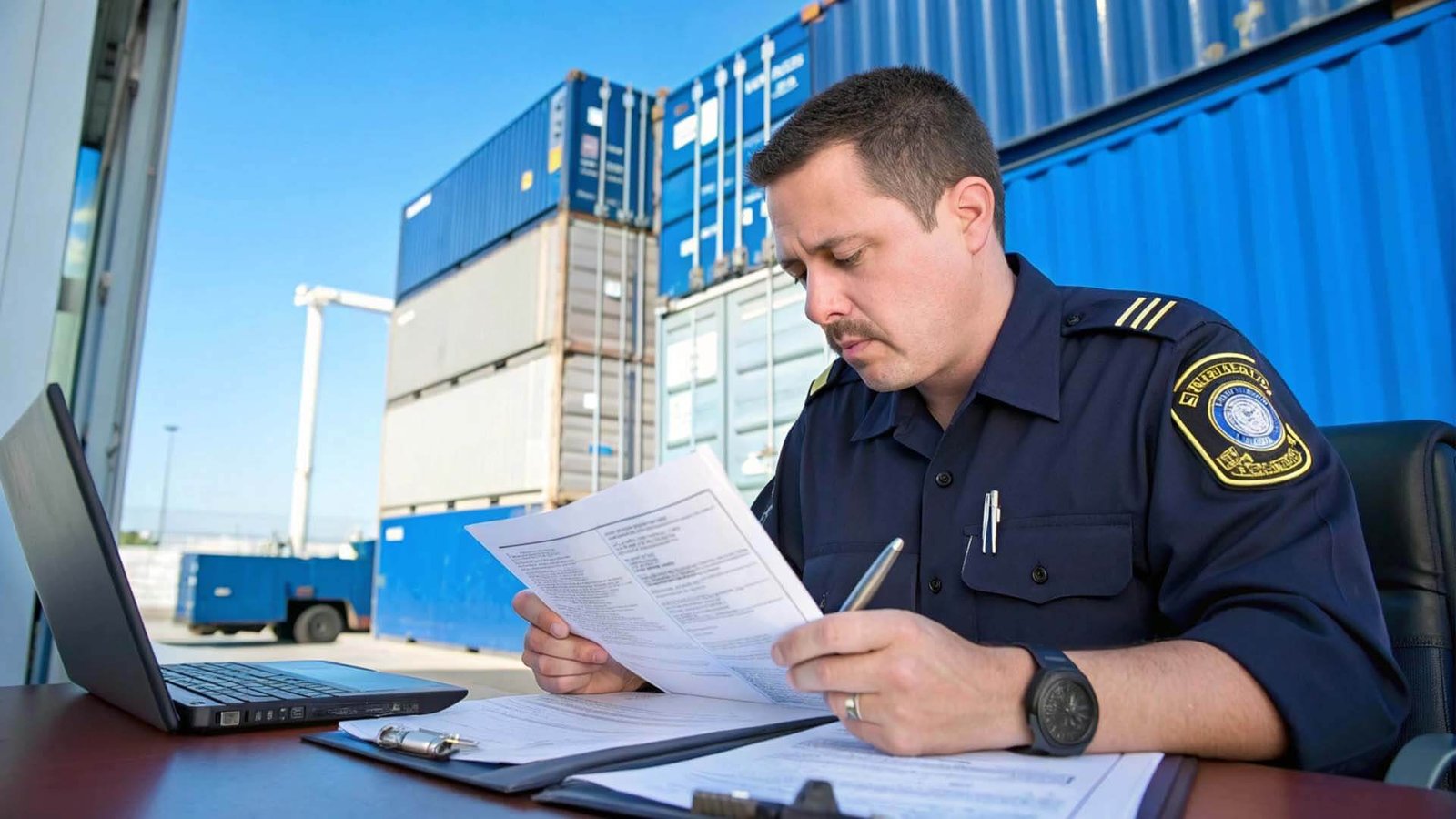
The shipping manifest is the master list for everything on board a ship. The ocean carrier (for FCL) or the NVOCC/consolidator (for LCL) is responsible for creating and filing it. Think of it as the ship's passport. When the vessel is on its way to the U.S., this manifest is transmitted electronically to CBP through the AMS. CBP officers review it to decide which containers need a closer look. Your customs broker11 also accesses this data to prepare your formal customs entry. While direct access is limited to these official parties, the information itself is what becomes public later. For FCL shipments, the manifest is straightforward: one shipper, one consignee. But for LCL shipments, the risk multiplies. The consolidator's manifest lists every single importer's cargo in that container. This means more parties have visibility into the data before it even reaches customs, increasing the chance of exposure.
Is a Bill of Lading Public Information — and How Is It Different From a Manifest?
Do you think your Bill of Lading is the same as a manifest? This common mistake can lead to unexpected data exposure. They are very different documents with different purposes.
No, a Bill of Lading (B/L)12 is not public information. It is a private contract between a shipper and a carrier. The manifest, which is a summary of all B/Ls on a vessel, is the document from which data is made public by U.S. Customs.

Many importers I work with mix up these two critical documents. It's an easy mistake to make, but the difference is vital for confidentiality. The Bill of Lading is your proof of ownership, your contract of carriage, and the receipt for your goods. It’s a legal document exchanged between you and the carrier. The manifest, on the other hand, is a summary document for customs. It consolidates high-level information from all the Bills of Lading for a single voyage into one file for CBP to review. When CBP releases data for public sale, they are pulling from the manifest data filed in AMS, not the individual Bills of Lading. This is a crucial distinction. Your contract with the carrier (the B/L) remains private, but the data you provide for that contract gets summarized on the manifest and can become public.
Key Differences: Manifest vs. Bill of Lading
| Feature | Cargo Manifest | Bill of Lading (B/L)12 |
|---|---|---|
| Purpose | Customs declaration and security screening8 | Contract of carriage, receipt of goods, document of title |
| Issuer | Ocean Carrier or NVOCC | Ocean Carrier or NVOCC |
| Audience | CBP, Port Authorities | Shipper, Consignee, Carrier, Banks |
| Publicity | Data can become public | Private contract |
How Does the 24-Hour Manifest Rule13 Affect Confidentiality for U.S. Imports?
Shipping to the U.S. requires you to submit data early. But filing your manifest 24 hours before loading can expose your data to risk much sooner than you might think.
The 24-Hour Manifest Rule13 requires carriers to submit a detailed cargo manifest3 to U.S. CBP at least 24 hours before cargo is loaded onto a vessel at the foreign port. This early submission creates the data record that can later become public.

After the 9/11 attacks, U.S. Customs implemented this rule to get a better look at what was coming into the country long before it arrived. It means your carrier can't even load your container in Shanghai or Shenzhen until CBP in the U.S. has received and reviewed the manifest data. This includes the shipper's name, the consignee's name, and a precise description of the goods. The rule is great for security, but it's also the starting point of your confidentiality risk. As soon as that data is filed in AMS, a record is created. This is the exact record that data brokers14 will later access if you haven't filed for confidentiality. The rule also applies to FROB (Freight Remaining On Board) cargo—shipments that are on the vessel but are not destined for the U.S. Even that data must be filed, showing how comprehensive CBP's data collection is.
What Information on a Cargo Manifest Can Be Kept Confidential — and What Cannot?
Do you want to hide everything on your shipping manifest? Unfortunately, you can't. Some data is mandatory for security and tax purposes and cannot be hidden from U.S. Customs.
You can request confidentiality for the shipper's and consignee's name and address. However, you cannot hide the cargo description, quantity, weight, vessel name, or ports of loading and unloading from CBP. These details are essential for security screening8 and tariff assessment15.

This is where strategy comes in. Your goal is to be compliant with CBP while protecting your business intelligence. The most powerful tool you have is the formal Manifest Confidentiality Request2, which specifically shields the names and addresses of the primary parties. But what about the rest? You cannot hide the fundamental facts of the shipment. CBP needs to know what the product is to assess risk and apply the correct duties. However, how you word the description matters. For example, instead of writing "Model X-7 High-Performance Lithium Batteries for Brand Z Electric Bicycles," a more compliant yet less revealing description might be "Rechargeable Lithium-Ion Battery Packs." This is accurate for customs but gives away less proprietary information. Working with an experienced customs broker11 is key here. We can help you find the right balance between a description that is specific enough for CBP and general enough to protect you from prying eyes.
What Practical Methods Do B2B Importers Use to Protect Manifest Confidentiality?
Ready to stop broadcasting your trade secrets to the world? Leaving your manifest unprotected is like giving your entire playbook to your competition. Here are the practical steps to lock it down.
The most effective method is to file a biennial Manifest Confidentiality Request2 with CBP. Importers also work with trusted customs broker11s to properly structure consignee and notify party information on documents, further limiting what becomes publicly visible in databases.

Theory is one thing, but action is what protects your business. As a customs broker11, these are the exact steps I take with my clients.
1. File the CBP Manifest Confidentiality Request2
This is the single most important action. It's a formal letter or online submission to CBP requesting that your name as an importer (and variations of it) and your shipper's name be excluded from the public data feeds. This protection is not automatic. You must apply for it, and it must be renewed every two years. It's a simple process, but it's amazing how many importers don't know it exists.
2. Strategic Document Structuring
Even with a confidentiality request, smart document preparation adds another layer of security. For example, you can list your customs broker11 or a trusted third-party logistics provider as the "Notify Party10" on the Bill of Lading. Sometimes, importers with multiple business entities will use a holding company16 as the official Importer of Record to shield their main brand name from documents.
3. Work With a Proactive Customs Broker
Your customs broker11 is your first line of defense. A good broker doesn't just file paperwork. We advise you on these strategies. We ensure the AMS filing is done correctly and can help you manage your confidentiality request. This is especially critical for LCL shipments, where your data is part of a larger consolidated manifest.
What Are the Most Common Manifest Confidentiality Mistakes That Expose Importers?
Do you think you're protected but still feel exposed? Simple mistakes in your documentation or process can undo all your confidentiality efforts. You need to avoid these common pitfalls.
The biggest mistake is failing to file or renew the biennial Manifest Confidentiality Request2 with CBP. Other common errors include using inconsistent company names17 across documents, writing overly specific cargo descriptions, and wrongly assuming your freight forwarder handles confidentiality automatically.

I've seen these mistakes cost businesses dearly. Protecting your data requires attention to detail. Here are the most common errors I help my clients fix.
Forgetting to File or Renew
The CBP confidentiality request is not a "set it and forget it" solution. It expires every two years. I've seen clients who were protected suddenly find their data exposed because they missed the renewal deadline. You must track this date and re-file on time.
Inconsistent Shipper and Consignee Details
If your confidentiality request is for "ABC Imports LLC," but your Bill of Lading lists "ABC Imports," that variation might not be protected. You must provide CBP with a complete list of all variations of your company name and your suppliers' names. Consistency across your commercial invoice, B/L, and packing list is key.
Assuming Your Forwarder or Broker Handles It
Never assume. Confidentiality is the importer's responsibility. While your customs broker11 can file the request on your behalf, you must give them explicit instructions to do so. Many freight forwarders do not offer this service and are only focused on moving the freight. You must own this process.
Conclusion
Manifest confidentiality isn't about hiding from customs; it's about smart, compliant data management. Proactive planning with your customs broker11 before filing is the key to protecting your business.
Understand the impact of public shipping records on your business and how competitors might use this information. ↩
Learn how to legally protect your shipping data from being accessed by competitors through a formal request with U.S. Customs. ↩
Explore the details contained in a cargo manifest and why it's crucial for customs and competitors. ↩
Gain insights into FCL shipping and how it affects your shipping manifest and data exposure. ↩
Learn about LCL shipping and the increased risk of data exposure it presents. ↩
Find out how data aggregators purchase and sell shipping data, potentially exposing your business information. ↩
Discover how AMS is used by U.S. Customs for security and how it affects your shipping data confidentiality. ↩
Learn how shipping manifests are used by U.S. Customs for security purposes and what data is required. ↩
Explore how shipping manifest data becomes available for commercial purchase and its impact on businesses. ↩
Understand the importance of the Notify Party in shipping documents and how it affects data visibility. ↩
Discover the role of a customs broker in managing shipping data confidentiality and compliance. ↩
Learn the differences between a Bill of Lading and a cargo manifest to protect your shipping data. ↩
Understand the 24-Hour Manifest Rule and its implications for your shipping data confidentiality. ↩
Find out how data brokers obtain shipping data and the risks it poses to your business. ↩
Understand how shipping manifests are used in assessing tariffs and the data that must be disclosed. ↩
Discover how using a holding company can shield your main brand name in shipping documents. ↩
Ensure your shipping data remains confidential by maintaining consistent company names across documents. ↩