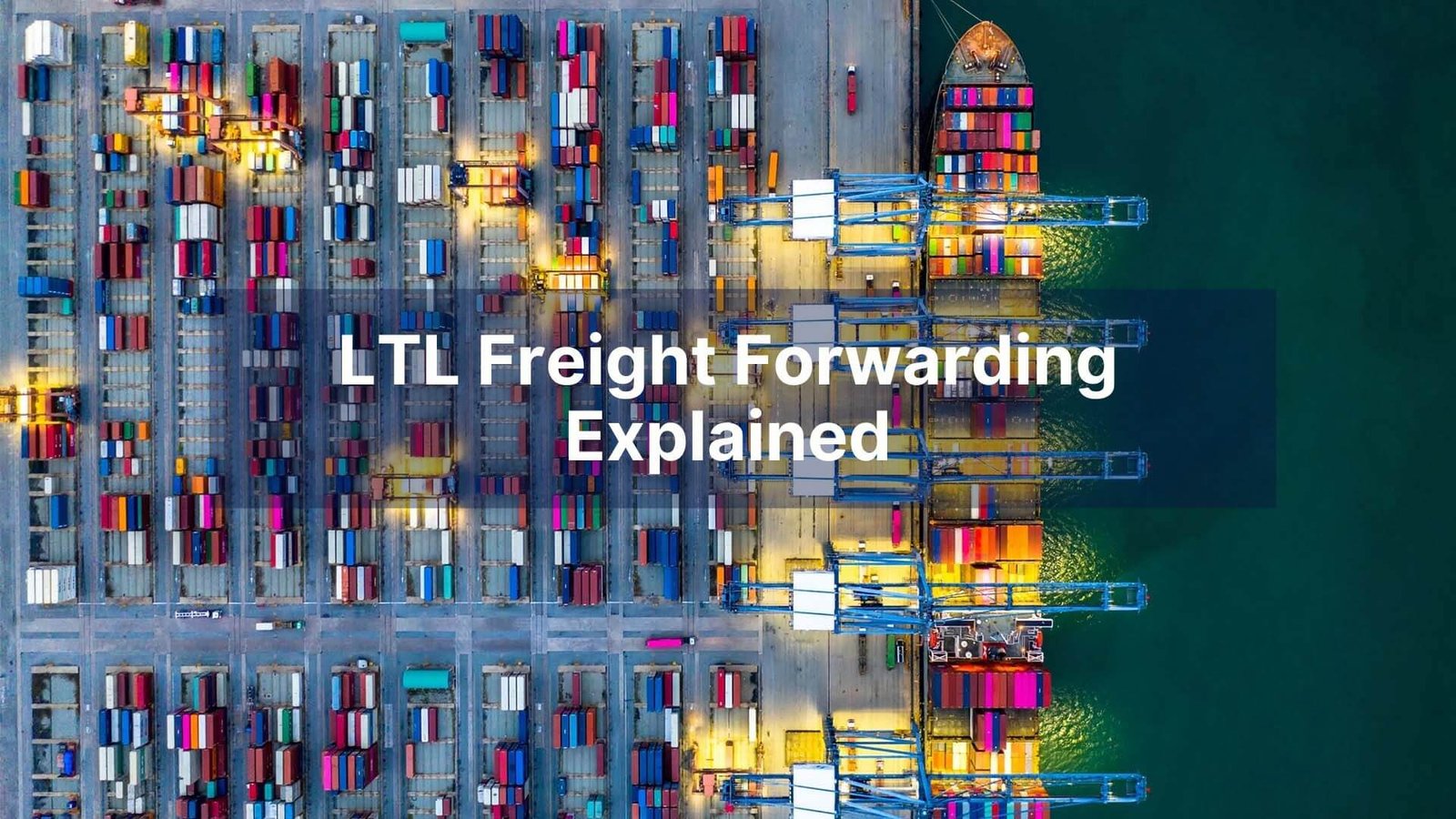
LTL (Less-Than-Truckload) freight forwarding simplifies the shipping process for U.S. importers by consolidating cargo that doesn’t require an entire trailer. It provides a cost-effective solution1 for moving goods from ports after customs clearance2 to various destinations.
LTL freight forwarding3 is a logistics process that helps U.S. importers manage domestic freight efficiently. After customs release, importers can use LTL to transport shipments from ports or 3PL facilities4 to distribution centers5 or retailers, balancing cost and speed.
The world of logistics can be complex, especially for U.S. importers. Using LTL freight forwarding3 can save time and money, but understanding how it works is essential. I’m here to break down the process and help you make informed decisions about your shipping needs.
Define LTL freight forwarding3 and explain when U.S. importers should use it for domestic moves after customs release or 3PL receiving?
LTL freight forwarding3 allows businesses to transport smaller quantities of cargo cost-effectively. For U.S. importers, it serves as an optimal choice when they need to move goods that do not fill an entire truck. This service becomes particularly useful after customs clearance2, allowing for efficient transit of goods from ports to distribution centers5 or retail outlets.
LTL freight forwarding3 is the coordination of palletized shipments6 that don’t fill a full trailer, moving through a carrier’s terminal network7. U.S. importers commonly use LTL after customs release to move cargo from a port, CFS, or 3PL warehouse to a distribution center, retailer, or Amazon prep facility8—balancing cost and speed.
- Importer LTL use cases:
- Port/CFS → 3PL receiving
- 3PL → DC/store
- 3PL → Amazon prep / FBA
- Manufacturer → regional DC
LTL is an excellent option when importers need flexibility and cost savings. By grouping multiple shipments, LTL reduces shipping costs compared to Full Truckload (FTL)9. However, it’s crucial to understand how LTL fits into the larger logistics picture for your business.
Explain how LTL shipping works step-by-step (pickup → terminal cross-dock10 → linehaul11 → destination terminal → delivery) and why it affects speed and damage risk12?
LTL shipping involves several steps that may introduce delays and risks due to the nature of handling multiple shipments in a single trailer. Understanding this process is vital for effective planning and execution.
LTL shipping works by consolidating multiple shippers’ freight into shared trailers. Freight is picked up, brought to an origin terminal, cross-docked into linehaul11 trailers, moved to a destination terminal, and delivered locally. Because LTL handles freight multiple times, it’s more exposed to delays and damage than FTL—making packaging and labeling critical.
LTL Workflow Stages + Risk Points
| Stage | What happens | Time risk | Damage risk | Prevention |
|---|---|---|---|---|
| Pickup | Freight picked up from origin | Delay may occur | Damage from handling | Proper packaging |
| Origin Terminal | Freight sorted and loaded onto linehaul11 trailers | Possible delays | Handling damage | Clear labeling |
| Linehaul | Freight transported to destination terminal | Transit delays | Risk of damage | Secure loading |
| Destination Terminal | Freight sorted for local delivery | Possible delays | Damage during unloading | Effective communication |
| Delivery | Final delivery to customer | Appointment issues | Delivery errors | Confirm details in advance |
The LTL process involves multiple touchpoints, increasing the potential for delays and damage. As such, effective packaging and clear labeling play a crucial role in ensuring successful delivery.
Compare LTL vs FTL vs parcel delivery (cost, transit time, service levels, and best-use shipment sizes) so importers choose the right mode.
When choosing a shipping method, it's essential to understand the differences between LTL, FTL, and parcel delivery.
LTL is ideal for palletized freight that doesn’t justify a full trailer and is too large for parcel carriers. FTL is best for time-sensitive or high-value shipments needing fewer touchpoints. Parcel is optimized for small shipments and fast residential delivery. Importers should choose based on shipment size, urgency, damage sensitivity, and total cost-to-serve.
| Mode | Best shipment size | Cost behavior | Transit reliability | Damage risk | Typical use cases |
|---|---|---|---|---|---|
| LTL | 150 lbs - 10,000 lbs | Moderate to low | Moderate | Higher | Palletized freight |
| FTL | 10,000 lbs and up | Higher cost | Higher | Lower | Large, time-sensitive shipments |
| Parcel | Up to 150 lbs | Variable | High | Moderate | Small items, quick delivery |
Note: LTL = domestic trucking; LCL = ocean consolidation.

Break down how LTL pricing is calculated (freight class/NMFC, density, lane, fuel, and accessorials) and how importers avoid surprise charges.
Pricing for LTL shipping can be complicated. Understanding the key components can help importers avoid unexpected costs.
LTL rates are built from freight class (NMFC), shipment density13, lane distance, and carrier capacity, plus fuel and accessorial charges14. Surprise invoices usually come from reweigh/reclass corrections15 or accessorials like liftgate, appointment delivery, residential delivery, and limited access locations. Importers reduce risk by quoting with accurate dimensions, weights, and delivery requirements.
Freight Class / Density Cheat-Sheet (Simplified)
| Density range | Typical freight class direction | Example products | Risk notes |
|---|---|---|---|
| Low density (bulky) | Class 100 - 400 | Furniture | Higher reclass risk |
| Mid density | Class 500 - 1500 | Appliances | Moderate risk |
| High density (heavy) | Class 1500+ | Heavy machinery | Lower risk |
What Drives LTL Cost
| Cost driver | What it means | What increases cost | Importer control |
|---|---|---|---|
| NMFC class | Classification of freight based on characteristics | Higher freight class increases cost | Accurate classification |
| Density | Weight per cubic foot of cargo | Lower density increases cost | Proper measurement |
| Lane | Distance and route of shipment | Longer distances increase cost | Efficient routing |
| Fuel | Fuel surcharge applied based on market rates | Rising fuel prices | Fuel-efficient carriers |
| Accessorials | Extra fees for added services | Liftgate, residential delivery | Proper planning |
Show importer packaging and pallet best practices (dimensions, labeling, stackability16, liftgate needs) to prevent reweighs, claims, and delivery delays.
Effective packaging practices are essential for LTL shipping. Properly prepared goods can lead to smoother deliveries and avoid costly mistakes.
In LTL, packaging is a cost control tool. Freight is handled multiple times, so importers should use strong pallets, tight stretch wrap, corner boards, and clear labels. Accurate dimensions and weights prevent reweigh/reclass fees. Declaring stackability16 and liftgate requirements17 in advance reduces delivery failures, appointment delays, and damage claims18.

Importer LTL Packaging Checklist:
- Pallet quality
- Shrink wrap + banding
- Corner protection
- Stackable labeling
- Barcode/PO labeling
- Carton overhang prevention
- Accurate dims/weight
- Photos before pickup
Top Claim Causes + Prevention
| Cause | Why it happens | Prevention | Evidence needed |
|---|---|---|---|
| Crush damage | Poor stacking | Use stackable pallets | Photos of loaded pallets |
| Water damage | Inadequate weather protection | Use waterproof materials | Photos of packaging |
| Missing pieces | Incomplete packing | Double-check shipments | Packing lists |
| Puncture | Sharp objects during handling | Secure packaging | Inspection reports |
Provide an LTL forwarder/carrier selection scorecard with KPIs (on-time %, damage rate, invoice accuracy19, appointment compliance, and claims handling).
Choosing the right LTL carrier is critical for success. Using KPIs can guide importers in making informed decisions.
The best LTL option isn’t always the cheapest—it’s the most reliable for your lanes and delivery requirements. Importers should use a scorecard that measures on-time pickup/delivery, damage and claim rates, invoice accuracy19, reclass frequency, and responsiveness. KPI governance20 with monthly lane reviews helps reduce cost and improve service over time.
LTL Carrier / Forwarder Evaluation Scorecard
| Category | Weight | What to verify | Evidence | KPI target |
|---|---|---|---|---|
| Lane coverage + terminal density | 20% | Available routes | Carrier profiles | 95% coverage |
| Transit time consistency | 20% | Average transit times | Historical data | 98% on-time |
| Pickup/delivery performance | 20% | On-time records | Delivery logs | 95% on-time |
| Damage rate + claims handling | 20% | Claims history | Claims reports | <1% damage rate |
| Invoice accuracy + dispute resolution | 10% | Invoice audits | Financial records | 98% accuracy |
| Tracking visibility + EDI/API | 10% | Real-time updates | System capabilities | 95% visibility |
LTL KPI Dashboard for Importers
| KPI | Definition | Target | Trigger action |
|---|---|---|---|
| On-time pickup % | Percentage of pickups on time | 95% | Evaluate carrier options |
| On-time delivery % | Percentage of deliveries on time | 95% | Review performance |
| Damage rate | Ratio of damaged shipments | <1% | Investigate incidents |
| Claim cycle time | Time taken to resolve claims | <30 days | Optimize processes |
| Invoice accuracy | Accuracy of billing | 98% | Regular audits |
| Reclass % | Percentage of reclassifications | <2% | Improve quoting process |
Conclusion
Understanding LTL freight forwarding3 equips importers with the knowledge to make better shipping decisions. To take the next step, request a lane review and accessorial fee reduction strategy from our team today.
Discover why LTL freight forwarding is a budget-friendly option for transporting goods, especially for shipments that don't require a full trailer. ↩
Learn about the importance of customs clearance in the LTL process and how it impacts the movement of goods from ports to destinations. ↩
Explore how LTL freight forwarding can streamline logistics for U.S. importers, offering cost-effective solutions for domestic freight management. ↩
Understand the role of third-party logistics (3PL) facilities in the LTL shipping process and their benefits for importers. ↩
Explore the significance of distribution centers in the LTL logistics chain and how they facilitate efficient delivery to retailers. ↩
Find out how palletized shipments optimize space and reduce costs in LTL freight forwarding, enhancing efficiency. ↩
Learn about the role of carrier terminal networks in LTL shipping and how they affect transit times and delivery reliability. ↩
Discover how Amazon prep facilities are integrated into the LTL process, aiding importers in preparing goods for Amazon distribution. ↩
Understand the key differences between LTL and FTL shipping, including cost, speed, and shipment size considerations. ↩
Explore the terminal cross-docking process in LTL shipping and its impact on speed and risk of damage. ↩
Learn about the linehaul stage in LTL shipping and its role in transporting goods between terminals. ↩
Understand the factors contributing to higher damage risk in LTL shipping and how importers can mitigate these risks. ↩
Discover how shipment density influences LTL shipping costs and strategies to optimize density for better pricing. ↩
Learn about the various accessorial charges in LTL shipping and how they can impact overall costs. ↩
Explore the impact of reweigh/reclass corrections on LTL shipping invoices and how to avoid surprise charges. ↩
Find out how stackability affects LTL shipping efficiency and cost, and best practices for packaging. ↩
Understand the importance of liftgate requirements in LTL shipping and how they influence delivery success. ↩
Learn strategies to prevent damage claims in LTL shipping, ensuring safe and reliable delivery of goods. ↩
Discover the importance of invoice accuracy in LTL shipping and how it affects financial management for importers. ↩
Explore how KPI governance can enhance LTL shipping efficiency, reduce costs, and improve service quality. ↩