Are you worried about overpaying customs duties1? Incorrect codes mean huge fines and delayed shipments. Mastering HTS code lookup2 puts you in control, saving you thousands on your imports.
Accurate HTS code classification3 is crucial for U.S. importers. It determines the correct duty rate4 for your products. Using the right code ensures you pay the lowest legal tariff, avoid costly penalties, and prevent your shipments from being held up at the border by customs.

This seems simple, but it's a big deal for your business. This little code has a huge impact on your bottom line. Let me break down why. We'll go step-by-step, so you can feel confident about your next shipment. Let's get started.
What is the HTS Code, and why does it matter?
Confused by customs jargon like HTS codes? These numbers seem complex and frustrating. But understanding them is the key to unlocking smoother, cheaper imports for your business.
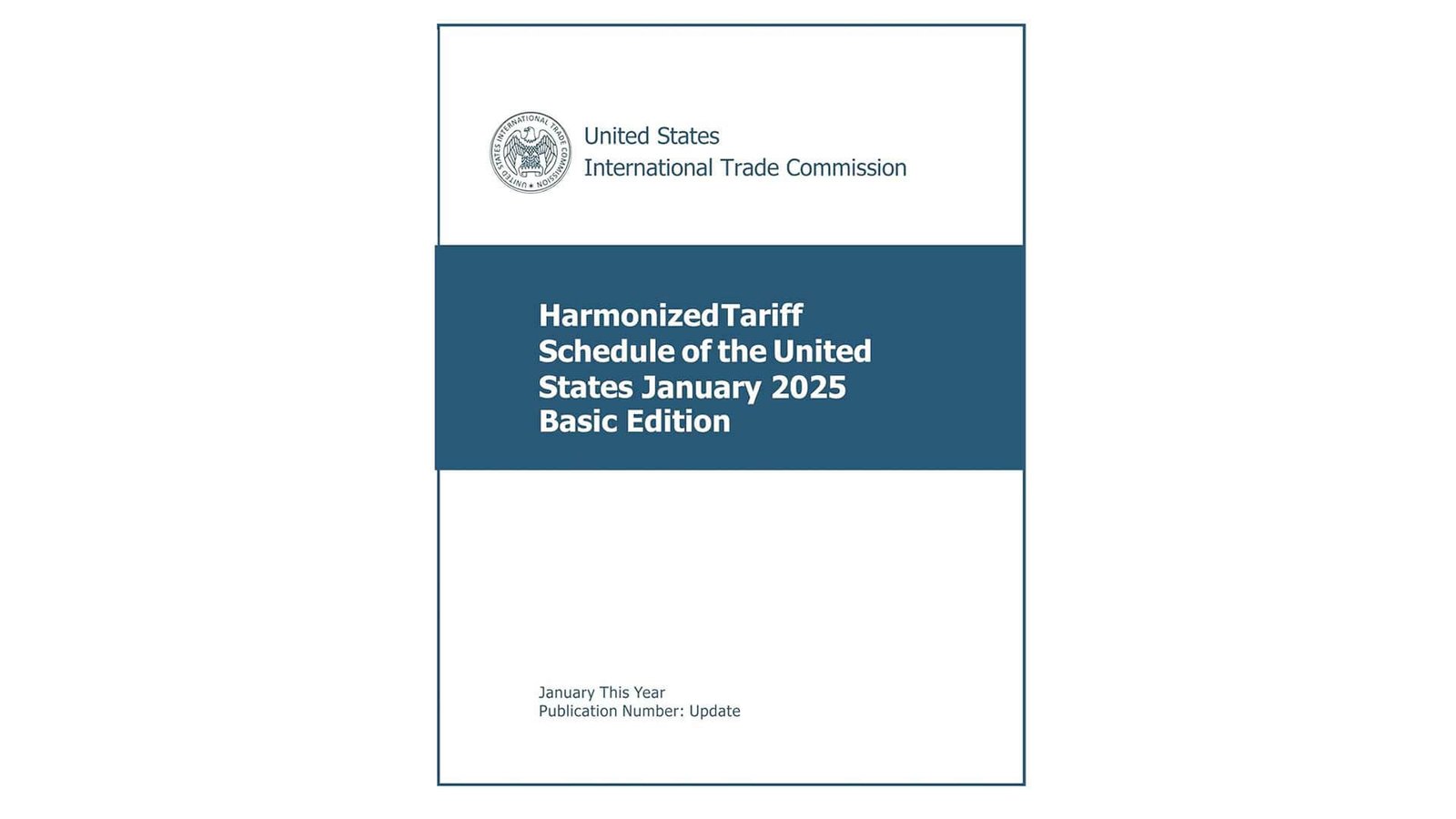
The Harmonized Tariff Schedule (HTS) code5 is a 10-digit number the U.S. uses to classify imported goods. U.S. Customs and Border Protection (CBP)6 uses this code to figure out how much duty you owe. Getting it right is essential for compliance and cost savings.
The HTS code tells customs exactly what you are importing. Think of it as a universal language for international trade7. The first six digits are part of an international system called the Harmonized System (HS). Almost every country in the world uses it. The last four digits are specific to the United States. They provide more detail about the product for U.S. tariff and statistical purposes. Getting this 10-digit number right is your responsibility as the importer. It’s not just a suggestion; it’s a legal requirement8. If you get it wrong, you could face audits, penalties, and even seizure of your goods. So, this code isn't just an administrative detail. It is the foundation of your import declaration and directly affects your total landed cost9.
The Structure of an HTS Code10
The code is highly structured. Each part of the number narrows down the product's category.
| Code Section | Digits | What It Represents | Example (Wooden Chair) |
|---|---|---|---|
| Chapter | 1-2 | Broad product category | 94 (Furniture) |
| Heading | 3-4 | More specific group | 01 (Seats) |
| Subheading | 5-6 | Even more specific | 61 (Of wood) |
| U.S. Suffix | 7-10 | U.S. specific details | 1010 (specific chair type) |
Why It's Not Just a Number
This structure is what allows customs to apply a specific duty rate4. A wooden chair (9401.61) might have a different duty rate4 than a metal chair (9401.71). The details matter immensely. You have to be precise to ensure you are compliant and not overpaying.
How can finding the right HTS code save you money?
Are you leaving money on the table with every shipment? You might be if your HTS codes are not optimized. This small mistake could be costing you thousands in unnecessary duties.
Finding the right HTS code directly saves you money by ensuring you pay the correct, and often lowest, possible duty rate4. A slight difference in classification can mean a tariff of 0% versus 10% or more. This precision is key to maximizing your profit margins.

The impact of the HTS code on your costs is direct and significant. Let me share a story. I once had a client, Mark, who was importing corrugated paper products from China. The duty rate4 on these goods is very high, around 45%. A small mistake in classification could easily lead to tens of thousands of dollars in extra costs. The key is that different, but similar, products can have wildly different duty rate4s. Your job is to find the correct code that legally offers the lowest rate. This isn't about cheating the system; it's about understanding the rules and using them to your advantage. A few minutes of research can save you a fortune over the course of a year.
A Tale of Two Codes
Imagine you are importing a part for a machine. Is it a "part of a motor" or a "plastic fitting"? The HTS code, and therefore the duty rate4, will be completely different.
| Product Description | Potential HTS Code | Duty Rate |
|---|---|---|
| Plastic part for an engine | 8409.91.50 | 2.5% |
| General plastic fitting | 3926.90.99 | 5.3% |
On a $100,000 shipment, that's the difference between paying $2,500 and $5,300 in duties. This is why precision is everything.
Beyond the Rate: The Full Picture
While the HTS code sets the duty percentage, a great logistics partner helps with the entire cost equation. For instance, at our company, we have our own U.S. customs bond11. This allows us to file entries for our clients where the declared value for customs is often lower than the market price. For Mark’s paper products, we might file at a value of $50,000 instead of the full $100,000. So, instead of paying $45,000 in duties (45% of $100k), he pays $22,500 (45% of $50k). It’s a two-part strategy: the right HTS code for the lowest rate, plus an optimized customs value.
How do you find the right HTS code for your product?
Does searching the official HTS database12 feel like a maze? It's easy to get lost and pick the wrong code. This uncertainty can lead to costly customs issues later.
You can find the right HTS code using the official U.S. International Trade Commission's HTS search tool. Start with a general description of your product and narrow it down using the chapter, heading, and subheading notes. It requires careful reading and attention to detail.

Finding the correct HTS code is a process of elimination. You start broad and get more and more specific. The official HTSUS (Harmonized Tariff Schedule of the United States) is a massive document, but its online search tool makes things easier. The most important part of the process is reading the notes. Each section and chapter of the HTSUS has legal notes that tell you what is included or excluded from a category. Ignoring these notes is one of the biggest mistakes importers make. You need to gather as much information as possible about your product: What is it made of? What is its primary use? How is it constructed? This information will guide your search and help you defend your choice if customs ever questions it.
| Step | Action | Why It's Important |
|---|---|---|
| 1. Identify Your Product | Gather all details: material composition, function, form. | The more details you have, the easier it is to classify. |
| 2. Use the Search Tool | Search the official HTSUS tool with basic keywords. | This gives you a starting point and potential chapters to look at. |
| 3. Read Chapter & Section Notes | Carefully read the legal notes for the chapters that seem to fit. | These notes are legally binding and can overrule what seems obvious. |
| 4. Compare Subheadings | Drill down through the headings and subheadings to find the best fit. | The most specific description that accurately fits your product is usually the right one. |
When to Ask for Help
Honestly, this can get very complicated. If you are ever unsure, don't guess. The consequences are too high. A licensed customs broker13, like us, does this every single day. We understand the nuances of the HTSUS and can help you find the correct classification. Investing in expert advice upfront can save you from huge penalties down the road.
What are the most common mistakes in HTS code classification14?
Have you ever had a shipment delayed or fined by customs? It’s often due to a simple HTS code mistake. These errors are common, but they can sink your profits.
The most common mistakes include misinterpreting product descriptions, ignoring chapter notes, choosing a code based on a product's name instead of its primary function or material, and relying on a supplier's suggested code without verifying it. These errors can lead to penalties and delays.

As an importer, the buck stops with you. You are legally responsible for the HTS code you declare, no matter who gave it to you. I've seen many importers make simple mistakes that end up costing them dearly. The most frequent error is blindly trusting the HTS code provided by the manufacturer in China. Your supplier is an expert in making products, not in interpreting U.S. customs law. Their code might be for Chinese exports, or it might just be a guess. You must always do your own research or have your customs broker verify it. Another common pitfall is not understanding the "essential character15" of a product. If you import a kit, for example, you generally classify it based on the component that gives the kit its main identity.
The Supplier's Code Trap16
Relying on your supplier's HTS code is a huge risk. They are not the importer of record, you are. They face no penalties if the code is wrong, but you face all of them.
- They don't know U.S. law: The HTS system has U.S.-specific rules they may not be aware of.
- Their interests are different: They want to make the sale quickly; they aren't focused on your long-term compliance risk.
- The code might be outdated: Tariff codes can and do change.
Getting the "Essential Character" Right
For goods made of multiple materials or components, you must classify them based on their "essential character15." This is determined by the General Rules of Interpretation (GRIs), which are the legal foundation for HTS classification. For example, a wool coat with plastic buttons is classified as a wool coat, not as plastic buttons. The wool gives the item its identity. This concept can be tricky, which is another reason why working with an experienced professional is so valuable. They can help you navigate these complex rules correctly.
How can you appeal or correct an incorrect HTS code classification?
Did customs reclassify your goods and send you a huge bill? It feels unfair and overwhelming. But you don't have to just accept their decision and pay up.
If you disagree with a CBP classification, you can file a protest with the port director within 180 days of liquidation. You'll need to provide a strong argument with supporting documentation, citing specific HTS rules and notes to justify your proposed code.

If U.S. Customs and Border Protection (CBP)6 disagrees with your HTS code, they will issue a notice of action. This often comes with a bill for additional duties, and sometimes penalties. You have the right to challenge this decision. The formal process is called filing a protest17. This is a legal procedure where you formally state your disagreement and provide evidence for why your classification is correct. You can't just say you disagree; you have to build a case. This involves citing the specific HTS headings, subheadings, and legal notes that support your position. You’ll also need to provide documents like product specifications, photos, or samples. It’s a detailed, evidence-based process that requires a strong understanding of customs law.
The Formal Protest Process
Filing a protest (CBP Form 19) is a time-sensitive and formal action.
- Deadline: You must file within 180 days from the date of liquidation (when the entry is finalized by customs).
- Argument: You must clearly explain why CBP's decision is wrong and your original classification is correct.
- Evidence: You need to submit supporting documents. The more evidence, the stronger your case.
A Proactive Strategy: Binding Rulings18
The best way to handle a dispute is to prevent it from ever happening. Before you even import a new product, you can request a "Binding Ruling" from CBP. You submit all the details about your product, and CBP will issue a legally binding letter telling you the correct HTS code. This ruling is binding on all U.S. ports of entry. It gives you certainty and protects you from reclassification and penalties down the line. This is a powerful tool for any serious importer.
Conclusion
Let's recap. Proper HTS code lookup2 is not just about compliance. It’s a key strategy to save time and money, reduce risks, and keep your supply chain moving smoothly.
Learn strategies to prevent overpaying customs duties and ensure your business remains profitable by understanding the nuances of duty payments. ↩
Discover the importance of HTS code lookup in international trade and how it can save your business money and time. ↩
Understand the significance of accurate HTS code classification to avoid penalties and ensure smooth customs clearance. ↩
Explore how the HTS code affects the duty rate and why precision in classification is crucial for cost savings. ↩
Explore the role of the Harmonized Tariff Schedule (HTS) code in determining duty rates and its impact on import costs. ↩
Learn about the responsibilities of U.S. Customs and Border Protection (CBP) in regulating imports and ensuring compliance. ↩
Find out how the Harmonized System standardizes product classification globally, simplifying international trade. ↩
Understand the legal implications of incorrect HTS code classification and how it affects your business operations. ↩
Discover how accurate HTS code classification can influence the total landed cost and improve your profit margins. ↩
Learn about the structure of an HTS code and its importance in determining the correct duty rate for imported goods. ↩
Understand the function of a U.S. customs bond in import transactions and how it can benefit your business. ↩
Learn how to navigate the official HTS database effectively to ensure accurate product classification and compliance. ↩
Discover the advantages of hiring a licensed customs broker to avoid costly mistakes in HTS code classification. ↩
Identify common pitfalls in HTS code classification and learn strategies to prevent them, ensuring compliance and cost efficiency. ↩
Learn how to determine the essential character of a product for accurate HTS classification and compliance. ↩
Understand the risks of relying on supplier-provided HTS codes and how to ensure accurate classification for your imports. ↩
Get insights into the process of filing a protest against incorrect HTS code classification to protect your business interests. ↩
Explore how Binding Rulings provide certainty in HTS classification and prevent costly disputes with customs. ↩