The diamond trade1 promises high returns, but it is governed by complex U.S. customs rules2. A single compliance mistake3 can lead to seized goods, severe penalties, and financial loss.
Starting a diamond import-export business in the U.S. requires more than just a supplier. You must register with U.S. Customs and Border Protection (CBP), secure a customs bond4, correctly classify your diamonds, and strictly adhere to all federal regulations, including sanctions and origin verification rules.
The journey from sourcing a diamond to selling it in the U.S. market is a path filled with regulatory checkpoints. As a customs brokerage strategist, I've seen many promising ventures fail because they underestimated the importance of compliance from day one. They focused on the diamonds but not on the detailed rules that govern their movement across borders. Let's break down the critical questions you need to answer to build a successful and compliant diamond trading business in the United States. This is not just about following rules; it's about protecting your investment and your profit.
How Do You Start a Diamond Import-Export Business Under U.S. Customs Regulations?
You found a diamond supplier and a potential buyer. But U.S. Customs sees your future shipment as high-risk cargo5 requiring strict oversight. Here is how you set up your operation correctly.
Starting requires establishing your company as the official Importer of Record6 (IOR), securing a valid customs bond4, and understanding the specific classifications for diamonds. This is a formal process with CBP that makes you legally responsible for every aspect of the import.
To start, you must formally establish your business as the Importer of Record6 (IOR). This is the legal entity or individual who takes full responsibility for the shipment. The IOR is liable for paying all duties, taxes, and fees. The IOR also ensures the goods meet all U.S. laws and regulations. You register as an IOR by filing CBP Form 5106. This step is non-negotiable. Next, you must understand that not all diamonds are treated the same by U.S. Customs. The Harmonized Tariff Schedule7 (HTS) has different codes for different types of diamonds. For example, rough industrial diamonds are classified differently than polished, gem-quality stones. This classification determines the duty rate and any other government agency requirements. CBP considers all diamonds high-risk, high-value cargo. This is because of the potential for undervaluation to avoid duties, money laundering, and the risk of conflict diamonds entering the supply chain. Your business model also matters. A trader who buys and owns inventory has different compliance burdens than an agent who only brokers deals.
| Business Model | Key Customs Consideration |
|---|---|
| Principal Trader | You are the IOR. You own the goods and are liable for duties and compliance. |
| Agent/Broker | You connect a buyer and seller. The buyer is typically the IOR. Your role is facilitation. |
| Re-Exporter | You import diamonds to a bonded facility and export them without formal entry. |
Do You Need a License to Import or Export Diamonds in the United States?
The term "license" is a source of constant confusion. Assuming you don't need official permission to trade diamonds is a mistake that can lead to your goods being seized at the border.
The U.S. government does not issue a single "diamond import license." However, you must register with CBP as an importer. Furthermore, specific regulations from agencies like the Treasury Department's OFAC and the Kimberley Process for rough diamonds function as mandatory compliance requirements you must meet.
Let me be very clear: the idea that you don't need any special permission to import diamonds is wrong. While there isn't a piece of paper called a "Diamond License," the regulatory framework creates a system of required approvals. First, every importer must be on file with CBP. This is usually done by completing CBP Form 5106, which assigns you an importer number. This is your basic license to operate. For most polished diamonds from non-sanctioned countries, this general import authority is enough, provided all your paperwork is perfect. However, special controls apply in many cases. If you import rough diamonds, you must comply with the Kimberley Process Certification Scheme8 (KPCS). This requires a specific certificate from the exporting country's government. Also, the Office of Foreign Assets Control9 (OFAC) prohibits transactions with certain countries, entities, and individuals. Importing diamonds of Russian origin, for example, is currently prohibited. The key takeaway is this: "no single license" does not mean "no compliance required." You are responsible for knowing and following every single rule that applies to your specific shipment.
How Much Does It Cost to Become a Diamond Importer or Exporter in the U.S.?
You are likely focused on the cost of the diamonds themselves. But many traders fail because they don't budget for the hidden compliance and logistics costs. These expenses are not optional.
Your startup costs must include a customs bond4, which starts around $400 annually, plus high-value cargo insurance10, secure armored transport, and customs broker fees11. Under-budgeting these critical operational costs is a common mistake that leads to delays, seizures, and lost profits.
Let's build a realistic budget beyond the cost of your inventory. First, CBP registration itself is free, but it unlocks a world of responsibility and associated costs. You will need a customs bond4. This is an insurance policy for the government that guarantees you will pay all duties and taxes. A single-entry bond covers one shipment, but any serious trader needs a continuous bond. A continuous bond typically costs between $400 and $800 per year. Next is cargo insurance. Standard policies do not cover high-value goods like diamonds. You will need a specialized policy, often called a Jeweler's Block policy, which is significantly more expensive. Then there is logistics. You cannot ship diamonds with a standard courier. You must use a secure logistics provider like Malca-Amit or Brinks, which involves armored transport and is a major cost. Finally, you have transaction fees. This includes your customs broker's fee for filing the entry, the Merchandise Processing Fee (MPF), and the Harbor Maintenance Fee (HMF). Failing to budget for these items means you won't have the cash to clear your goods when they arrive.
| Cost Item | Estimated Range | Why It's Necessary |
|---|---|---|
| Continuous Customs Bond | $400 - $800 / year | Required by CBP for most commercial imports. |
| Secure Logistics | Varies widely by value/route | Standard shipping is not secure enough for diamonds. |
| High-Value Cargo Insurance | Varies by value | Protects your investment against loss or theft. |
| Customs Broker Fees | $150 - $500+ per entry | For expert preparation and filing of customs documents. |
| Duties & Taxes | Varies by HTS code/value | Legal requirement. Paid directly to the government. |
What Certificates and Documents Are Required for Diamond Imports and Exports?
A commercial invoice seems like a simple document. But for diamonds, a missing certificate or an incorrect data point on that invoice can bring your entire shipment to a halt at the border.
Essential documents include a highly detailed commercial invoice, a Kimberley Process Certificate for all rough diamonds, and a country of origin declaration. For exports, an Electronic Export Information12 (EEI) filing is usually mandatory. Recent sanctions also require attestations of non-Russian origin.

Your paperwork is your passport through customs. It must be perfect. The most important document is the commercial invoice. For diamonds, it must go beyond a simple price. It needs to include a precise description (the 4Cs: cut, carat, clarity, color), the value per stone, the country of origin, and the correct HTS code. If you are importing rough diamonds, you absolutely must have a valid Kimberley Process Certificate (KPC) from the country of export. Without it, the shipment is illegal and will be seized. The country of origin is also under intense scrutiny due to international sanctions. You must be able to prove where your diamonds were mined and processed. For polished diamonds, this often requires a self-certification or a statement on the invoice from your supplier. This is especially critical because of the G7 ban on Russian diamonds. CBP may require declarations that your diamonds were not mined in or transited through Russia. For exports from the U.S. valued over $2,500, you must file Electronic Export Information12 (EEI) in the Automated Export System (AES). This is not optional; it is a federal law.
How Are Bonded Warehouses and FTZs Used in the Diamond Trade?
Paying duties and taxes the moment your diamonds land in the U.S. can severely strain your cash flow. Storing them in a standard warehouse is also a massive security and compliance risk.
Bonded warehouses and Foreign-Trade Zones13 (FTZs) allow you to defer, reduce, or even eliminate U.S. customs duties. They provide a secure, CBP-supervised location to inspect, sort, or re-export diamonds, which improves cash flow and mitigates risk before formal U.S. entry.
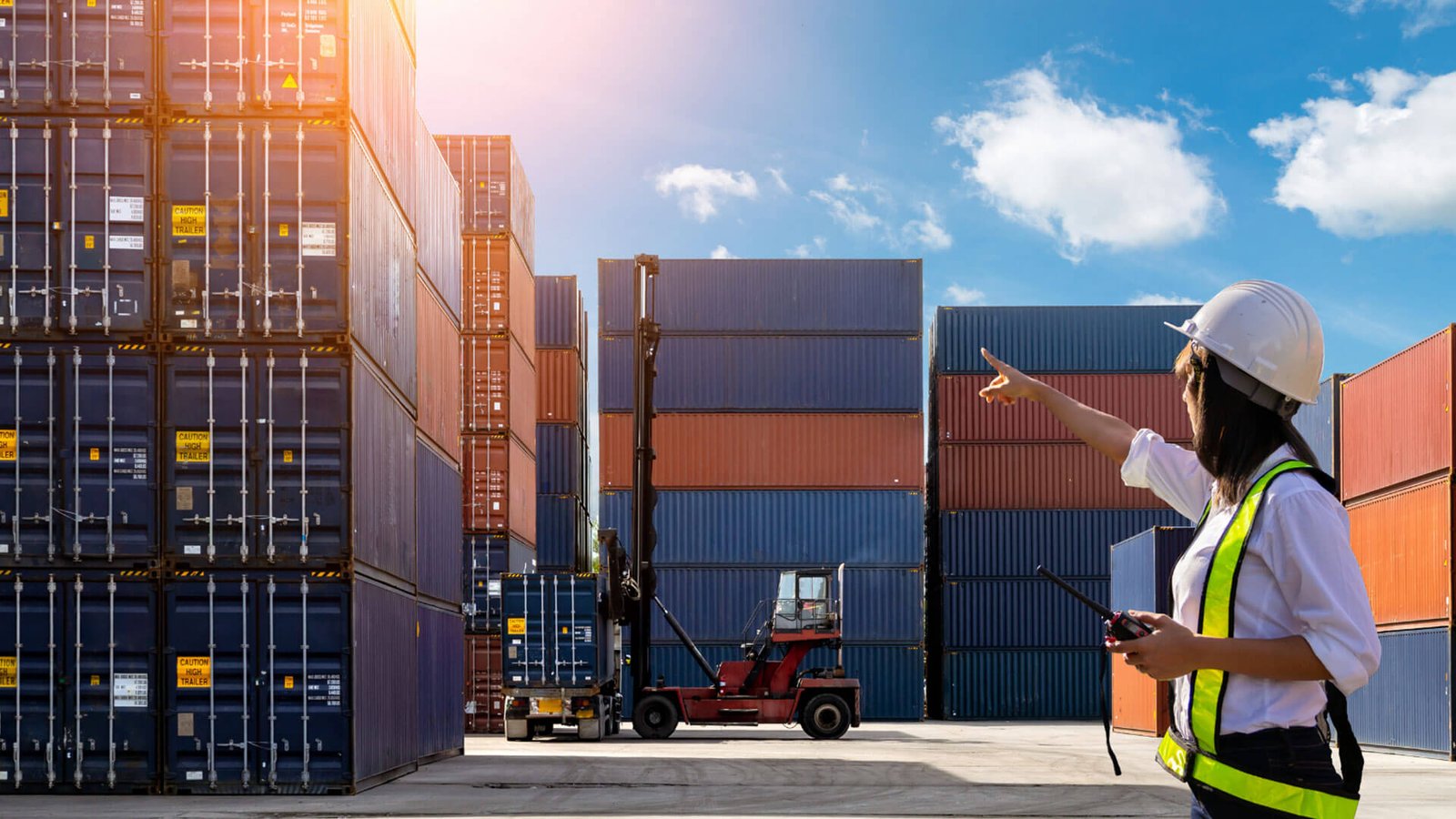
Smart diamond trade1rs use CBP-approved facilities to their strategic advantage. A bonded warehouse or an FTZ is a secure area where imported goods can be stored before they are formally entered into U.S. commerce. The primary benefit is duty deferral. You do not have to pay import duties and taxes until the goods leave the facility and are sold in the U.S. This is a huge cash-flow advantage. These facilities are also perfect for a variety of business activities. For example, you can have a potential buyer inspect the diamonds inside the FTZ before you pay the duty. If the buyer rejects them, you can re-export them without ever having paid U.S. duties. This is a common practice for international trading hubs14. An FTZ offers even more flexibility than a bonded warehouse, allowing for minor processing or assembly. From a risk perspective, these are highly secure locations monitored by CBP, drastically reducing the chance of theft compared to a public warehouse. Using a bonded facility is a core strategy for managing capital and compliance in the high-stakes diamond trade1.
Who Are the World’s Largest Diamond Exporting Countries — and Why Origin Matters to U.S. Customs?
You may know where diamonds are mined. But from a compliance standpoint, U.S. Customs is often more concerned with where the diamonds were cut, polished, and traded just before they arrived here.
While nations like Botswana and Russia are top miners, trading hubs14 like India, Belgium, and Israel dominate polished diamond exports. U.S. Customs scrutinizes origin to enforce sanctions, like the ban on Russian diamonds, and to ensure Kimberley Process compliance. Incorrect origin documentation15 is a red flag.

The origin of your diamonds is not just a geographical fact; it is a critical piece of compliance data. You must understand the difference between the mining source and the trading hub. A rough diamond might be mined in Botswana, sent to India for cutting and polishing, and then sold to you from a dealer in Antwerp, Belgium. For U.S. Customs, the entire chain of custody matters. The primary reason for this intense focus is sanctions enforcement. The current G7 sanctions16 prohibit the import of diamonds mined in Russia, even if they were processed in another country like India. CBP expects you, the importer, to have a robust traceability system to prove your diamonds are not of Russian origin. This is a major shift and places a heavy burden of proof on the trade. Origin documentation also confirms compliance with the Kimberley Process for rough diamonds. Shipments from certain countries or with unclear origin stories will automatically receive a higher level of scrutiny from CBP, which can lead to exams and delays. Getting the origin wrong is one of the fastest ways to get your shipment detained.
Does the United States Import and Export Diamonds?
The United States does not have any major commercial diamond mines. This leads many to underestimate its massive role in the global diamond trade1. This is a critical misunderstanding for any new trader.
Yes, the U.S. is a central hub in the global diamond market. It is one of the world's largest consumers of polished diamonds and also a significant center for re-exporting stones to other international markets after trading, grading, or minor value-add activities17.

The U.S. plays a pivotal role as a trading and consumption hub. The business model is often "import, add value, re-export." A U.S. dealer might import diamonds from India, have them graded by the Gemological Institute of America (GIA), and then re-export them to a buyer in Hong Kong or Europe. This value-add process makes the U.S. a key node in the supply chain. This is another reason why bonded warehouses18 and Foreign-Trade Zones13 are so critical to the U.S. diamond industry. They allow these re-export transactions to happen efficiently without the burden of paying U.S. duties. When you do export diamonds from the U.S., you must follow outbound compliance rules. As I mentioned, this means filing the Electronic Export Information12 (EEI) for shipments valued over $2,500. Common mistakes on the export side, like undervaluing the goods or misstating the final destination, can trigger audits from CBP and the U.S. Census Bureau. The U.S. is very much an active player in both directions of the diamond trade1.
Can You Use DDP Shipping for Diamonds — and Should You?
The shipping term DDP sounds simple and attractive for a buyer. But for the seller of a high-value, highly regulated product like diamonds, it transfers an enormous amount of risk and responsibility.
Yes, you can ship diamonds using Delivered Duty Paid (DDP) terms, but it is extremely risky for the seller. Under DDP, the seller acts as the Importer of Record in the U.S. and is responsible for all customs compliance, duties, and potential penalties.

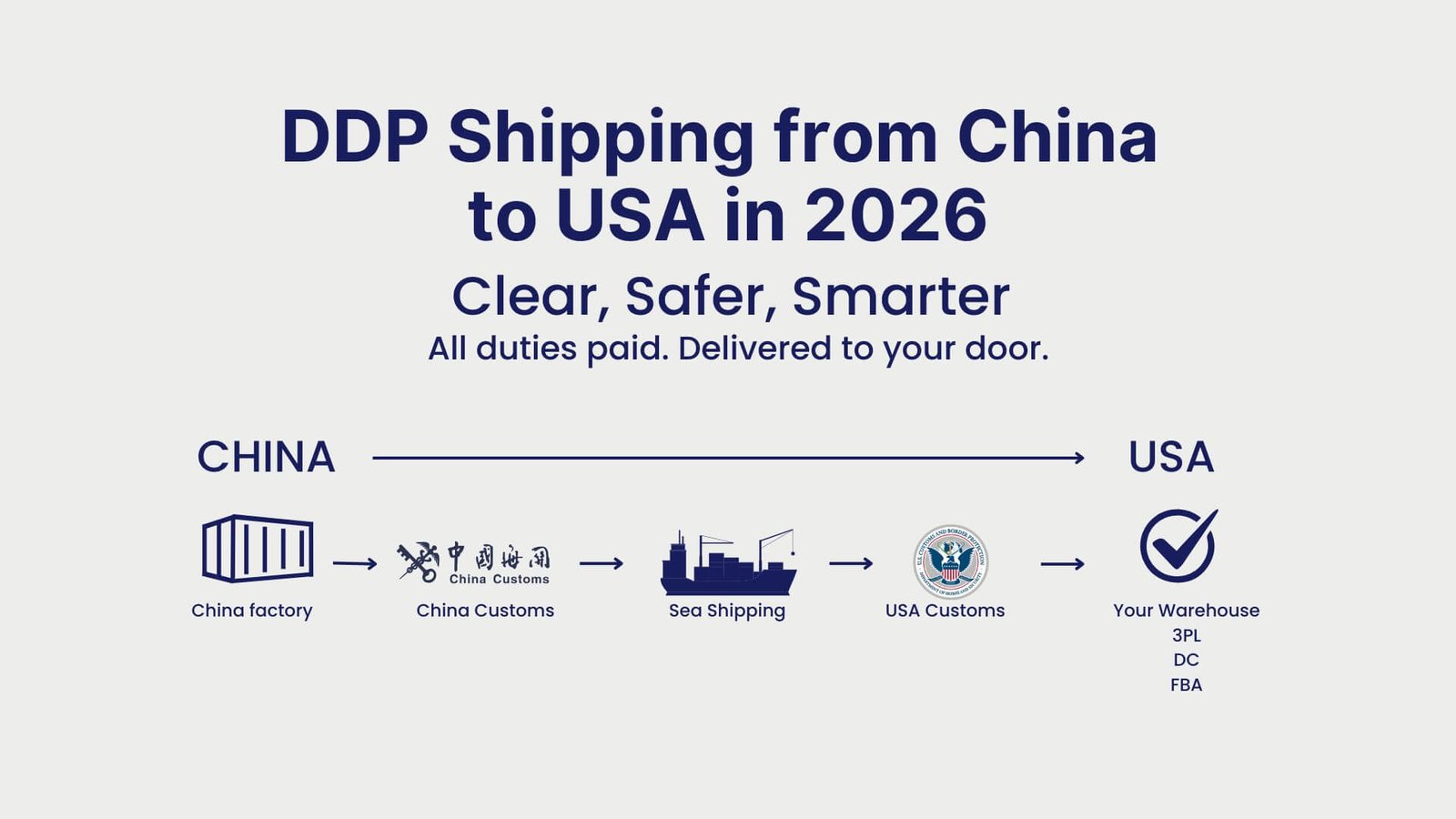
Delivered Duty Paid (DDP) is an Incoterm where the seller agrees to handle everything. This includes transportation, insurance, customs clearance, and paying all duties and taxes at the destination. The risk only transfers to the buyer once the goods are cleared and delivered. For diamonds, this is a dangerous proposition for the seller. As the seller, you are taking on the full legal liability of being the U.S. Importer of Record. If U.S. Customs challenges the valuation of the diamonds, it is your problem to solve. If your customs broker makes a classification error, you are the one who pays the penalty. If new sanctions are announced while the goods are in transit, you are responsible for compliance. A much safer model for the seller is to use terms like FCA (Free Carrier) or FOB (Free On Board), where the buyer takes responsibility for U.S. customs clearance. I only recommend a DDP model for diamonds if the seller is working with a highly experienced U.S. customs broker who acts as their dedicated agent and has factored a significant risk premium into the price.
What Is the Minimum Investment to Start a Diamond Import-Export Business?
You might hear stories about people starting trading businesses with no money down. In the regulated and high-stakes world of diamonds, that is a dangerous fantasy that will lead to quick failure.
There is no "no money" path in the diamond trade. Even agents need capital for essentials like customs bonds, insurance, and secure logistics. Traders need significant capital for inventory plus an additional 20-30% in liquid cash for duties, fees, and unexpected delays.

Let's be realistic about the capital required. The idea of being a pure intermediary with zero capital is not feasible. Even if you are an agent connecting a buyer and seller, you will likely need to cover fixed operational costs to be seen as a credible partner. This includes your continuous customs bond and specialized insurance. For those looking to be principal traders who buy and hold inventory, the capital requirements are substantial. You not only need the money to purchase the diamonds, but you must also hold a significant cash reserve. This reserve is for paying duties, taxes, and high-security shipping fees upon arrival. I advise clients to have at least 20-30% of their inventory value available in liquid cash. Why? Because a shipment held by customs for a documentation review can tie up your inventory for weeks. If you don't have the cash flow to survive that delay and clear the goods once they are released, your business is finished. Compliance and logistics are fixed costs you must plan for from the very beginning.
How Do Diamond Import-Export Traders and Agents Make Money — and Where Most Fail?
The profit margins in the diamond trade can be very attractive. But the financial risks are equally large, and a single compliance error can instantly erase your entire profit on a deal.
Traders make money on the price spread between buying and selling, while agents earn a commission. Most diamond businesses fail not from poor sourcing but from compliance mistakes. Undervaluation, misclassification, or origin errors lead to fines and penalties that destroy profits.
There are two primary ways to earn revenue. As a principal trader, you buy diamonds at one price and sell them at a higher price. Your profit is the margin. As an agent, you facilitate a deal between a buyer and a seller and earn a commission, usually a small percentage of the transaction value. The real story, however, is not how people make money, but how they lose it. The margins in diamond trading can be surprisingly thin. A small customs penalty of 5% can wipe out your entire profit. The biggest points of failure are almost always compliance-related. The temptation to declare a slightly lower value to save on duty is a common but disastrous mistake. CBP has expert valuators who will catch it, leading to stiff penalties. Using an incorrect HTS code to find a lower duty rate is considered fraud. And as we've discussed, failing to provide accurate origin documentation can result in seizure. For this reason, you must view compliance not as an expense, but as a profit protection strategy. A good customs broker and a solid compliance plan are the best insurance for your bottom line.
Conclusion
Starting a diamond business requires mastering U.S. customs rules, securing your supply chain, and managing high financial risk. Meticulous planning and expert guidance are not optional; they are your foundation for success.
Understanding the dynamics of the diamond trade can help you navigate the complexities of this lucrative market. ↩
Familiarizing yourself with U.S. customs rules is essential to avoid costly mistakes in diamond importation. ↩
Learning about compliance mistakes can help you protect your investment and avoid severe penalties. ↩
Knowing how customs bonds function can save you from unexpected costs and ensure smooth operations. ↩
Understanding why diamonds are classified as high-risk can help you prepare for stricter scrutiny. ↩
Understanding the Importer of Record's responsibilities is crucial for legal compliance in diamond imports. ↩
Familiarity with the HTS can help you classify diamonds correctly and avoid penalties. ↩
Learning about the KPCS is vital for compliance when importing rough diamonds. ↩
Understanding OFAC regulations is crucial to avoid legal issues when trading diamonds. ↩
Knowing about high-value cargo insurance can protect your investment against theft or loss. ↩
Understanding customs broker fees can help you budget accurately for your diamond trading business. ↩
Familiarity with EEI requirements is essential for compliance when exporting diamonds. ↩
Understanding FTZs can help you optimize your diamond trading operations and reduce costs. ↩
Learning about trading hubs can provide insights into sourcing and selling diamonds effectively. ↩
Knowing the significance of origin documentation can prevent compliance issues and delays. ↩
Understanding G7 sanctions is crucial for compliance and avoiding legal repercussions. ↩
Exploring value-add activities can enhance your business model and profitability in diamond trading. ↩
Exploring the advantages of bonded warehouses can improve your cash flow and security. ↩