Struggling with unpredictable shipping costs and customs headaches from China? You're not alone. A compliant DDP partner can give you one clear price and total peace of mind.
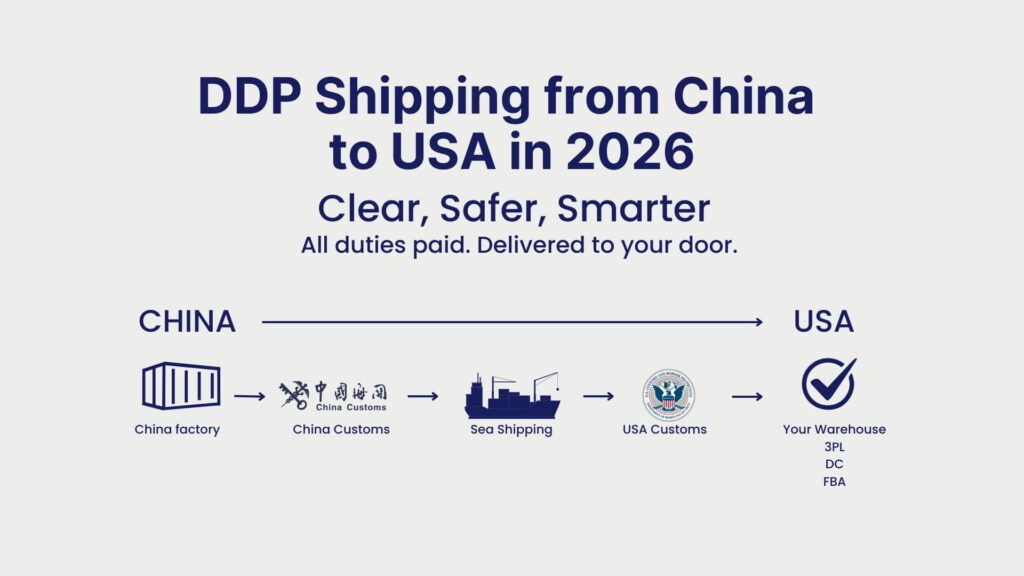
Delivered Duty Paid (DDP) is a shipping term where your supplier handles everything. This includes all transportation, U.S. customs clearance, duties, and final delivery. It gives you a single, all-inclusive price, eliminating surprise bills and simplifying your entire import process from China.
The world of importing has changed. I see it every day. The old ways of doing things are becoming riskier and more expensive. Importers who once managed everything themselves are now looking for a simpler, safer way. They want to focus on selling products, not fighting logistics fires. This is why the conversation around DDP has become so important. But not all DDP is created equal. Let's break down what's really happening and how you can use DDP to your advantage in 2026.
Why Is Importing in 2026 Harder Than Ever?
Feeling like importing is more chaotic and expensive? With shifting tariffs and stricter CBP enforcement, the old methods are failing. Understanding these new challenges is the first step to finding a solution.
Importing in 2026 is harder due to increased U.S. Customs (CBP) scrutiny on valuations and compliance (like UFLPA). Add in unpredictable tariff changes and stricter Amazon FBA receiving rules, and you get a recipe for delays and surprise costs. This makes predictability a top priority.

I talk to U.S. importers like Mark every day, and they all tell me the same thing: the ground is shifting beneath their feet. It's not just one thing; it's a combination of new pressures that make importing a minefield.
Rising CBP Scrutiny
U.S. Customs and Border Protection (CBP) is more active than ever. They are conducting more valuation checks to ensure the declared value of goods is accurate. They are performing more HS code audits to stop misclassification. And enforcement of regulations like the Uyghur Forced Labor Prevention Act (UFLPA) is strict, requiring clear proof of your supply chain. A single mistake here can lead to seized goods and heavy fines.
Unpredictable Costs and Delays
Tariffs can change with little warning, completely destroying your landed cost calculations. We've also seen a return of port congestion and supply chain delays. When your container gets stuck, you face demurrage and detention fees that can run hundreds of dollars per day. This volatility makes it nearly impossible to budget effectively.
Amazon FBA Tightening
For Amazon sellers, the rules for inbound shipments are getting stricter. FBA warehouses are rejecting shipments for minor issues with pallets, labeling, or delivery appointments. This leads to costly rework fees and stockouts.
These factors together are pushing importers to search for a new model—one that offers predictability, compliance, and control.
What Is DDP (Delivered Duty Paid) in Simple Terms for U.S. Importers?
Shipping incoterms like FOB and EXW are confusing. Choosing the wrong one can cost you thousands in unexpected fees and stress. DDP is the simplest, all-in-one option for importers.
DDP, or Delivered Duty Paid, means the seller is responsible for all costs and risks until the goods are delivered to your door. This includes ocean freight, insurance, U.S. customs clearance, all duties and taxes, and final-mile trucking. It's the most hands-off option for an importer.
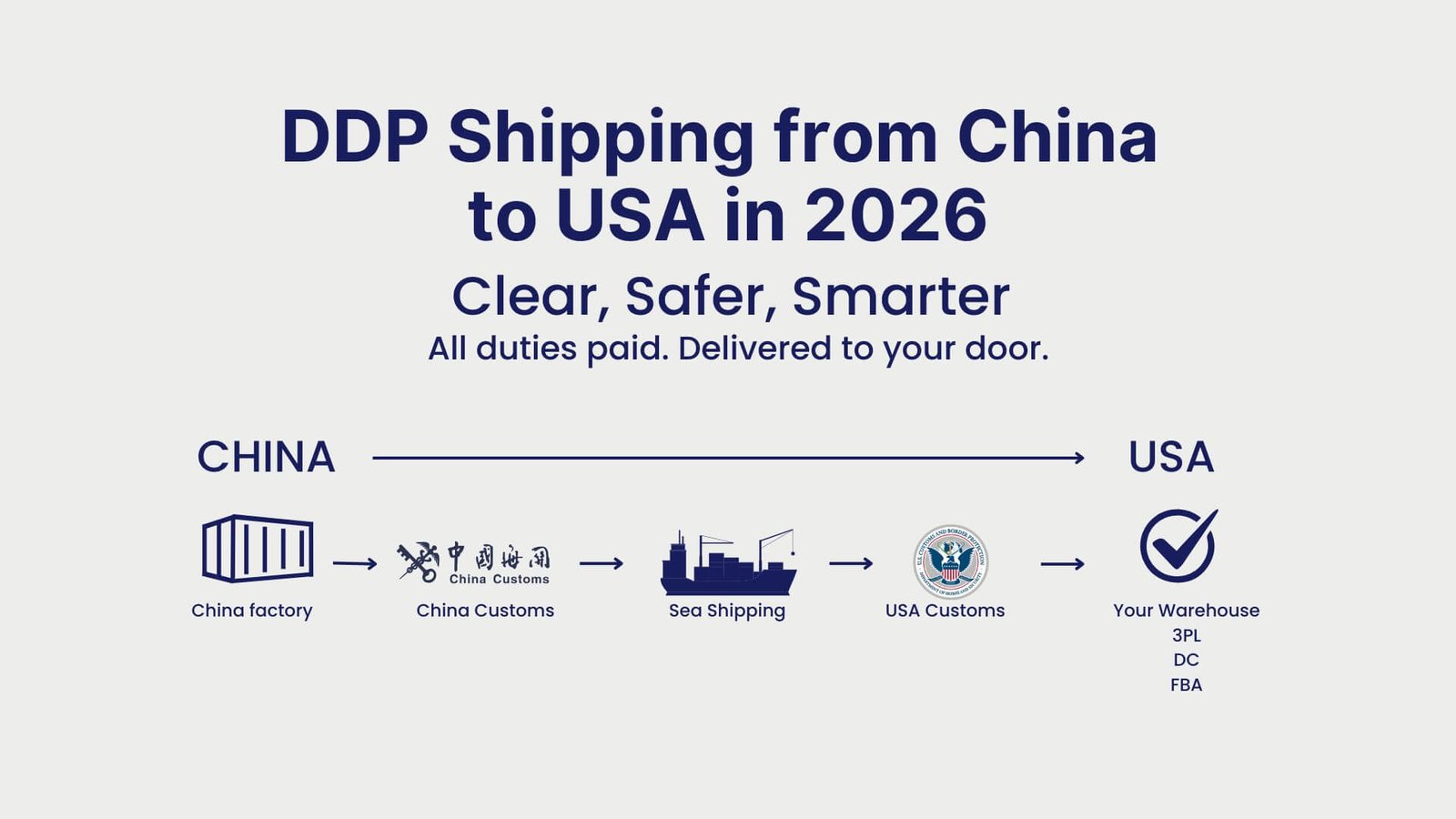
When I explain DDP to clients, I break it down into three simple pillars: Cost, Compliance, and Convenience. It’s a framework that helps you understand the value.
The 3 Pillars of DDP
- Cost: You get one, all-inclusive price. This price covers everything from the factory in China to your warehouse in the USA. No more surprise invoices for customs duties, port fees, or final delivery. You can calculate your landed cost with 100% certainty.
- Compliance: A compliant DDP provider acts as the Importer of Record (IOR) and handles all the complex U.S. customs paperwork. This includes making sure your HS codes are correct and any other government agency requirements (like FDA or FCC) are met.
- Convenience: You manage one relationship. Instead of juggling a factory, a Chinese trucking company, an ocean carrier, a customs broker, and a U.S. trucking company, you have a single point of contact.
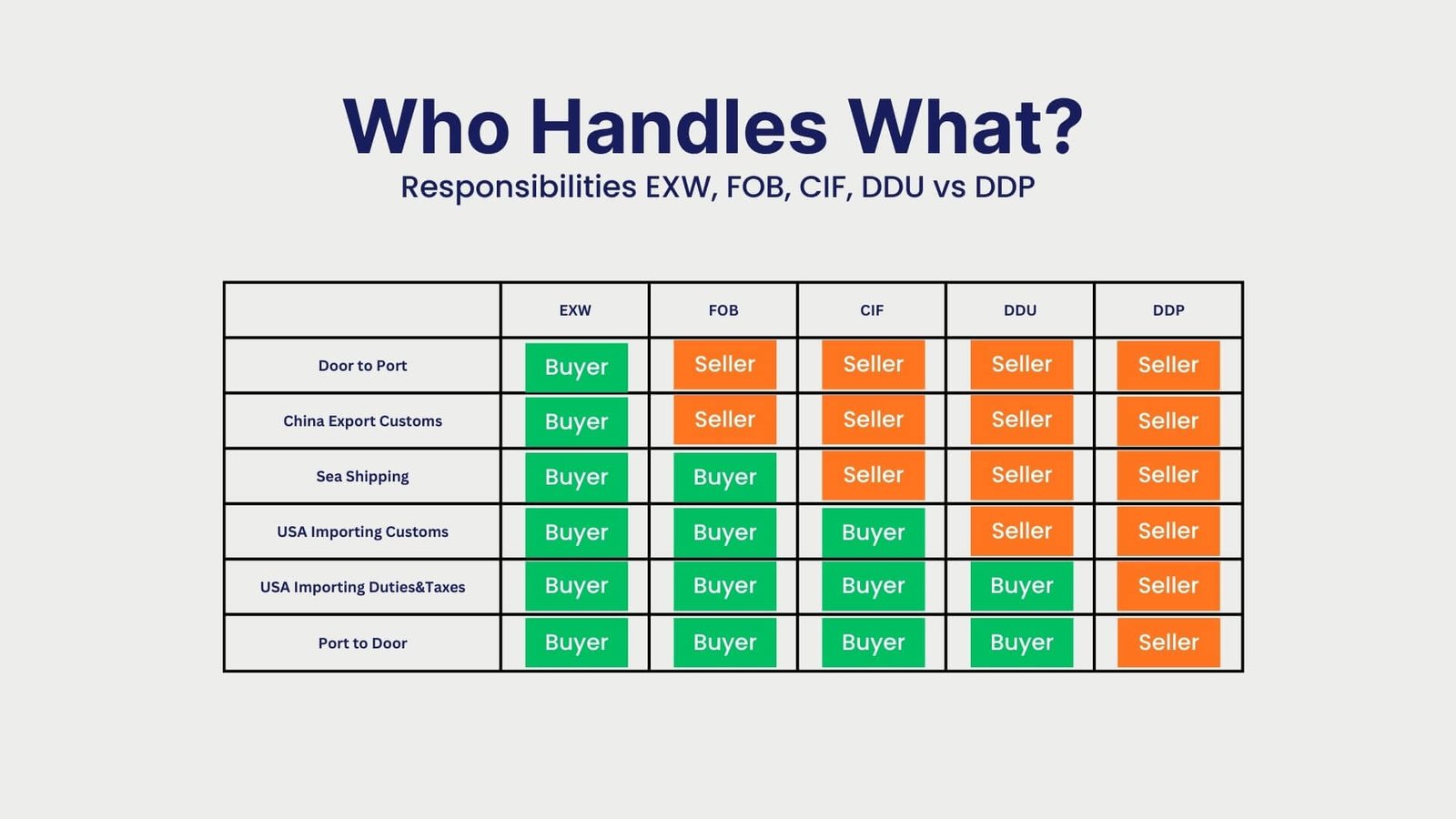
To make it even clearer, here is how DDP compares to other common Incoterms.
Who Handles What? A Responsibility Breakdown
| Task | EXW (Ex Works) | FOB (Free on Board) | DAP (Delivered at Place) | DDP (Delivered Duty Paid) |
|---|---|---|---|---|
| Factory Pickup | Buyer | Seller | Seller | Seller |
| Export Customs | Buyer | Seller | Seller | Seller |
| Ocean Freight | Buyer | Buyer | Seller | Seller |
| U.S. Customs Clearance | Buyer | Buyer | Buyer | Seller |
| U.S. Import Duties | Buyer | Buyer | Buyer | Seller |
| Final Delivery | Buyer | Buyer | Buyer | Seller |
As you can see, DDP shifts almost all the logistical responsibility to the seller or your DDP service provider.
Why Has DDP Become the Go-To Choice for U.S. Importers in 2026?
Juggling multiple freight vendors is a headache. One miscommunication can lead to huge delays and fees. DDP consolidates everything under one trusted, accountable partner, simplifying your operations.
Importers are choosing DDP in 2026 for its predictable, all-in-one landed cost, which is crucial during tariff volatility. It also handles all customs paperwork, pays duties upfront to avoid surprises, and streamlines the entire process, especially for complex shipments like Amazon FBA.

Based on my conversations with hundreds of importers, I've seen a clear shift. The reasons are practical and directly address the biggest pain points in today's market. Here are the core drivers behind DDP's growing popularity.
7 Reasons Importers Are Switching to DDP
- Predictable Landed Cost: In an era of tariff volatility, knowing your exact cost per unit before it even ships is a massive competitive advantage. DDP provides one fixed price.
- Customs Paperwork Done for You: A compliant DDP provider handles the complex entry filing. This includes ensuring any other government agency requirements, like those from the FDA, EPA, or FCC, are correctly handled.
- Duty Paid Upfront: With FOB or EXW, you often get a surprise duty and tax bill from your broker weeks after the goods arrive. With DDP, the duty is included in your initial quote. No surprises.
- Faster Customs Release: When documentation is prepared correctly and submitted by a compliant provider, your shipment is less likely to be flagged for a customs exam. This means faster release and quicker time-to-market.
- Less Operational Workload: Why manage 4 or 5 different vendors? With DDP, you have a single provider and a single point of contact from end to end. This frees up your time to focus on your business.
- Amazon FBA Compliance: A good DDP provider specializes in FBA. They ensure your cargo is palletized, labeled, and delivered according to Amazon's strict and ever-changing rules, avoiding costly rejections.
- Reduced Risk Exposure: For importers who are new, understaffed, or simply don't want to become logistics experts, DDP transfers the risk and workload to a specialist.
When Is DDP Not the Best Choice for Your Shipment?
DDP sounds perfect for everyone, right? But it's not a one-size-fits-all solution. Knowing its limitations is key to making a smart business decision and proves you're working with an honest partner.
DDP is not the best choice if you need absolute control over your ocean freight costs and carrier selection. It's also less suitable for very high-value goods where you want to manage duty payments directly, or if you already have a strong in-house compliance team.
I believe in transparency, and that means telling you when DDP might not be the right fit. It builds trust. If you're an importer who values a high degree of control over every leg of the journey, you might prefer another arrangement.
Here are a few scenarios where FOB or EXW might serve you better:
You Want Full Control Over Costs
With DDP, costs like ocean freight and duties are bundled into one price. If you are an experienced importer with strong carrier relationships, you might be able to secure a lower ocean freight rate on your own. DDP prioritizes predictability over granular cost control.
You Import Very High-Value Goods
For goods with extremely high value, the duty payment can be substantial. Some importers prefer to manage this payment directly through their own customs broker to maintain full visibility and control over that large cash transaction. There's also a risk of some DDP providers inflating the duty portion of their quote.
You Need Specific Shipping Schedules
If you need to use a specific steamship line or a very precise sailing schedule, a FOB arrangement gives you the power to book the ocean freight yourself. DDP providers typically work with a set of preferred carriers to ensure reliable service.
Your Provider Lacks U.S. Compliance Expertise
This is the most important point. If your DDP provider is not a licensed U.S. Customs Broker, you are taking a huge risk. In that case, you are far better off managing the import yourself with a FOB shipment and hiring your own compliant broker.
What Are the Hidden Risks of Cheap DDP Providers in 2026?
That "too good to be true" DDP quote looks tempting. But it often hides illegal shortcuts and dangerous compliance gaps that put your entire business at risk. I'll share what competitors won't tell you.
The biggest risk of cheap DDP is using a non-compliant provider. They may misclassify your goods to pay less duty (exposing you to fines), undervalue your cargo (risking seizure), or use a fake Importer of Record, which is illegal and can get you blacklisted by CBP.

This is the part of the DDP world that worries me most. Many U.S. importers are being put at risk by providers in China who cut corners to offer a low price. They don't have to face CBP, but you do.
The Dangers of Non-Compliant DDP
- Incorrect HS Classification: A China-based forwarder might guess your HS code to create a quote. If it's wrong, you could be underpaying or overpaying duties. If CBP finds out, you are liable for the back-duties and significant fines, even years later.
- Under-Valuation: Some cheap DDP providers will declare a lower value for your goods to customs to save money on duty. This is illegal. If CBP discovers this, they can seize your entire shipment and levy severe financial penalties.
- Fake Importer of Record (IOR): This is the scariest risk. Some forwarders use a "borrowed" tax ID or a shell company as the IOR. This is a form of customs fraud. If that IOR is flagged, all shipments linked to it, including yours, can be stopped.
- Bundled "Mystery Fees": Their quotes often hide the true duty amount in a single "DDP" fee. You have no idea if they classified your product correctly or how much duty was actually paid. You lose all transparency.
- Routing to Hide Origin: I've seen cases where providers route goods through Hong Kong or Malaysia to try and obscure the true origin to circumvent tariffs. This is another illegal practice with severe consequences.
Ultimately, with a cheap, non-compliant DDP provider, you have zero visibility and zero control. You are trusting your business to an overseas agent who is not legally accountable to U.S. law.
What Are the 5 Costly Mistakes a Compliant DDP Service Helps You Avoid?
Simple shipping mistakes are incredibly expensive. Demurrage fees, unexpected duty bills, and rejected Amazon FBA shipments can destroy your profit margins. A good DDP service acts as your insurance policy against these errors.
A compliant DDP service helps you avoid: 1) Costly CBP holds and exams from bad paperwork. 2) Surprise duty bills from misclassification. 3) FBA rejections from non-compliant prep. 4) Lack of accountability. 5) Launch-destroying delivery delays.
I see importers make these same costly mistakes over and over. They are almost always preventable. Here is how a professional DDP service, acting as your partner, helps you avoid them.
1. CBP Holds, Exams, and Demurrage
- The Mistake: Missing documents or an incorrect HS code on your customs entry will almost certainly trigger a CBP hold or exam. While your container sits, you are charged demurrage and detention fees of $200–$350 per day.
- The DDP Solution: A compliant DDP provider prepares and files all documents correctly before the ship even arrives. This minimizes the risk of holds, ensuring a smooth release.
2. Unexpected Duty Bills
- The Mistake: You calculate your profit margin based on a 3% duty rate. But your FOB-appointed broker classifies the product under a different HS code, and you get a surprise bill for 15% duty.
- The DDP Solution: The duty rate is legally verified and locked in upfront. The DDP quote includes this cost, so there are absolutely no surprises.
3. Amazon FBA Rejection
- The Mistake: Your shipment arrives at Amazon, but the pallets are the wrong size or the labels are incorrect. Amazon rejects it, and you have to pay for it to be trucked to a 3rd party warehouse, reworked, and redelivered.
- The DDP Solution: A DDP provider specializing in FBA handles all the prep, palletization, labeling, and delivery appointments to Amazon's exact specifications.
4. Forwarder Disappearance
- The Mistake: With FOB, you have multiple handoffs. When a delay happens, the China forwarder blames the carrier, who blames the U.S. broker. There is no accountability.
- The DDP Solution: You have one point of contact and one company responsible for the entire journey. The buck stops with them.
5. Late Delivery Destroying Launch Windows
- The Mistake: You've planned a major product launch or a Q4 sales push. A customs delay or delivery problem causes you to miss it, costing you thousands in lost sales.
- The DDP Solution: A predictable DDP timeline, with proactive management, ensures your products arrive when you need them.
How Did a U.S. Importer Cut Duty by 42% Using Our Compliant DDP Model?
Paying high duties on your imports often feels unavoidable. But what if I told you that you might be overpaying without even knowing it? One of my clients saved thousands with a simple, legal change.
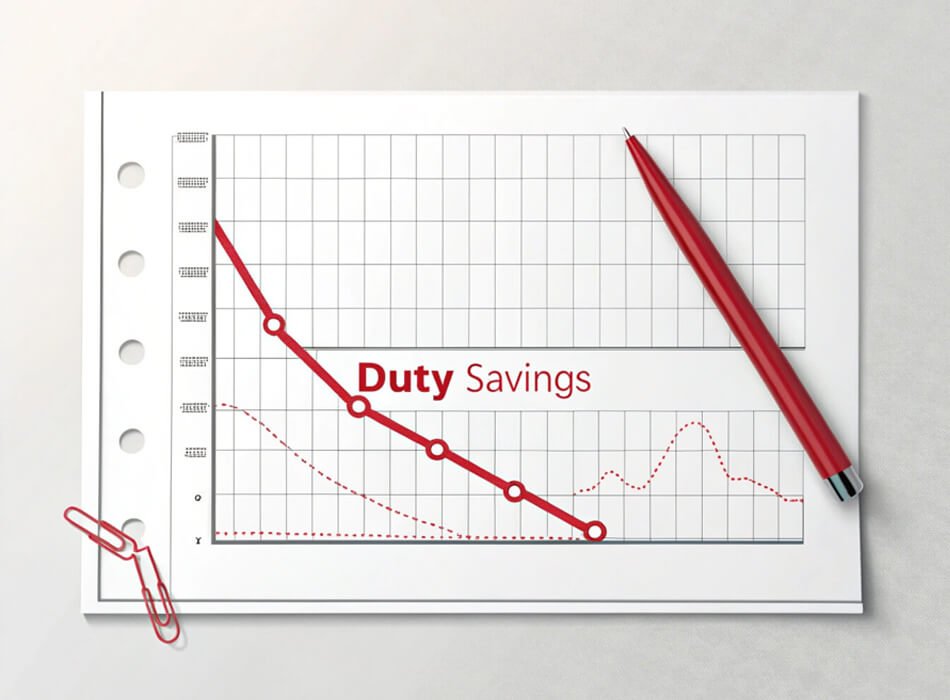
An electronics importer client shipping 1x40HQ container switched from FOB to our compliant DDP service. By legally correcting their product's HS classification, we cut their duty rate from 3.9% to 2.2%, saving them $3,800 on duty and fees for that single shipment.
This is a real-world story that shows the power of working with a DDP provider who is also a licensed U.S. Customs Broker. Let's call the client "Mark," an importer of consumer electronics.
The Problem Under His Old FOB Model
Mark was shipping one 40-foot container (1x40HQ) per month. He was using a FOB arrangement, where his supplier got the goods to the port, and he hired his own freight forwarder and customs broker. His broker had classified his product under an HS code that carried a 3.9% duty. He was also experiencing frequent customs delays and his products were often late for his retail partners.
The Solution with Our Compliant DDP Model
Mark came to us looking for a more predictable solution. During our initial consultation, we did a free HS code review. As licensed customs brokers, we have a legal and ethical duty to classify products correctly. We discovered his product qualified for a different HS code, one with only a 2.2% duty rate.
The results were immediate:
- Duty Savings: The duty reduction saved him over $3,800 on his very first container. That's a 42% reduction in duty paid.
- Faster Release: We used On-Board Clearance, filing the customs entry 5 days before vessel arrival. His container was cleared in just 1 day after unloading.
- FBA-Ready: We also managed the final delivery to Amazon. The container was properly palletized and labeled, leading to zero FBA rejections.
The total savings in both time and money were huge. He saved $3,800 in cash and got his products to market 7 days faster than his average time under FOB. This is the difference a compliant partner can make.
How Do You Choose a Safe, Compliant DDP Provider in 2026?
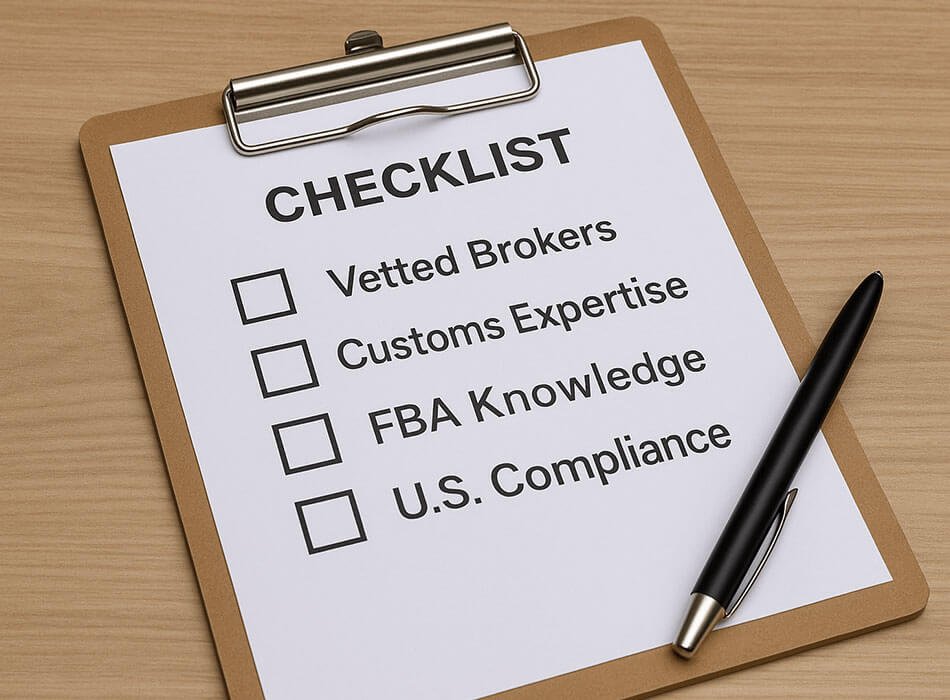
Finding a reliable DDP provider in a sea of confusing options is hard. Many overseas agents make promises they can't legally keep. Use this simple checklist to vet your partners and protect your business.
To choose a safe DDP provider, verify they are a U.S.-registered customs broker. They must provide legal HS classification, handle FDA/EPA filings, use a real Importer of Record, and offer a transparent, fully-landed cost quote. U.S.-side accountability is non-negotiable.
This checklist is your shield. Ask these questions before you sign any contract. If a potential provider can't say "yes" to these, walk away.
The Compliant DDP Provider Checklist
- Are they a U.S.-Registered Customs Broker?
- Why it matters: This is the most important question. A licensed broker is legally accountable to U.S. CBP. A simple forwarder in China is not.
- Do they provide legal HS Classification and duty optimization?
- Why it matters: This ensures you pay the correct, lowest legal duty rate and protects you from future fines.
- Can they handle FDA, EPA, or FCC filings?
- Why it matters: If you import food-related items, electronics, or pesticides, this capability is essential for a legal entry.
- Do they use a real, compliant Importer of Record (IOR)?
- Why it matters: They must use your business as the IOR or have a legitimate, legal IOR service. Ask them who the IOR will be.
- Is the landed-cost quote fully transparent?
- Why it matters: You should see a clear breakdown of freight, duty, and delivery fees. Avoid "bundled mystery fees."
- Do they have experience with Amazon FBA-spec compliance?
- Why it matters: If you're an FBA seller, this specialized knowledge prevents costly rejections and warehouse fees.
- Do they offer end-to-end tracking and U.S.-side accountability?
- Why it matters: When a problem happens, you need a contact in your U.S. time zone who is responsible for solving it.
Why Is Our DDP Model Different from the Competition?
On the surface, all DDP services can seem the same. But the truth is, most are just middlemen, adding layers of risk and cost. Our model is fundamentally different because it was built for U.S. compliance first.
Our DDP model is different because we are a U.S.-registered customs broker, not just a freight forwarder. This allows us to legally optimize your duty, use advanced clearance methods like On-Board Clearance for faster release, and offer true, transparent landed-cost quoting.
We didn't just add DDP as a service. We built our entire DDP program around our core strength: U.S. customs compliance. This is a critical distinction that directly benefits you.
The U.S. Compliance Advantage
- We are a U.S.-Registered Customs Broker: This isn't just a certification. It means we are licensed by and legally accountable to the U.S. government. We are your legal representative at the border. Most DDP providers are not.
- We Cut Duty Legally: Our licensing allows us to perform deep HS code analysis and legally classify your products to ensure you pay the lowest possible duty. We have helped clients cut duty by 30-50%.
- We Use On-Board Clearance: Because we are brokers, we can file your customs entry up to 5 days before the vessel arrives. This often means your container is cleared before it's even unloaded, dramatically speeding up your supply chain.
- True Landed-Cost Transparency: We provide a clear, itemized quote showing you exactly what you're paying for freight, duty, and delivery. No hidden fees, no mystery charges.
- FCL Specialists: We specialize in full-container-load (FCL) DDP. We are not a cheap, small-parcel DDP operator. We provide control and expertise at the container level.
- Door-to-Door Accountability: From the factory in China to your door in the U.S., we are the single point of contact and accountability.
Should You Switch to DDP in 2026?
Deciding between DDP and a more traditional incoterm like FOB can be tough. The wrong choice can impact your cash flow, workload, and bottom line. This simple decision matrix can help make the right choice clear.
You should switch to DDP if you prioritize predictable costs, want to reduce your operational workload, and need seamless FBA handling. You should stick with FOB if you need maximum control over freight costs, import very high-value goods, or have a dedicated in-house logistics team.
There is no single right answer for every business. The best choice depends on your priorities, resources, and risk tolerance. I've created this practical guide to help you decide.
Choose DDP if:
- You want predictable, all-in-one landed costs for easy budgeting.
- You do not have a dedicated logistics team and want to reduce your workload.
- You ship moderate-value goods in full container loads (FCL).
- You sell on Amazon and need guaranteed FBA-ready handling and delivery.
- You want to manage fewer vendors and have a single point of accountability.
- You value simplicity and peace of mind over granular control of every cost.
Choose FOB if:
- You want maximum cost control over ocean freight and can negotiate your own rates.
- You import very high-value machinery or goods where duty is a massive expense you want to manage directly.
- You prefer to choose your own specific carriers and sailing schedules.
- You have a strong in-house compliance team or a long-term, trusted U.S. customs broker you already work with.
- You are an experienced importer who is comfortable managing multiple vendors and risks.
What's the Future of Importing from China?
The old ways of importing from China are broken. The constant fire-fighting, surprise fees, and stressful delays are draining your energy and profits. The future is about predictability, compliance, and control.
In 2026, successful importing hinges on three things: compliance, predictability, and control. A compliant DDP shipping model, when executed by the right partner, is a powerful tool that delivers all three, letting you focus on growth instead of logistics.

The importers who will succeed in the coming years are the ones who adapt. They understand that their job is not to be a logistics expert, but to be an expert in their own business—finding great products and selling them. The chaos of 2026's shipping landscape demands a more streamlined, predictable, and legally sound approach. A compliant DDP model is a powerful answer to that demand. It is powerful, but only when it is done legally and transparently by the right provider. It's about shifting from a reactive, problem-solving mode to a proactive, growth-focused mindset. Your goal shouldn't be to fight fires; it should be to build a fire-proof supply chain.
Talk to a U.S.-registered customs broker about what a compliant DDP option could look like for your business.
Conclusion
In 2026, compliant DDP shipping offers U.S. importers predictability and peace of mind. Choose a partner with U.S. customs brokerage expertise to ensure savings and avoid dangerous hidden risks.