Struggling with complex China imports? Worried about surprise customs fees1? DDP2 shipping handles everything for you, from the factory in China to your door in the US.
DDP2, or Delivered Duty Paid3, is an international trade term. It means the seller or their agent is responsible for all costs and risks. This includes shipping, insurance, and import duties4, until the goods are delivered to your US address. It's a completely hands-off shipping solution5 for you, the importer.
I remember a client who visited our Shenzhen office just yesterday. He's a US importer named Mark, and he sells power banks and TWS headphones. He had five large orders from five different factories, worth about $144,000. He needed to get them all into one container and shipped to the US. He was detail-oriented and focused on cost, but his biggest pain point was clear. He did not want to deal with the headache of US customs and duties. He asked me what to do. I told him DDP2 was the perfect solution for his situation. This article will explain DDP2 just like I explained it to him.
What is DDP2, and how does it simplify shipping?
Confused by all the shipping acronyms? DDP2 might sound complex, but it's not. It is the simplest way for you, the buyer, to import goods without stress.
DDP2 stands for "Delivered Duty Paid3". It is a shipping agreement where the seller handles everything. This includes all transportation, insurance, customs clearance6, and paying all taxes and duties. Your job is just to receive the goods at your door.
DDP2 is an official Incoterm7, which is a set of rules published by the International Chamber of Commerce. These rules define the responsibilities of sellers and buyers for the delivery of goods. Under DDP2, the seller has the maximum obligation. This makes it very attractive for buyers like you.
The Seller's Full Responsibility
When you agree to DDP2 terms, your freight forwarder8, acting on the seller's behalf, takes on all the work. We handle the entire journey of your products. This starts from the factory in China. It includes transport to the port, ocean freight, and insurance. Most importantly, it includes clearing US customs and paying all associated taxes and duties. The price you are quoted is the final price. There are no surprise fees for customs or port charges later on. This gives you complete budget certainty.
The Buyer's Simple Role
Your role in a DDP2 shipment is minimal. You place the order and wait for it to arrive. You don't need to coordinate with shipping lines, file customs paperwork, or calculate duties. This frees up your time to focus on what you do best: selling your products and growing your business. For importers who find logistics9 and customs overwhelming, DDP2 is the ideal "set it and forget it" option.
How are DDP2, CIF10, FOB11, and EXW12 different?
Choosing the wrong shipping term can cost you money. You might end up paying for unexpected fees. Understanding the differences between DDP2, CIF10, FOB11, and EXW12 protects your budget.
The main difference is who pays for what and when the risk transfers from seller to buyer. With EXW12, the buyer handles everything. With FOB11, risk transfers at the origin port. With CIF10, it includes insurance. DDP2 covers everything to your door.
These four terms represent a spectrum of responsibility. On one end is EXW12, giving the buyer total control and total responsibility. On the other end is DDP2, giving the seller total responsibility. Let's break it down to see where the risk and cost transfer from the seller to you, the buyer.
Understanding the Key Differences
Each term, or Incoterm7, has a specific point where the responsibility for the shipment passes from the seller to the buyer. This is the most critical difference to understand. If something happens to the goods, the party who holds the risk at that time is responsible for the loss. For new importers or those who want to avoid logistics9, moving the risk transfer point as close to your own warehouse as possible is the safest choice. DDP2 does exactly that.
Here is a simple table to compare them:
| Incoterm7 | Seller's Responsibility | Buyer's Responsibility | Risk Transfer Point |
|---|---|---|---|
| EXW12 (Ex Works) | Make goods available at their factory. | All transport, export/import clearance, duties. | At the seller's factory. |
| FOB11 (Free On Board) | Deliver goods to the vessel at the origin port. Export clearance. | Ocean freight, insurance, import clearance, duties. | When goods are on board the vessel. |
| CIF10 (Cost, Insurance, Freight) | Same as FOB11, plus pays for ocean freight and minimum insurance. | Import clearance, duties, final delivery13. | When goods are on board the vessel. |
| DDP2 (Delivered Duty Paid3) | All costs and risks to the final destination. | Unloading at the destination. | At the buyer's named destination. |
As you can see, DDP2 is the most comprehensive option from the buyer's perspective. It removes all the logistical burdens between the factory and your door.
When should you choose DDP2 for your shipments?
Not sure which shipping term is right for your business? Choosing the wrong one can lead to delays and extra costs. DDP2 is the perfect solution for specific situations.
Choose DDP2 when you want a clear, all-inclusive price and want to avoid handling US customs yourself. It is ideal for importers who need a predictable, hassle-free process from the factory to their final destination.
Deciding on the right Incoterm7 depends on your experience, your resources, and your tolerance for risk. For many of our US customers, DDP2 provides the peace of mind they need. It allows them to operate like they are buying from a domestic supplier, even when their factory is across the ocean.
You Are a New Importer
If you are new to importing from China, the process can feel overwhelming. You have to navigate export customs, freight booking, marine insurance, and US import customs. DDP2 removes all these hurdles. We handle it all. You get one simple, all-in price.
You Need Budget Certainty
If you are like Mark, the power bank importer, you are cost-oriented. You need to know your total landed cost to price your products correctly. DDP2 gives you this. The quoted price includes shipping, duties, and taxes. There are no surprise bills from customs or the shipping line. This makes financial planning much easier.
You Are Sourcing from Multiple Suppliers
Mark's situation is a perfect example. He had products at five different factories. With DDP2, we instructed him to have all suppliers send the goods to our warehouse in Shenzhen. We then consolidated everything into one container. This is much simpler than trying to coordinate five different FOB11 shipments. DDP2 is excellent when you need consolidation services14.
How does the DDP2 process actually work?
The DDP2 process can seem magical. Your goods just show up at your US warehouse. But how does it all happen? Understanding the steps gives you confidence and control.
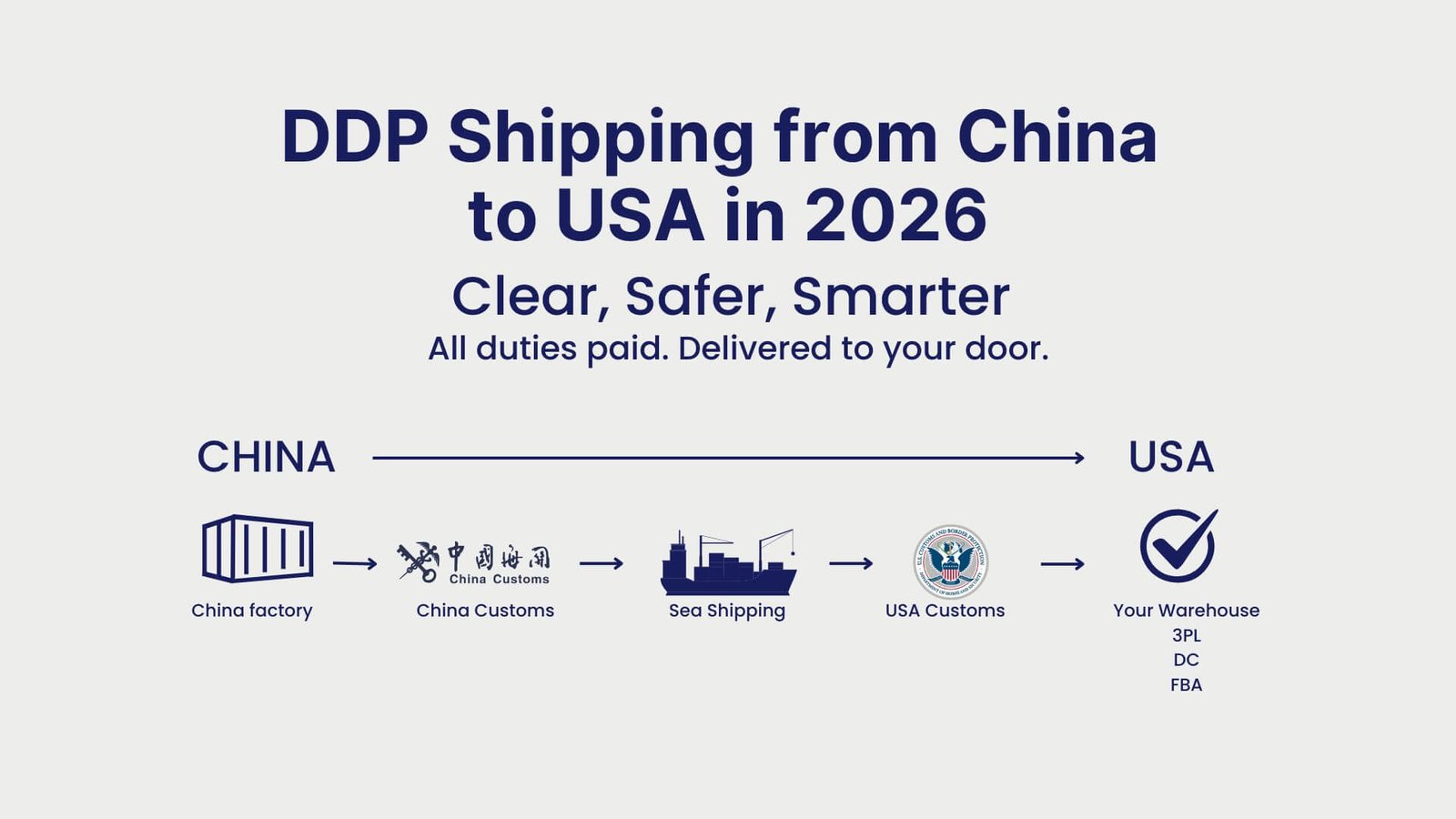
The DDP2 process involves your freight forwarder8 managing every single step. We consolidate your goods, handle China's export customs, manage the sea freight15, clear US customs, pay all duties, and arrange the final truck delivery to your door.
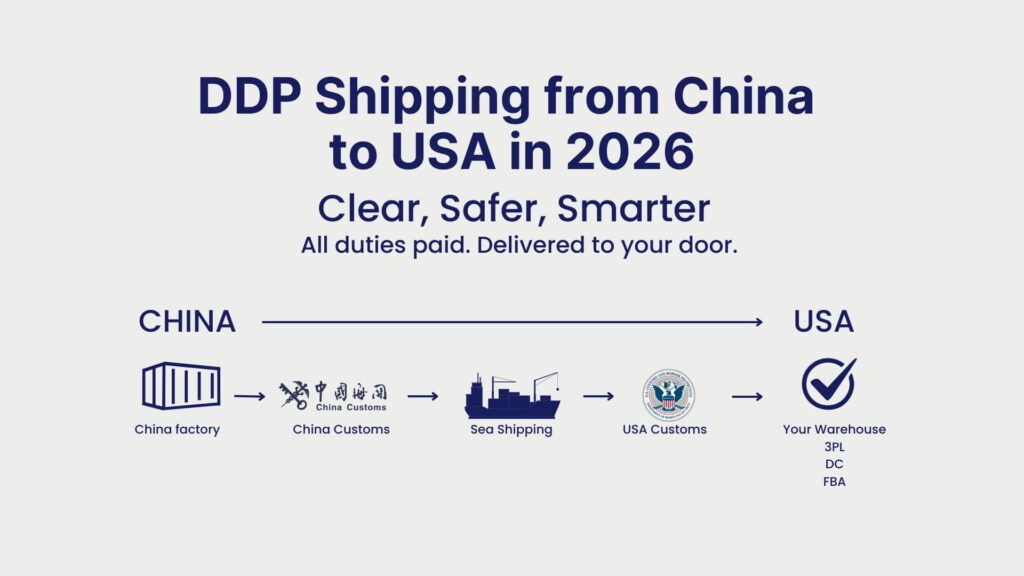
When I explained our DDP2 service to Mark, I laid it out for him in simple steps. He could see the entire path his goods would take, from his five suppliers in China to his single warehouse in the US. This transparency is key. You should always know what is happening with your valuable cargo. We don't just ship your container; we manage a detailed process to ensure a smooth, predictable delivery. Here is the step-by-step process we use for our DDP2 customers. It shows how we take full responsibility for your shipment and make importing easy for you.
- Provide Packing List and Invoice: You give us the commercial invoice and packing list from your suppliers. We use this to coordinate with them.
- Consolidation: We instruct your suppliers to send the goods to our warehouse in Shenzhen. Here, we consolidate all your orders into one container.
- China Export Customs: We prepare all necessary documents and clear your container through China's export customs.
- Sea Shipping: We book space on a vessel and manage the sea freight15 from the Port of Yantian in Shenzhen to the Port of Los Angeles.
- On-Board Clearance: We can begin the US customs clearance6 process while the vessel is still on the water, which saves valuable time.
- US Customs Clearance and Duties: When the container arrives, we clear it through US Customs. We do this under our registered US company name, ChuangDa Customs Services Inc. We pay all taxes and duties on your behalf.
- Delivery Notice: Once cleared, we send you a delivery notice. You can then schedule the best day and time for final delivery13.
- Final Mile Delivery: We arrange for a truck to pick up the container from the port and drayage it directly to your warehouse door.
How can you import power banks from China to the US step-by-step using DDP2?
Importing electronics like power banks is tricky. They are often classified as dangerous goods16. Getting the documentation wrong can lead to major delays, fines, or even seizure of your goods.
First, provide your supplier details, packing list, and invoice to us. We then consolidate your power banks, handle all dangerous goods16 paperwork, manage sea freight15, clear US customs, pay duties, and deliver to your warehouse.
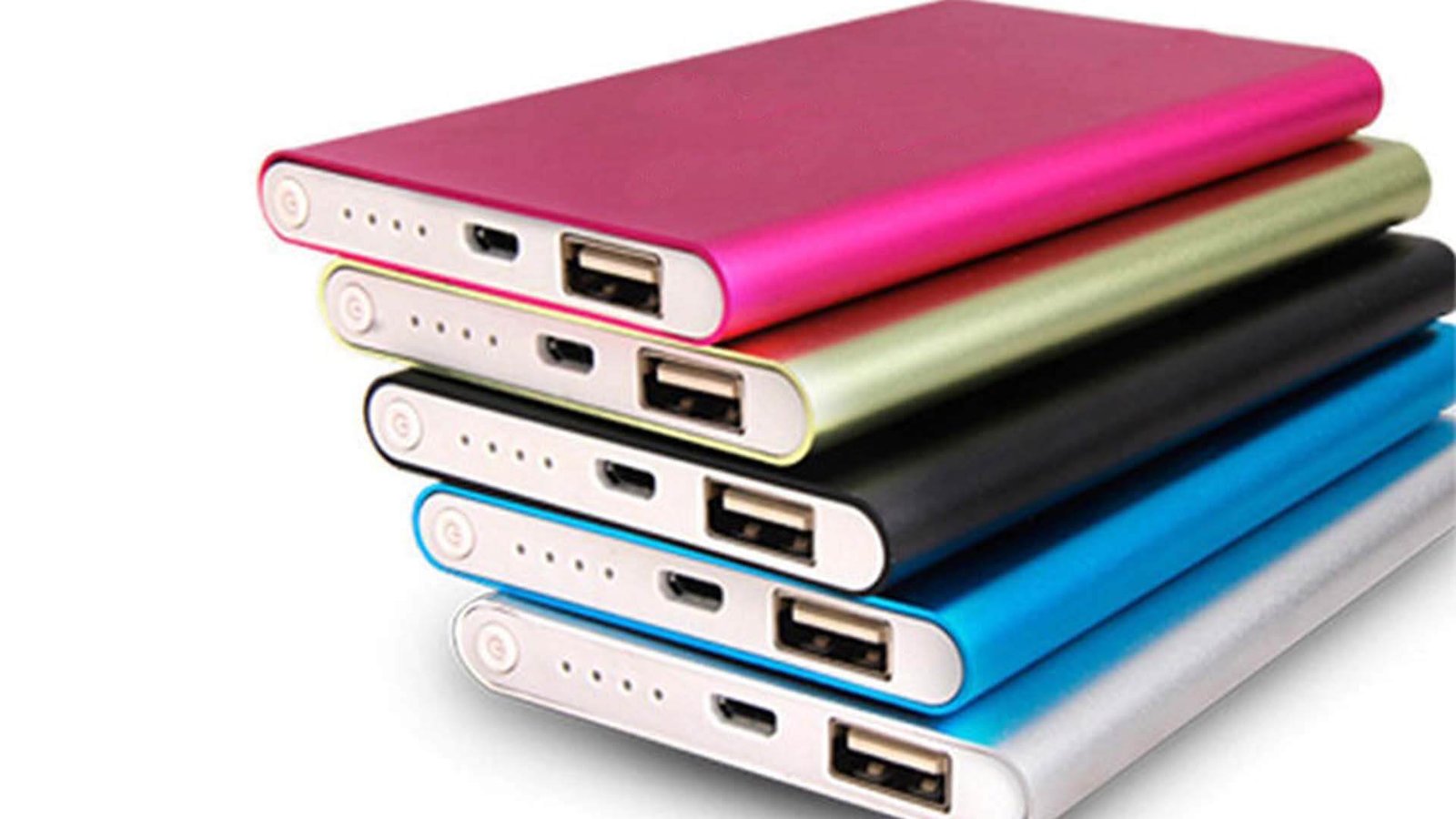
Using DDP2 for power banks is a smart move. It shifts the responsibility for handling the complex regulations to an expert partner. We have extensive experience shipping electronics17 and other products with special requirements. When you are shipping power banks, which contain lithium-ion batteries, you have to follow strict rules. Here is how we apply our DDP2 process specifically for a power bank shipment.
Step 1: Documentation and Consolidation
It starts with the right paperwork. You will need to get a Material Safety Data Sheet18 (MSDS) from your supplier. This document is critical for shipping lithium batteries. It details the chemical properties and transportation requirements. Along with the commercial invoice and packing list, the MSDS allows us to plan the shipment correctly. We then arrange for all your power banks to be consolidated at our facility.
Step 2: Handling Dangerous Goods (DG) Classification
Power banks are typically classified as UN3480 or UN3481. This means they are dangerous goods16. We ensure that all products are correctly labeled with the proper DG marks. We also ensure the container is placarded correctly. Our team prepares the Dangerous Goods Declaration for the steamship line. This step is non-negotiable and prevents your container from being rejected at the port.
Step 3: Ocean Freight and US Customs
We manage the ocean freight just like any other shipment. However, upon arrival in the US, our role as a US Customs Broker becomes crucial. As ChuangDa Customs Services Inc., we act as the Importer of Record. We use our expertise to ensure the correct HTS codes19 are used for your power banks and TWS headphones. This helps you get the lowest possible duty rate. We pay the duties for you, simplifying your accounting.
Step 4: Final Delivery
After customs release, we coordinate the final delivery13. You get a simple notification that your container is ready. You schedule the delivery, and our truck brings the container to your door. The entire complex process of shipping dangerous goods16 becomes as simple as receiving a domestic package.
Conclusion
DDP2 shipping removes the complexity of importing from China. It provides one simple price and handles all logistics9, letting you focus on growing your business with absolute confidence.
Discover strategies to prevent unexpected customs fees and ensure a smooth import process. ↩
Explore this link to understand how DDP simplifies international shipping and reduces your logistical burdens. ↩
Learn about Delivered Duty Paid and how it can benefit your importing process. ↩
Get insights into how import duties are determined and how to manage them effectively. ↩
Find out the most effective shipping solutions that can streamline your import operations. ↩
Get detailed information on the customs clearance process and how to navigate it. ↩
Learn about Incoterms and their significance in international shipping agreements. ↩
Understand the role of a freight forwarder and how they can simplify your shipping experience. ↩
Explore best practices in logistics to enhance your importing efficiency and reduce costs. ↩
Discover the meaning of CIF and how it compares to other shipping terms like DDP. ↩
Understand FOB and its implications for risk and responsibility in shipping. ↩
Learn about EXW and how it affects the responsibilities of buyers and sellers. ↩
Explore how final delivery is coordinated to ensure timely receipt of your goods. ↩
Find out how consolidation services can simplify your shipping process and save costs. ↩
Explore the concept of sea freight and its importance in international shipping. ↩
Understand the regulations surrounding dangerous goods to ensure compliance during shipping. ↩
Learn about the specific challenges and regulations involved in shipping electronics. ↩
Learn about the importance of MSDS in shipping hazardous materials like lithium batteries. ↩
Discover how HTS codes impact duty rates and compliance in international shipping. ↩