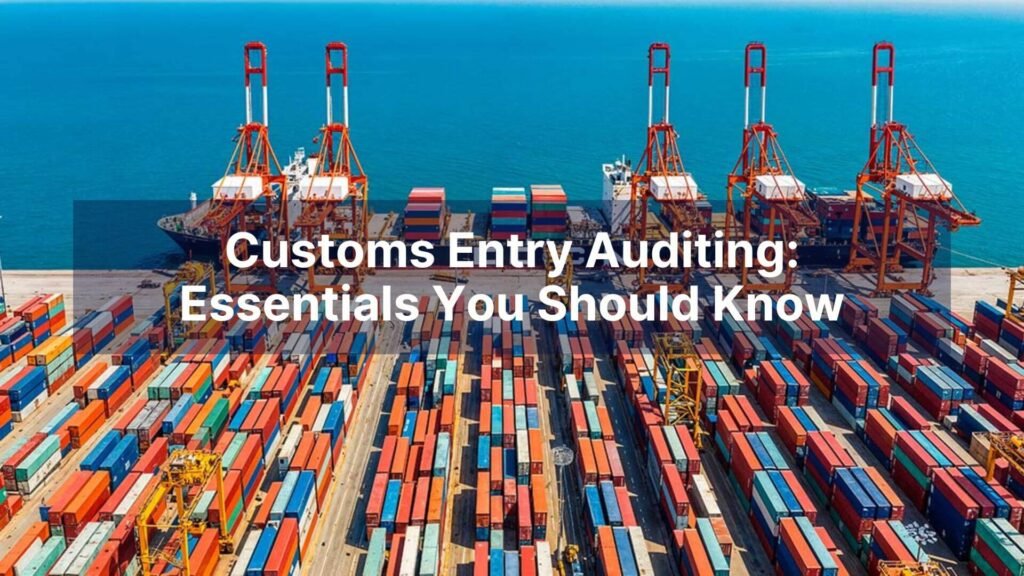
Customs entry auditing1 is crucial for U.S. importers to ensure compliance with regulations. Understanding the audit process helps avoid costly errors and penalties, making it essential for businesses involved in international trade.
Customs entry auditing1 is the process by which CBP reviews import records2 to verify compliance with classification, valuation, origin, and documentation requirements3. Audits help ensure duties are paid correctly and trade regulations are followed, and they typically target importers with higher compliance risk4 or complex trade activities.
As an importer, knowing what to expect from a customs audit is key. Preparation is essential to mitigate risks and ensure compliance. Understanding the audit triggers5 and being proactive can save your business from hefty penalties later.
What Is Customs Entry Auditing and Why U.S. Importers Are Reviewed by CBP?
Customs entry auditing1 is the process by which CBP reviews import records2 to verify compliance with classification, valuation, origin, and documentation requirements3. Audits help ensure duties are paid correctly and trade regulations are followed, and they typically target importers with higher compliance risk4 or complex trade activities.
Purpose Table
| Reason for Audit | Business Impact |
|---|---|
| Duty accuracy | Prevents revenue loss |
| Compliance enforcement | Avoids violations |
| Risk targeting | Focus on high-risk importers |
Flow:
Importer Activity → CBP Risk Screening → Audit Selection → Record Review
Customs audits are essential for maintaining trade integrity. They ensure that all importers are following the established guidelines. A thorough understanding of why your business may be selected for an audit can lead to better preparation and risk mitigation strategies.
Common Triggers That Lead to a Customs Audit Including Valuation, Classification, and Origin Errors
Customs audits are often triggered by inconsistent product classification, undervaluation, repeated post-entry corrections, origin discrepancies, or unusual duty patterns. Large import volumes or participation in special trade programs may also increase scrutiny.
Trigger Risk Table
| Trigger | Why It Raises Risk |
|---|---|
| HTS misclassification6 | Incorrect duty |
| Undervalued goods | Revenue loss risk |
| Repeated corrections | Compliance weakness |
| Origin inconsistency | Tariff evasion concern |
| High import volume | Greater exposure |
Understanding these triggers will help you avoid common pitfalls that lead to audits. It’s essential to maintain accurate records and consistent classifications in your import activities.
Key Areas CBP Reviews During an Entry Audit: HTS Codes, Value, Records, and Compliance Controls
CBP audits focus on entry accuracy, including HTS classification, transaction value, origin claims, documentation retention, and internal compliance controls7. Importers must demonstrate that their processes ensure accurate filings and recordkeeping.

Audit Focus Table
| Area | What CBP Checks |
|---|---|
| Classification | Correct HTS usage |
| Valuation | Declared transaction value |
| Origin | FTA or tariff claims |
| Records | 5-year retention8 |
| Internal controls | Compliance procedures |
Being aware of these focus areas allows you to conduct your own internal reviews. This proactive approach can help identify potential issues before they become significant problems during an audit.
How Importers Should Prepare Documentation and Internal Records Before a Customs Audit
Preparation involves organizing entry records, invoices, purchase orders, contracts, and classification support. Importers should review processes, confirm documentation accuracy, and ensure records match declared customs data.

Prep Checklist
| Document | Purpose |
|---|---|
| Commercial invoices | Value proof |
| Purchase orders | Transaction verification |
| HTS rulings | Classification support |
| Entry summaries | Filing record |
| Shipping documents | Movement proof |
Flow:
Document Review → Internal Audit → Corrections → Ready for CBP Review
Preparing your documentation is vital for a successful audit. Make sure to have everything organized and ready for review. This can significantly reduce the stress of the audit process.
Post-Entry Audits and Self-Reviews: How to Identify and Correct Errors Before CBP Does
Internal post-entry audits9 help importers identify errors early and file corrections, reducing penalties. Proactive reviews of entries, classifications, and valuation methods show compliance effort and can mitigate enforcement actions.
Self-Audit Focus
| Review Area | Goal |
|---|---|
| HTS consistency | Avoid misclassification |
| Value validation | Ensure accuracy |
| Origin verification | Support claims |
| Entry corrections | Voluntary disclosure |
Flow:
Entry Filed → Internal Review → Error Found → Correction Filed → Compliance Strengthened
Conducting self-reviews10 can save your business from future headaches. Identifying issues before CBP does shows your commitment to compliance and can lead to reduced penalties.
How Customs Brokers11 and Compliance Partners Help Importers Reduce Audit Risk and Maintain Entry Accuracy
Brokers and compliance partners provide classification review12, entry monitoring, documentation support, and audit preparation services13. Their oversight helps importers maintain consistent filings and respond effectively to CBP inquiries.

Importer → Broker → CBP Compliance Flow
Entry Planning → Classification Review → Filing → Monitoring → Audit Response → Continuous Improvement
Support Table
| Service | Importer Benefit |
|---|---|
| Classification support | Fewer errors |
| Entry monitoring | Early issue detection |
| Documentation control | Faster audit response |
| Training | Compliance awareness |
Partnering with a customs broker can significantly enhance your compliance efforts. Their expertise can streamline your processes and ensure that your documentation is always accurate.
In conclusion, understanding customs entry auditing and being prepared can significantly reduce audit risks. Proactive measures and professional partnerships are essential for maintaining compliance in your import activities.
Understanding customs entry auditing is crucial for importers to ensure compliance and avoid penalties, making it a vital aspect of international trade. ↩
Learning about CBP's review process helps importers prepare for audits and ensure their records meet compliance standards. ↩
Knowing these requirements is essential for importers to ensure their goods are correctly processed and duties are accurately paid. ↩
Identifying factors that increase compliance risk can help importers take proactive measures to mitigate potential audit triggers. ↩
Understanding common audit triggers allows importers to avoid actions that may lead to an audit, saving time and resources. ↩
Avoiding HTS misclassification is crucial for importers to prevent incorrect duty payments and potential penalties. ↩
Implementing strong internal compliance controls ensures accurate filings and can prevent costly errors during audits. ↩
Maintaining records for 5 years is a legal requirement that helps importers demonstrate compliance during audits. ↩
Conducting post-entry audits helps importers identify and correct errors early, reducing the risk of penalties. ↩
Self-reviews allow importers to proactively identify and correct issues, demonstrating compliance efforts to CBP. ↩
Customs brokers offer expertise in classification and documentation, helping importers maintain compliance and reduce audit risks. ↩
Classification review ensures that goods are correctly classified, preventing errors that could lead to audits. ↩
Audit preparation services help importers organize their documentation and processes, ensuring readiness for potential audits. ↩