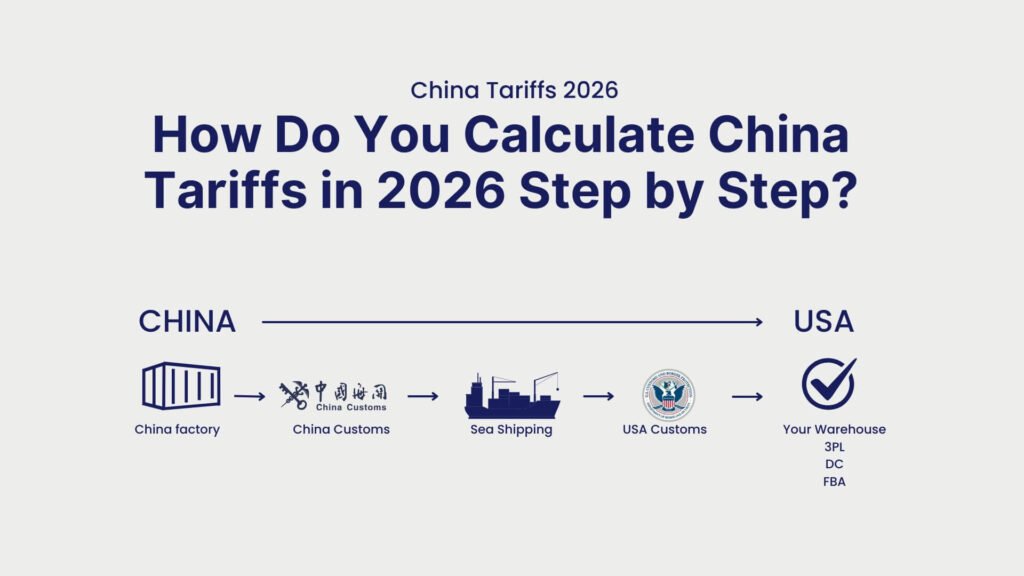
Worried about surprise import duties1 from China in 2026? Miscalculations can cost thousands, ruining your budget. I’ll provide a clear, step-by-step guide to calculating tariffs correctly.
To calculate China tariffs in 2026, you must identify your product's HTS code2, find the base duty rate, add any applicable Section 301 tariffs3, and then calculate the MPF and HMF fees. The total is based on your shipment's customs value4.
Getting the final number right is critical. I've seen many importers, like my client Mark, get hit with unexpected bills that damage their business. Before we jump into the math, you need to understand exactly what fees you're even paying. Let's break down the different tariffs you'll face when importing from China.
What Tariffs Apply to Imports From China in 2026?
Confused by all the different duties on your China import invoice? Missing even one fee can lead to a huge, unexpected bill. Let's break down every single tariff.
In 2026, imports from China face several potential charges: the standard U.S. duty based on the HTS code2, additional Section 301 tariffs3, the Merchandise Processing Fee (MPF)5, and the Harbor Maintenance Fee (HMF)6. All these must be calculated for a true landed cost.
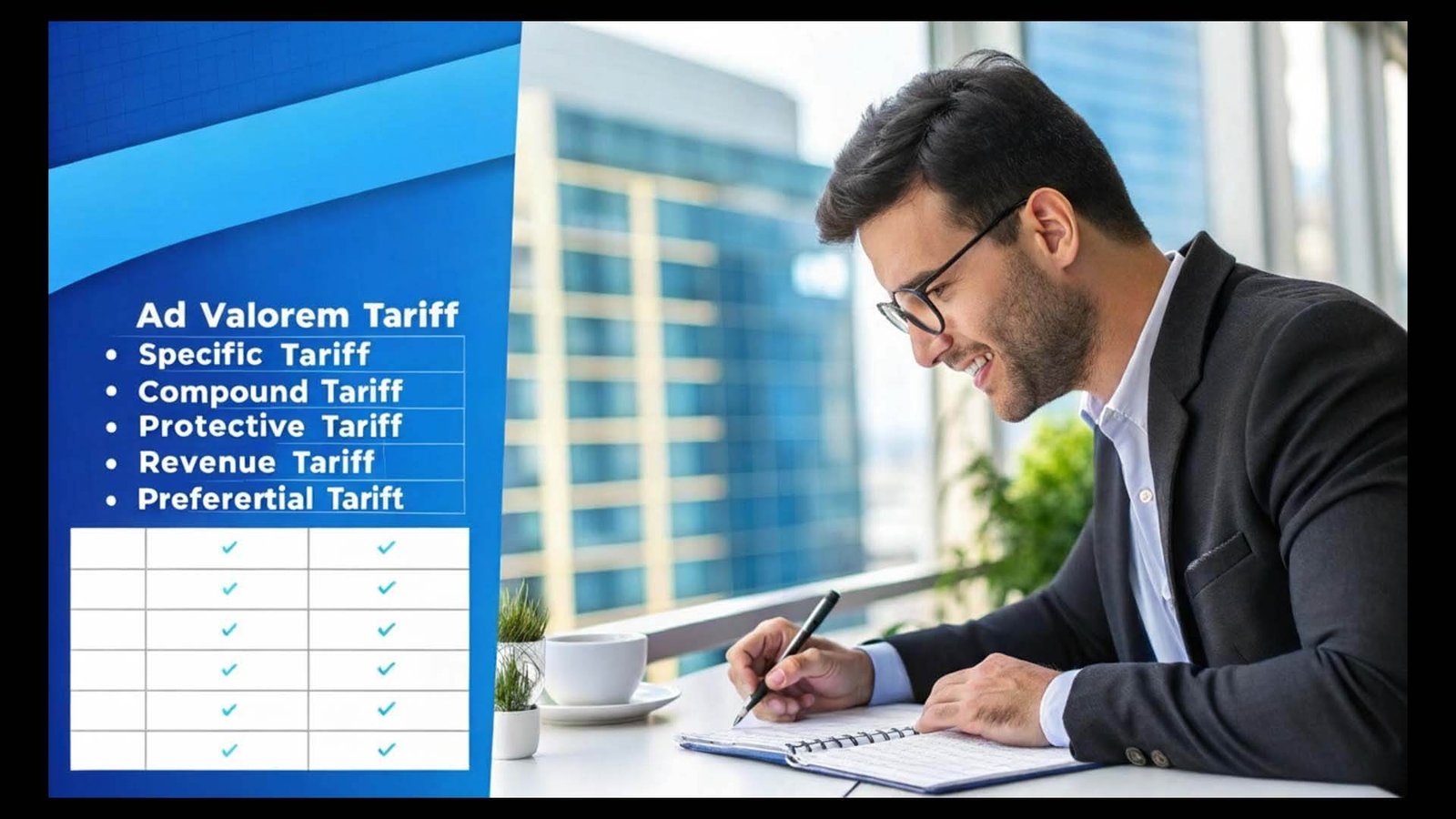
It's not just one single "tariff." Your total duty bill is a stack of different fees. As a customs broker7, I see importers miss these all the time, which leads to costly problems. Let's look at each one so you are prepared.
The Four Key Charges
-
Base U.S. Duty (HTS): Every product has a Harmonized Tariff Schedule (HTS) code. This 10-digit number determines the standard duty rate. It could be 0%, 5%, or more, depending entirely on the product.
-
Section 301 Tariffs: These are extra duties specifically for many goods made in China. They are added on top of the base duty. In 2026, these can be as high as 25%, so ignoring them is a massive financial risk.
-
Merchandise Processing Fee (MPF)5: This is a fee U.S. Customs and Border Protection (CBP) charges to process your import entry. It's calculated as 0.3464% of your shipment's value, with a minimum and maximum fee per entry.
-
Harbor Maintenance Fee (HMF)6: If your goods arrive by sea, you'll pay the HMF. This fee helps maintain U.S. ports and is 0.125% of the cargo's value.
Here is a simple table to summarize these fees:
| Fee Type | What It Is | How It's Calculated |
|---|---|---|
| Base Duty | Standard tariff for a specific product | Percentage of customs value4 via HTS code2 |
| Section 301 | Additional tariff on China-origin goods | Percentage of customs value4 |
| MPF | Fee for customs processing | 0.3464% of customs value4 (with min/max) |
| HMF | Fee for port maintenance (sea freight only) | 0.125% of customs value4 |
These fees are not optional. You must account for all of them to understand your true landed cost.
How to Find the Correct Tariff Rate for Your Product?
Using the wrong HTS code2 is a costly mistake. You could be overpaying duties by thousands without even knowing it. Let's ensure you find the correct one.
To find the correct tariff rate, you must first classify your product with the right 10-digit HTSUS code using the official Harmonized Tariff Schedule. Then, check the Section 301 lists to see if an additional tariff applies to that specific HTS code2 from China.
The entire calculation depends on one thing: the correct HTS code2. Getting this wrong is the most common and expensive mistake I see importers make. It can lead to audit8s, fines, and shipment delays9. Here is how you get it right.
Finding Your HTS Code and Rates
First, you must classify your product. The Harmonized Tariff Schedule of the United States (HTSUS)10 is the official government resource for this. It is a giant list of codes for every imaginable product. You can search the official HTSUS online database. You need to be very detailed. For example, "wooden chair for kitchen use" is different from "upholstered metal chair for office use." The materials, function, and even small design details all matter. A tiny difference in description can change the duty rate completely.
Checking for Extra Tariffs
Once you have your 10-digit HTS code2, your work isn't done. You must check that code against the official U.S. Trade Representative (USTR) lists11 for Section 301 duties. There are several lists (List 1, 2, 3, and 4A), and if your HTS code2 is on one of them, you will have to pay an extra 7.5% or 25% duty. This is in addition to your base duty.
Here is a quick checklist to use before you start any calculation:
| Checklist Item | Status |
|---|---|
| Do I have a very detailed product description? | ☐ |
| Have I found the correct 10-digit HTSUS code? | ☐ |
| Have I confirmed the Country of Origin is China? | ☐ |
| Have I checked if my HTS code2 is on a Section 301 list? | ☐ |
Getting this part right is not about finding the lowest rate; it's about finding the correct one. Accuracy is key to avoiding penalties12.
Step-by-Step: How to Calculate China Tariffs in 2026?
Ready to see the exact math? Guessing your duty costs is a recipe for disaster and can destroy your profit margins13. I'll walk you through a real-world FCL example, line by line.
First, determine the customs value4 (usually the FOB value14). Calculate the base duty (Customs Value x HTS Rate). Then, calculate the Section 301 duty (Customs Value x Section 301 Rate). Add the MPF and HMF. Sum all these amounts for your total duty.
Let's put this into practice with a common scenario I handle for my clients: a Full Container Load (FCL)15 shipment of finished goods from China.
Example Scenario:
- Product: 1,000 units of Men's Leather Dress Shoes
- Customs Value (FOB Value): $100,000
- HTS Code: 6403.51.90
- Base Duty Rate (Column 1, General): 8.5%
- Section 301 Status: On a list with a 25% tariff.
Here is the step-by-step calculation:
-
Calculate Base Duty: $100,000 (Customs Value) x 8.5% (HTS Rate) = $8,500
-
Calculate Section 301 Duty: $100,000 (Customs Value) x 25% (Section 301 Rate) = $25,000
-
Calculate Merchandise Processing Fee (MPF)5: $100,000 (Customs Value) x 0.3464% = $346.40. This is within the current min/max fee range, so the fee is $346.40.
-
Calculate Harbor Maintenance Fee (HMF)6: $100,000 (Customs Value) x 0.125% = $125.00
Here is the final breakdown of the total amount you would pay to U.S. Customs.
| Item | Calculation | Amount Payable |
|---|---|---|
| Base Duty | $100,000 x 8.5% | $8,500.00 |
| Section 301 Duty | $100,000 x 25% | $25,000.00 |
| MPF | $100,000 x 0.3464% | $346.40 |
| HMF (for sea freight) | $100,000 x 0.125% | $125.00 |
| Total Payable to CBP | Sum of all above | $33,971.40 |
As you can see, the total duty bill is nearly 34% of the product's value. This is why accurate, step-by-step calculation is not optional for any serious importer.
Common China Tariff Calculation Mistakes That Cost Importers Money?
Even experienced importers make mistakes that cost them thousands. These small errors add up to huge overpayments or compliance penalties16s](https://www.law.cornell.edu/uscode/text/19/1592)%%%FOOTNOTE_REF_12%%%. Let’s review the most common ones I fix.
Common mistakes include using the wrong value for customs (e.g., including freight in the dutiable value), misclassifying the HTS code2, completely ignoring Section 301 tariffs3, and wrongly assuming DDP (Delivered Duty Paid) means the shipper handles duty risk correctly.

I have seen importers lose their entire profit margin from these simple errors. You work hard to source your products and find customers; don't let these mistakes ruin your business. Here are the top mistakes to avoid in 2026.
Understanding Value and Risk
-
Using the Wrong Customs Value: The dutiable value is generally the price you paid for the goods up to the point they are loaded for export. This is often called the FOB (Free On Board) value. If your supplier quotes you a DDP (Delivered Duty Paid) price, that price includes international freight and other post-export costs. You cannot use the total DDP price to calculate duty. This would mean you pay duty on the shipping cost, which inflates your final bill.
-
The DDP "Safety" Myth: Many importers I talk to, like my client Mark, initially think choosing DDP terms means they have no tariff worries. This is a dangerous misunderstanding. DDP shifts the responsibility for payment to the seller. It does not eliminate the risk for you, the U.S. Importer of Record. If your seller miscalculates or underpays the duty, U.S. Customs can—and will—come after your U.S. company for the difference, plus penalties12. You are ultimately liable for what enters the country under your name.
| Mistake | What It Costs You |
|---|---|
| Using DDP price for duty calculation | You overpay duty by calculating tax on international freight costs. |
| Forgetting Section 301 tariffs3 | You get a surprise bill from Customs for the unpaid amount, plus fines. |
| Believing DDP removes your risk | You remain legally liable for any customs declaration errors your seller makes. |
Conclusion
In 2026, accurate China tariff calculation17 is a compliance requirement, not a guess. Working with a U.S. customs broker7 is the only reliable way to control your duty risk.
Understanding surprise import duties can help you avoid unexpected costs and better manage your import budget. ↩
Knowing your product's HTS code is crucial for calculating the correct tariffs and avoiding costly mistakes. ↩
Section 301 tariffs can significantly impact your import costs, so it's essential to know if they apply to your products. ↩
Accurately determining customs value is essential for calculating duties and avoiding overpayment or penalties. ↩
Understanding the MPF helps you accurately calculate your total import costs and avoid underestimating expenses. ↩
Knowing about the HMF ensures you account for all fees when calculating the total cost of importing goods by sea. ↩
A customs broker can help you navigate complex import regulations and ensure compliance, reducing risk and potential penalties. ↩
Understanding what triggers audits can help you maintain compliance and avoid costly investigations and penalties. ↩
Avoiding shipment delays is crucial for maintaining supply chain efficiency and customer satisfaction. ↩
Using the HTSUS correctly ensures you classify your products accurately, affecting duty rates and compliance. ↩
Checking the USTR lists helps you identify additional tariffs that may apply to your imports, preventing unexpected costs. ↩
Knowing the penalties for errors in tariff calculations can motivate you to ensure accuracy and compliance. ↩
Understanding the impact of import duties on profit margins helps you make informed pricing and sourcing decisions. ↩
Understanding FOB value is crucial for calculating the correct duties and avoiding paying extra on shipping costs. ↩
Understanding FCL can help you optimize shipping costs and logistics for large import shipments. ↩
Being aware of compliance penalties can encourage you to adhere to regulations and avoid costly fines. ↩
Accurate tariff calculation is essential for budgeting and ensuring compliance with import regulations. ↩