Retailer integration is key to maximizing customer experience. It ensures that products are always in stock, accurately listed, and delivered on time. By understanding and implementing retailer integration1, businesses can secure brand loyalty2 and drive revenue growth.
Retailer integration creates loyalty by making the shopping experience reliable—products are available, listings are accurate, and orders arrive on time. For importers and suppliers, loyalty is won through operational performance3: fewer stockouts, fewer shipping errors, and consistent replenishment. Retailers reward suppliers who reduce friction and protect the customer experience.

Integrating with retailers not only boosts loyalty but helps in establishing a solid foundation for operational success. This article will guide you through various aspects of retailer integration1 and its impact on brand loyalty2 and revenue.
Explain retailer integration1 as the foundation for brand loyalty2 because it keeps products in stock, accurately listed, and delivered on time across channels?
Retailer integration in supply chain terms refers to the seamless connection between suppliers and retailers. This connection helps keep inventories stocked and orders fulfilled promptly.
Retailer integration builds customer loyalty by ensuring that products are consistently available and orders are accurate. Big-box retailers prioritize integrated suppliers because this reduces operational friction, enhances the shopping experience, and fosters long-term partnerships.

To illustrate how integration drives loyalty, let’s break it down into actionable components that lead to operational excellence:
| Customer experience goal | Retailer requirement | Supplier integration/process needed | KPI |
|---|---|---|---|
| In-stock availability | 98% fill rate4 | Real-time inventory updates | Fill Rate % |
| Fast replenishment | Orders fulfilled within 48 hours | Automated order processing | OTIF % |
| Accurate product info | GS1 compliance5 | Regular data synchronization | ASN Accuracy % |
| Fewer returns | Max 2% return rate | Improved labeling accuracy | Return Rate % |
| Consistent delivery | On-time every time | Reliable logistics management | Delivery Success % |
Show how EDI/API integration6 (PO, ASN, invoice, inventory) improves OTIF performance and reduces costly retailer chargebacks7 and deductions?
EDI/API integration6 simplifies the exchange of key documents in retail. This automation minimizes errors and streamlines processes like purchase orders and invoices.
EDI and API integration reduces errors and delays by automating key documents like purchase orders, advance ship notices (ASN), invoices, and inventory updates. When data flows correctly, deliveries are scheduled and received faster, and suppliers avoid common deduction drivers like missing ASN, incorrect labels, short ships, and late delivery—directly protecting margin.

Here’s a list of crucial EDI transactions that every retail supplier should focus on:
- PO (850)
- PO acknowledgment (855)
- ASN (856)
- Invoice (810)
- Inventory advice/updates (846/EDI or API)
To visualize the flow from data to execution:
PO received → inventory check → production allocation → booking plan → shipment build → ASN creation → compliant labeling → DC appointment → on-time delivery → invoice match → payment/no deduction
Connect global importing to retailer readiness by standardizing packaging8, labeling, carton/pallet rules, and inbound appointment compliance before goods arrive?
Retailer readiness ensures that shipments meet retailer specifications. By standardizing packaging8 and labeling, importers can avoid costly compliance issues.
Retail integration fails when physical execution doesn’t match retailer rules. Importers must ensure packaging specs, GS1 barcodes, carton labels, pallet configurations, and routing guides are correct before cargo arrives in the U.S. Fixing noncompliance at the DC creates delays, damages, and deductions—while compliance enables fast receiving and faster replenishment.

To help you ensure compliance, consider this checklist:
| Requirement | Where it fails | Impact | Prevention step |
|---|---|---|---|
| Labeling/barcodes | Incorrect formats | Delays and chargebacks | Regular audits |
| Carton pack rules | Variations not followed | Inventory discrepancies | Standard operating procedures |
| Pallet patterns | Misconfigurations | Damages and inefficiencies | Training on best practices |
| SSCC labels | Missing or incorrect | Compliance issues at DC | Label verification before shipping |
| Routing guide compliance | Wrong routing | Increased transportation costs | Pre-shipment checks |
| Appointment policy | Missed windows | Delays in receiving | Schedule ahead |
| Carton count accuracy | Incorrect counts | Chargebacks | Confirm counts prior to shipping |
Use integrated logistics9 (freight → customs → drayage → 3PL) to cut lead-time variability so retailers trust replenishment and allocate more shelf space?
Integrated logistics is critical for efficient supply chains. By managing everything from freight to customs, suppliers can improve delivery performance.
Retailer performance depends on predictability, not just cost. Integrated logistics connects ocean/air freight, customs clearance, drayage, and 3PL warehousing so goods flow smoothly into retail distribution. When lead-time variability drops, suppliers hit OTIF targets10 more consistently, reduce emergency expediting, and earn retailer trust—leading to better replenishment and revenue growth.
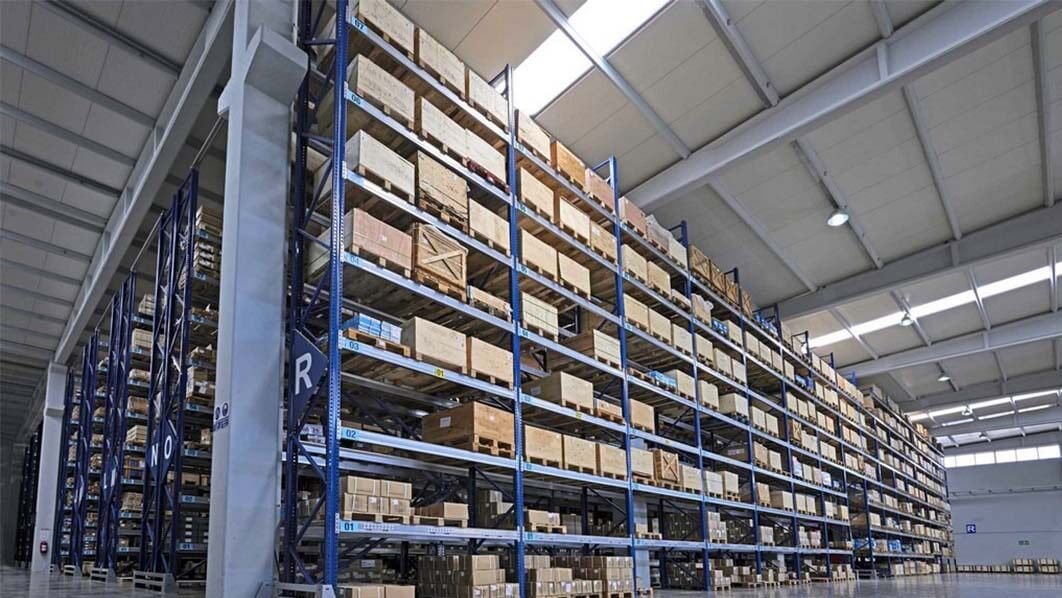
Consider the following workflow for enhanced logistics execution:
Factory → Export Docs + Packaging Compliance → Freight Booking → International Transit → U.S. Customs Clearance → Drayage/Rail → 3PL Receiving + Labeling/Kitting → Retail DC Appointment → Delivery + POD → Invoice Match
Here’s a comparison of speed options, costs, and risks:
| Option | Cost impact | Lead time impact | Best use-case | Retail risk avoided |
|---|---|---|---|---|
| Direct ocean | Low | Moderate | Regular shipments | Stockouts |
| Faster ocean service | Medium | Fast | Urgent needs | Delays |
| Air freight | High | Very fast | Critical stock | Out of stock |
| Hybrid ocean+air | Medium | Faster | Seasonal spikes | Unpredictable demand |
| Pre-position inventory | Medium | Flexible | Anticipated demand | Inefficient replenishment |
| Cross-dock | Low | Quick | Short-term storage | Out of shelf space |
Build a retailer scorecard system11 using measurable KPIs (fill rate4, OTIF, ASN accuracy12, inventory accuracy, return processing speed) to increase reorder revenue long-term?
Scorecard systems help monitor supplier performance. By tracking essential KPIs, suppliers can identify and improve areas of weakness.
Retailers reward suppliers who consistently meet service targets. A supplier scorecard system tracks OTIF, fill rate4, ASN accuracy12, invoice match rate13, damages, and returns cycle time. When these KPIs improve, suppliers reduce deductions, win preferred status, and gain more purchase orders and shelf space—turning operational excellence into repeat revenue.

Here’s a KPI dashboard for supplier integration:
| KPI | Target | Why it matters | Fix lever |
|---|---|---|---|
| OTIF % | 95% | Consistent deliveries | Improved logistics |
| Fill rate % | 98% | Fewer stockouts | Better inventory management14 |
| ASN accuracy12 % | 99% | Reduced chargebacks | EDI/API improvements |
| Invoice match % | 100% | Faster payments | Process auditing |
| Delivery appointment success % | 95% | Reliable scheduling | Clear communication |
| Shortage rate | <1% | Fewer deductions | Accurate forecasting |
| Damage rate | <1% | Protects revenue | Quality control checks |
| Return cycle time | <5 days | Faster recovery | Streamlined processing |
| Deduction rate | <1% | Maintains margins | Proactive issue management |
Implementing a vendor scorecard can prove vital for improving relationships:
Retail Integration Vendor Scorecard:
- Freight forwarder: Schedule reliability, milestone reporting, document accuracy
- Customs broker: Clearance speed, entry accuracy, hold resolution time
- Drayage: Pickup success %, appointment performance, dwell reduction
- 3PL: Receiving speed, labeling accuracy, cut-off compliance
- Last-mile/LTL: On-time delivery, claims rate, exception closure time
Common Retail Chargebacks/Deductions + Prevention Controls
| Chargeback type | Root cause | Prevention control | Owner |
|---|---|---|---|
| Late delivery | Missed shipping deadlines | Improved logistics coordination | Supplier |
| Missing/incorrect ASN | Data errors | Regular audits | Supplier |
| Labeling noncompliance | Incorrect specifications | Strict adherence to guidelines | Supplier |
| Routing guide violation | Non-compliance | Compliance checks before shipping | Supplier |
| Short ship / over ship | Inaccurate inventory | Rigorous inventory management14 | Supplier |
| Carton count mismatch | Miscounts | Double-checking before transport | Supplier |
| Invoice mismatch | Data inaccuracies | Clear communication | Supplier |
| Damages / poor packaging | Insufficient packaging | Quality checks | Supplier |
FAQ
What is retailer integration1 for suppliers and importers?
Retailer integration for suppliers and importers refers to the seamless connection between suppliers and retailers, ensuring accurate data exchange and compliance with retailer requirements, ultimately improving operational efficiency.
Which EDI/API messages impact OTIF most?
The most impactful EDI/API messages include Purchase Orders (PO), Advance Ship Notices (ASN), and Invoices, as they ensure timely and accurate information exchange throughout the supply chain.
What are the biggest causes of retail deductions and chargebacks?
Major causes include late deliveries, incorrect ASNs, labeling noncompliance, and inventory inaccuracies. Each of these issues can lead to financial penalties and damage supplier relationships.
How does integrated logistics9 improve retailer performance?
Integrated logistics streamlines the flow of goods from suppliers to retailers, minimizes delays, enhances communication, and improves overall OTIF performance, fostering better relationships and trust.
What KPIs define a high-performing retail supplier?
High-performing retail suppliers are defined by their OTIF percentages, fill rate4s, ASN accuracy12, delivery performance, and return cycle times, all of which are critical for building strong retailer relationships.
Conclusion
To enhance your retailer integration1 readiness, consider requesting a review of your EDI and operational processes. Conduct a chargeback root-cause analysis15 to identify areas for improvement. Ensure compliance with inbound setups for labels, cartons, and pallets. Lastly, develop an integrated logistics9 plan that covers freight, customs, and 3PL. This proactive approach will boost your revenue and strengthen retailer partnerships.
Understanding retailer integration is crucial for businesses aiming to improve customer experience and drive revenue growth. ↩
Exploring how retailer integration fosters brand loyalty can help businesses secure long-term customer relationships. ↩
Improving operational performance is key for importers and suppliers to win loyalty and reduce friction in the supply chain. ↩
Maintaining a high fill rate reduces stockouts and enhances customer satisfaction, driving repeat business. ↩
GS1 compliance ensures accurate product information, reducing returns and enhancing customer satisfaction. ↩
EDI/API integration automates key documents, reducing errors and delays, and improving OTIF performance. ↩
Understanding and reducing retailer chargebacks can protect margins and improve supplier relationships. ↩
Standardizing packaging helps avoid compliance issues and ensures smooth receiving and replenishment. ↩
Integrated logistics improves predictability and trust, leading to better replenishment and revenue growth. ↩
Consistently hitting OTIF targets builds retailer trust and leads to better partnerships and revenue growth. ↩
A retailer scorecard system tracks KPIs, helping suppliers improve performance and increase reorder revenue. ↩
ASN accuracy reduces chargebacks and ensures smooth operations, protecting supplier margins. ↩
A high invoice match rate ensures faster payments and reduces financial discrepancies for suppliers. ↩
Effective inventory management prevents discrepancies, reducing short ship/over ship issues and chargebacks. ↩
Conducting chargeback root-cause analysis helps identify areas for improvement, boosting supplier performance. ↩