Are your fulfillment costs1 unpredictable and eating into your profits? You're not alone. Many importers struggle with rising labor costs, shipping fees, and packaging errors that silently drain their budget.
Automated packaging systems2 can solve these problems. They improve fulfillment by reducing labor dependency3, cutting packaging waste, lowering shipping charges through right-sized cartons4, and increasing order accuracy5. This creates a more predictable, cost-effective, and scalable operation for U.S. importers who ship goods from China.
This might sound complex, but the benefits are very real. I've seen firsthand how importers transform their operations by connecting automation to their overall supply chain. It's not just about buying a machine; it's about building a smarter process. Let's break down how this works for a U.S. importer like you, looking at the real-world costs and benefits.
How Does Automated Packaging Reduce Fulfillment Costs by Lowering Labor Dependency, Packaging Waste, and Dimensional Weight Charges?
Are unpredictable labor costs making your budget a moving target? This volatility, combined with wasted materials and surprise shipping fees, makes it hard to control your landed cost.
Automated packaging reduces fulfillment costs1 by minimizing manual labor, right-sizing cartons to eliminate void fill, and lowering dimensional weight charges6. For U.S. importers shipping high volumes, these efficiencies translate directly into lower per-order fulfillment and carrier costs.
Labor Volatility7 vs. Automation Stability8
Finding and keeping reliable warehouse staff is a constant challenge. Labor costs are rising, and during peak seasons like the holidays, you might have to pay overtime or hire temporary workers who are less efficient. This creates instability in both your costs and your quality. An automated packaging machine, however, has a predictable cost. You invest in the machine once, and its operational costs are stable. It doesn't call in sick, it doesn't need training, and it can run for extra shifts during peak season without demanding overtime pay. I've seen clients reduce their reliance on temporary labor9 by over 50% during Q4, which gave them much-needed predictability when it mattered most. This stability is a huge advantage for any importer managing a tight budget.
The Hidden Cost of Dimensional (DIM) Weight10
Carriers like UPS and FedEx don't just charge you based on how heavy a package is. They also charge based on its size, using a formula called dimensional (DIM) weight. If you ship a light item in a big box filled with air pillows, you are paying to ship empty space. This is a massive hidden cost. Automated "right-sizing" systems build a custom-fit box for every order. This eliminates the empty space and the need for void-fill materials like air pillows or bubble wrap. This directly cuts your shipping costs on every single package. It also reduces your spending on packaging materials, providing a dual benefit that adds up quickly across thousands of orders.
How Savings Compound at Scale11
For an importer shipping just a few orders a day, saving a dollar or two per package might not seem like a big deal. But for importers managing container-level volumes from China, those small savings compound into a significant financial impact. If you ship 500 orders a day and save $1.50 on each one from lower DIM weight and reduced labor, that's $750 saved per day. Over a year, that's over $270,000 added directly back to your bottom line. Automation makes the most sense at scale, where small, repeatable efficiencies turn into major competitive advantages and a healthier profit and loss (P&L) statement.
Why Does Automated Packaging Improve Order Accuracy, Damage Prevention, and Chargeback Risk for High-Volume U.S. Importers?
Are you tired of dealing with customer complaints about damaged goods or wrong orders? These issues create a nightmare of returns, refunds, and angry reviews that can damage your brand's reputation.
Automated packaging improves fulfillment accuracy and reduces damage by standardizing carton selection, sealing, and cushioning. This lowers return rates, retailer chargebacks12, and customer dissatisfaction—key cost drivers often overlooked in manual packing operations.
Human Error vs. System-Controlled Precision13
Even your best employee can have a bad day. A manual packer might get tired and grab the wrong size box, use too little packing tape, or forget to add cushioning for a fragile item. These small mistakes lead to big problems. An automated packaging system, on the other hand, follows a set of rules every single time. The scanner confirms the items in the order, the system builds the perfect-sized box, and the sealer applies tape consistently. This system-controlled process removes human error from the equation. It ensures every package that leaves your facility is packed correctly and securely, which is the foundation of a good customer experience and a low return rate.
A Look at the Costs of Inaccuracy
Inaccurate or poor packaging doesn't just lead to customer returns. If you sell to major retailers like Amazon or Walmart, it can result in financial penalties called "chargebacks12." These retailers have strict rules for how products must be packaged and labeled for their fulfillment centers. A poorly sealed carton that opens in transit or a box that gets crushed because it was the wrong size can trigger a chargeback, costing you hundreds of dollars per incident.
Here is a simple comparison:
| Factor | Manual Packaging | Automated Packaging |
|---|---|---|
| Order Accuracy | Operator-dependent | System-controlled |
| Damage Rate | Higher variance | Consistently lower |
| Labor Cost | Rising & unstable | Predictable |
| Carton Sizing | Fixed SKUs | Dynamic, right-sized |
| Retail Chargebacks14 | More frequent | Reduced |
As you can see, automation provides consistency that directly reduces the risks and hidden costs associated with manual packing. For high-volume importers, minimizing these chargebacks12 and returns is just as important as lowering shipping costs.
Where Does Automated Packaging Fit in the Fulfillment Flow from Container Unloading to Final U.S. Delivery?
Do you see your supply chain as a series of separate steps? Many importers manage freight, customs, and fulfillment independently, which creates gaps where costs and delays can creep in.
Automated packaging sits between inbound inventory processing and outbound shipping. It ensures goods unloaded from containers are packed consistently, protected properly, and shipped efficiently—bridging the gap between international freight and domestic fulfillment performance.
The Typical Fulfillment Workflow
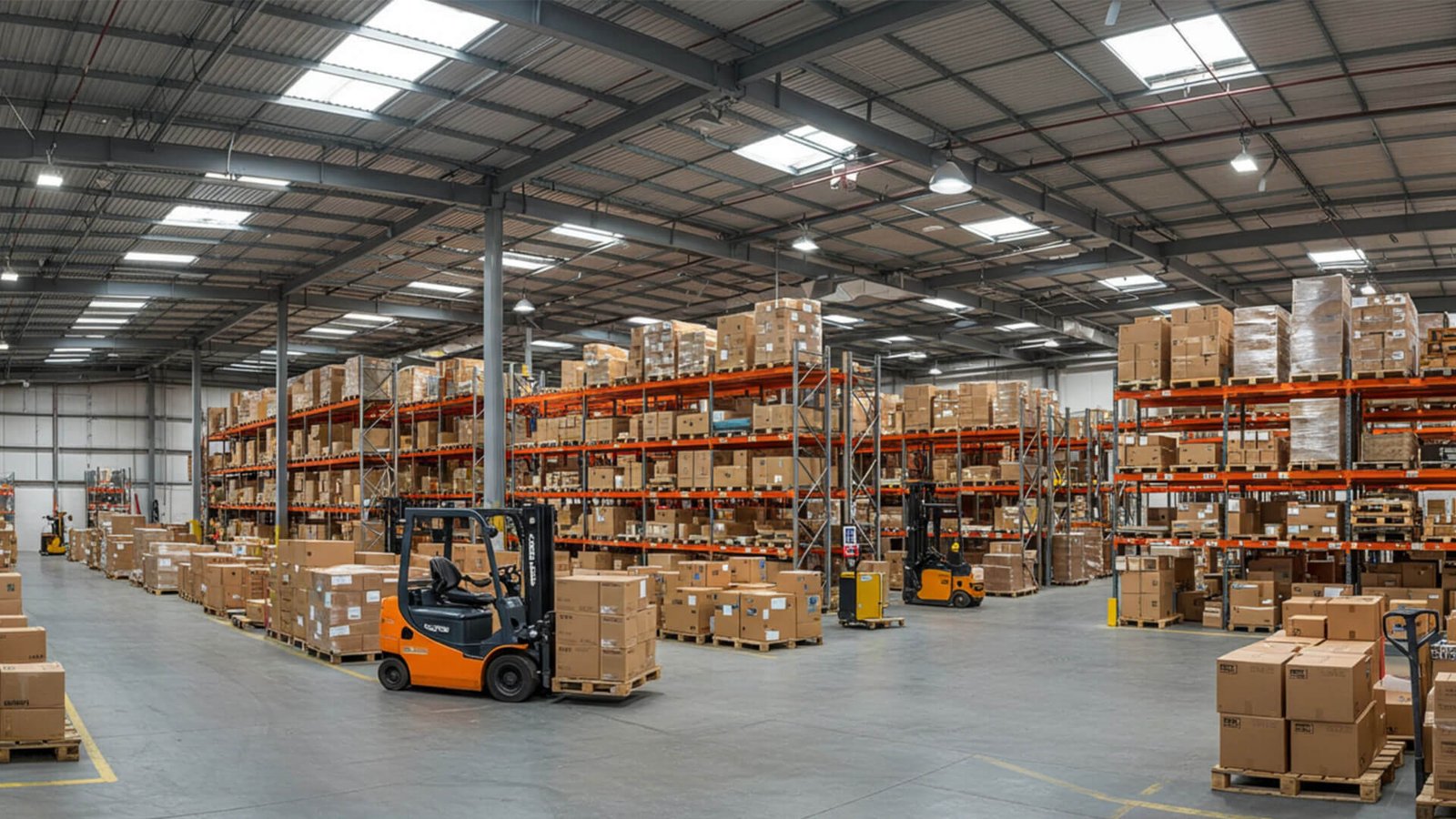
To understand where automation fits, let's look at the journey your products take after they arrive in the U.S. from China. The process is a smooth flow when managed correctly.
- Container Devanning15: Your container arrives at the U.S. port, clears customs, and is trucked to the warehouse. The container is then unloaded, a process we call devanning.
- Inventory Put-Away: The goods are sorted, counted, and stored in their designated locations within the warehouse.
- Order Picking: When a customer places an order, a warehouse worker picks the correct items from the shelves.
- Automated Packing: This is where the magic happens. The picked items are placed into the automated system. The machine scans them, builds a right-sized box, adds any necessary documents, seals it, and applies a shipping label.
- Outbound Shipping: The finished package is sorted by carrier (like UPS or FedEx) and loaded onto a truck for final delivery to the customer. Automation is the critical link between having bulk inventory and having a customer-ready package.
China Factory Packaging vs. U.S. Fulfillment Packaging16
A common point of confusion for importers is the difference between factory packaging and fulfillment packaging. The master cartons your goods are packed in at the factory in China are designed for one purpose: to protect products during ocean freight. They are meant for bulk transport, not for shipping to an individual customer's doorstep. When those goods arrive at your U.S. warehouse, they need to be re-packaged for final delivery. This is the step that automated packaging handles. Making smart decisions here affects everything. For example, using right-sized boxes means you can fit more packages on an outbound truck, potentially lowering your freight costs. It all connects.
When Does Automated Packaging Make Financial Sense for Importers Based on SKU Variety, Order Velocity, and Seasonal Volume Swings?
Automation sounds great, but it also sounds expensive. You don't want to invest in a powerful solution if your business isn't ready for it. How do you know if it's the right time?
Automated packaging delivers the strongest ROI for importers with high order velocity, SKU variability, or seasonal spikes. In these cases, manual labor becomes inconsistent and costly, and packaging inefficiencies multiply across thousands of outbound shipments.
Analyzing Your Order Profile
The decision to automate depends entirely on your business profile. Let's define a few key terms. "Order velocity17" is simply how many orders you ship per day. "SKU variety" refers to how many different types of products you sell. If you have a high order velocity (e.g., hundreds or thousands of orders per day) and a wide variety of SKUs, automation is a fantastic fit. A dynamic packaging machine can create different box sizes on the fly, which is something manual packers struggle to do efficiently. On the other hand, if you ship only 20 orders a day of the same product, the high initial cost of a machine may not be justified. You also need to consider seasonality. If your sales triple during the holidays, an automated system provides the scalability you need without the headache of hiring and training a large temporary workforce.
Decision Logic: Is Automation Right for You?
I often walk my clients through a simple decision-making process. The table below can help you see where your business fits.
| Import Profile | Automation Fit | Reason |
|---|---|---|
| High SKU Count | High | Dynamic carton sizing handles product variety efficiently. |
| Seasonal Peaks | High | Provides labor scalability without hiring temporary staff. |
| Low Order Volume | Low | The initial capital expense (Capex) is likely not justified. |
| E-commerce DTC | High | Very sensitive to DIM weight; right-sizing saves a lot of money. |
| Retail Bulk Orders | Medium | Depends on carton uniformity; may not need dynamic sizing. |
Think honestly about your operation. If you check the "High" fit boxes, the financial case for automation is strong. For example, for direct-to-consumer (DTC) e-commerce brands, DIM weight is a huge cost center. An automated system that minimizes box size can pay for itself in shipping savings alone. For businesses with intense seasonal peaks, automation isn't just a cost-saver; it's a risk-reducer.
What Must Importers Consider Beyond the Machines: Packaging Compliance18, Palletization, and Carrier Acceptance Rules?
So you've decided a machine could save you money. But buying the machine is not the final step. If you ignore the rules of the logistics world, you could end up with rejected shipments and penalties.
Beyond speed, importers must ensure automated packaging aligns with carrier carton limits, palletization standards, and import compliance requirements. Non-compliant packaging can negate cost savings through rework, delays, or carrier penalties.

Following Carrier and Retailer Rules
Every logistics partner has rules. Your parcel carriers, like UPS and FedEx, have strict limits on a package's maximum size and weight. If your automated system produces a box that is even an inch too big, it can be hit with a hefty oversized surcharge. This could instantly wipe out any savings you gained. Similarly, if you're shipping into the Amazon FBA network or to a big-box retailer, they have their own set of compliance rules. Your packaging must be robust enough to survive their warehouse environment and meet their labeling requirements. A good automated packaging strategy isn't just about creating a box; it's about creating the right box that meets all downstream requirements. This requires planning and coordination, not just flipping a switch on a machine.
Palletization and Warehouse Efficiency
After your orders are boxed, they are often stacked onto pallets to be loaded onto trucks. This is called palletization. The efficiency of this step is directly impacted by your packaging. If an automated system produces uniform, sturdy, and easily stackable boxes, you can build dense, stable pallets. This means you can fit more products onto a single pallet and more pallets onto a single truck, which saves money on less-than-truckload (LTL) freight. I've seen warehouses where inconsistent manual packing led to wobbly, unstable pallets that couldn't be double-stacked. This wasted valuable space in the truck and in the warehouse. A well-integrated automation plan considers the entire journey, including how boxes will be handled and stored long after they are sealed.
How Does Automated Packaging Work Best When Integrated with Inbound Freight Planning, Customs Clearance, and DDP Fulfillment Strategies?
Many importers I talk to manage their freight, customs, and fulfillment as separate activities. This creates communication gaps, finger-pointing, and costly mistakes that could have been avoided.
Automated packaging delivers the most value when aligned with inbound freight planning, customs clearance, and DDP fulfillment. This allows importers to control costs, reduce handoffs, and maintain consistency from the overseas factory to the final U.S. delivery.

The Power of an Integrated DDP Strategy
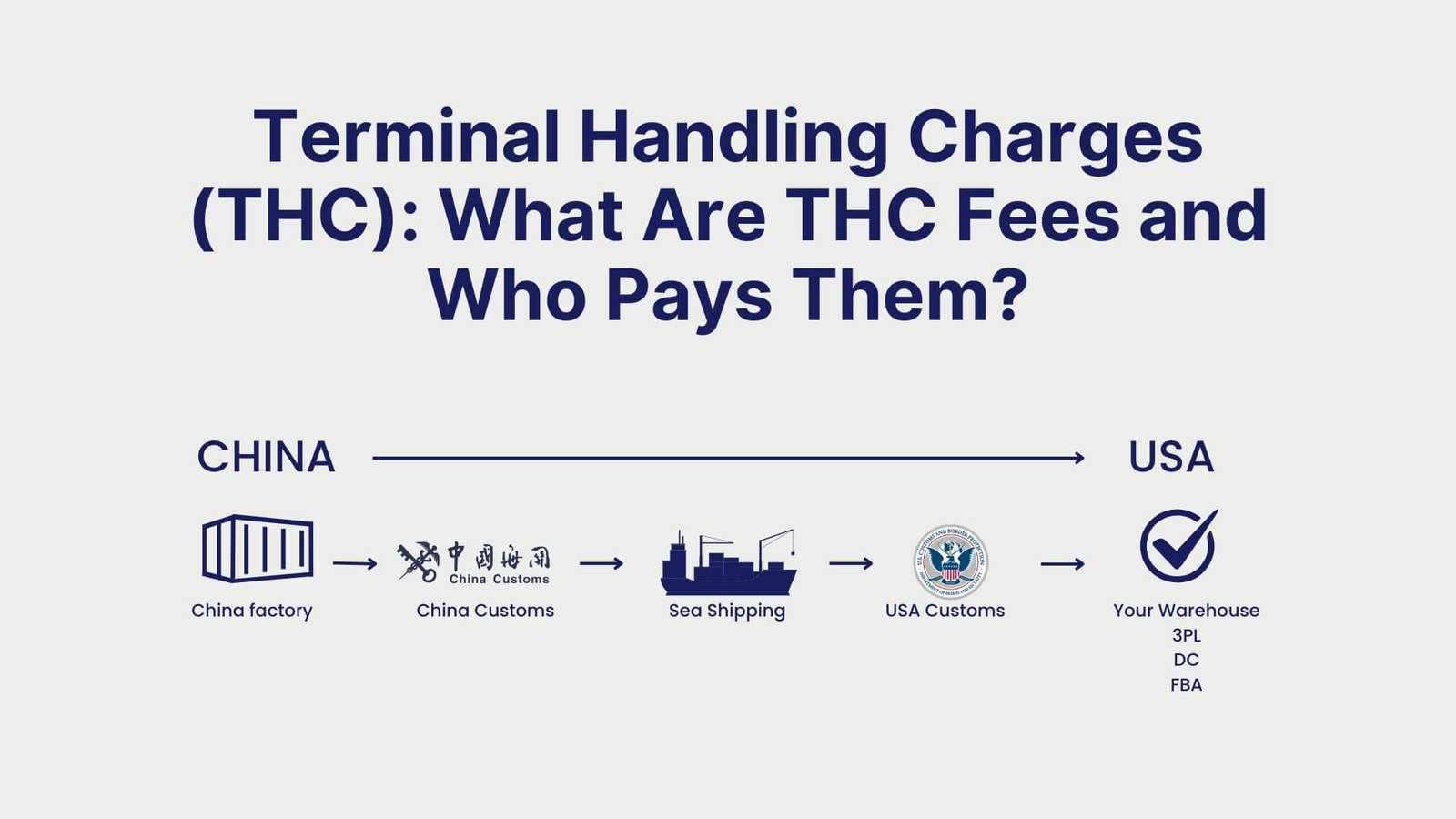
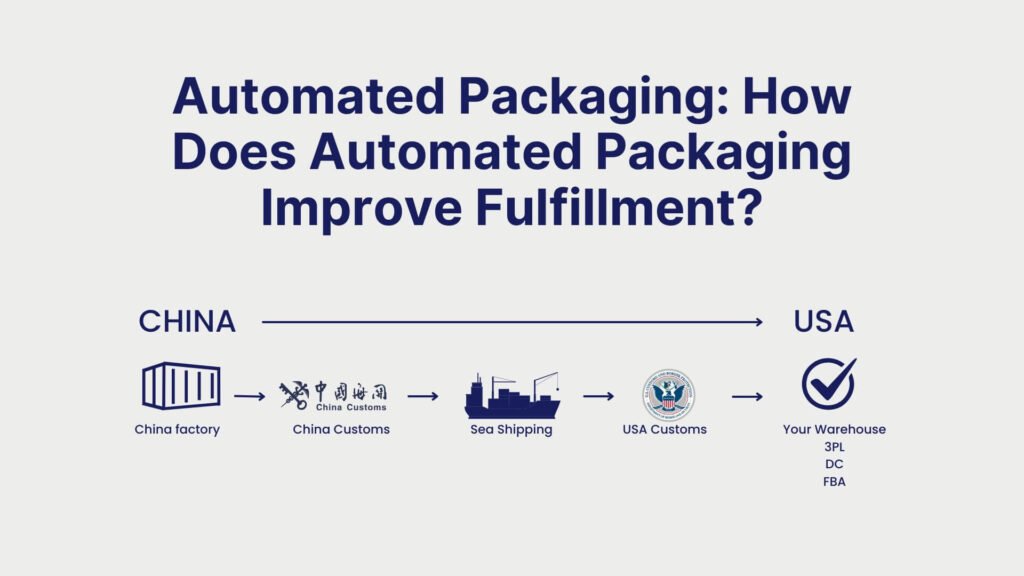
DDP, or Delivered Duty Paid, is a shipping arrangement where a single logistics partner handles the entire process for you. This includes pickup from the factory in China, ocean freight, U.S. customs clearance, and final delivery. When you use a DDP provider who also manages your fulfillment, including automated packaging, you create a seamless data flow. For instance, the information from the shipping documents used for customs clearance—like carton counts, weights, and product descriptions—is already in the system. This data can then be used by the fulfillment center to anticipate inbound inventory and plan for the automated packaging process. There are no gaps or handoffs between a customs broker and a separate 3PL warehouse. This integration prevents errors and creates major efficiencies.
Case Study: Reducing Costs and Damages
Let me give you two real-world examples. I remember a client importing consumer electronics from Shenzhen. Their parcel shipping costs were out of control because of high DIM weight charges on every order. After their containers were cleared through customs under our DDP service, we moved the goods to our fulfillment center. By integrating a right-sizing packaging machine into their workflow, we immediately cut their average parcel cost by 22%. This also reduced the need for expensive overtime labor during their product launches.
Another importer I worked with was shipping fragile household goods from Ningbo. Their damage rates were high because of inconsistent manual packing at their old warehouse. We implemented a DDP fulfillment solution that included an automated system to create a perfect-sized box with consistent cushioning for every order. Within three months, their damage and return rates dropped by over 70%. This not only saved them money on reverse logistics but also improved their customer reviews.
Conclusion
Automated packaging is not just about speed. It is about gaining control over your costs, improving accuracy, and creating a scalable fulfillment operation that supports your growth.
Should You Consider Automated Packaging for Your China → USA Fulfillment Operation?
- Is your order volume growing or expected to grow significantly? (Yes/No)
- Are you concerned about high damage or return rates? (Yes/No)
- Is finding and retaining reliable warehouse labor a challenge for your business? (Yes/No)
- Are high dimensional weight (DIM) charges a major part of your shipping costs? (Yes/No)
- Do you want end-to-end control and visibility over your supply chain from China to your U.S. customer? (Yes/No)
Understanding how to reduce fulfillment costs can significantly improve profit margins for businesses dealing with shipping and packaging. ↩
Exploring the benefits of automated packaging systems can help businesses streamline operations and reduce costs. ↩
Reducing labor dependency can lead to more stable and predictable operational costs, crucial for budgeting. ↩
Using right-sized cartons can minimize shipping costs and reduce waste, making it a sustainable choice for businesses. ↩
Improving order accuracy can lead to higher customer satisfaction and fewer returns, enhancing brand reputation. ↩
Understanding dimensional weight charges can help businesses optimize packaging and reduce shipping expenses. ↩
Addressing labor volatility can help businesses maintain consistent quality and control costs, especially during peak seasons. ↩
Automation can offer predictable costs and consistent performance, crucial for businesses looking to scale efficiently. ↩
Evaluating the use of temporary labor can help businesses decide on the best staffing strategies during peak times. ↩
Mitigating DIM weight costs can lead to significant savings in shipping, especially for high-volume shippers. ↩
Understanding how savings compound at scale can highlight the financial benefits of efficiency improvements in logistics. ↩
Minimizing chargebacks can prevent financial penalties and improve relationships with major retailers. ↩
Reducing human error through system-controlled precision can enhance packaging accuracy and reduce costs. ↩
Avoiding retail chargebacks can save businesses money and maintain good standing with retailers. ↩
Container devanning is crucial for efficient inventory management and smooth transition to fulfillment processes. ↩
Understanding these differences can help importers optimize packaging for final delivery and reduce costs. ↩
High order velocity requires efficient fulfillment strategies to maintain service levels and control costs. ↩
Ensuring packaging compliance can prevent costly penalties and ensure smooth delivery through various channels. ↩