Struggling with complex LED import rules1? You risk costly delays and fines. We simplify the process, ensuring your shipment clears customs smoothly and on budget.
As a commercial importer, you must understand that LED lights are regulated electrical products. U.S. Customs and Border Protection (CBP)2 requires accurate HS codes3, correct duty payments (including Section 301 tariff4fs](https://www.corporatevision-news.com/what-are-section-301-tariffs-and-how-do-they-impact-u-s-businesses/)%%%FOOTNOTE_REF_5%%%), and proof of compliance with agencies like the FCC and safety standards like UL to legally enter the country.

I've seen too many importers treat LED lights like simple consumer goods. This is a huge mistake. They are electrical products subject to strict rules. A missing certificate or the wrong HS code can get your entire shipment held up at the port, costing you thousands in fees and lost sales. This guide is for commercial buyers who need to get it right from the start. We will walk through the exact requirements to ensure your LED products from China land in the U.S. without any surprises.
Are LED Lights Legal to Import Into the U.S. — and How Are They Regulated?
Facing regulatory confusion for your LED imports? This uncertainty can stop your business plan cold. Let's clear up the rules so you can import with confidence.
Yes, it is perfectly legal to import LED lights into the U.S., but they are highly regulated. They are treated as electronic products subject to oversight from U.S. Customs (CBP) for tariffs and the Federal Communications Commission (FCC)6 for potential electronic interference.
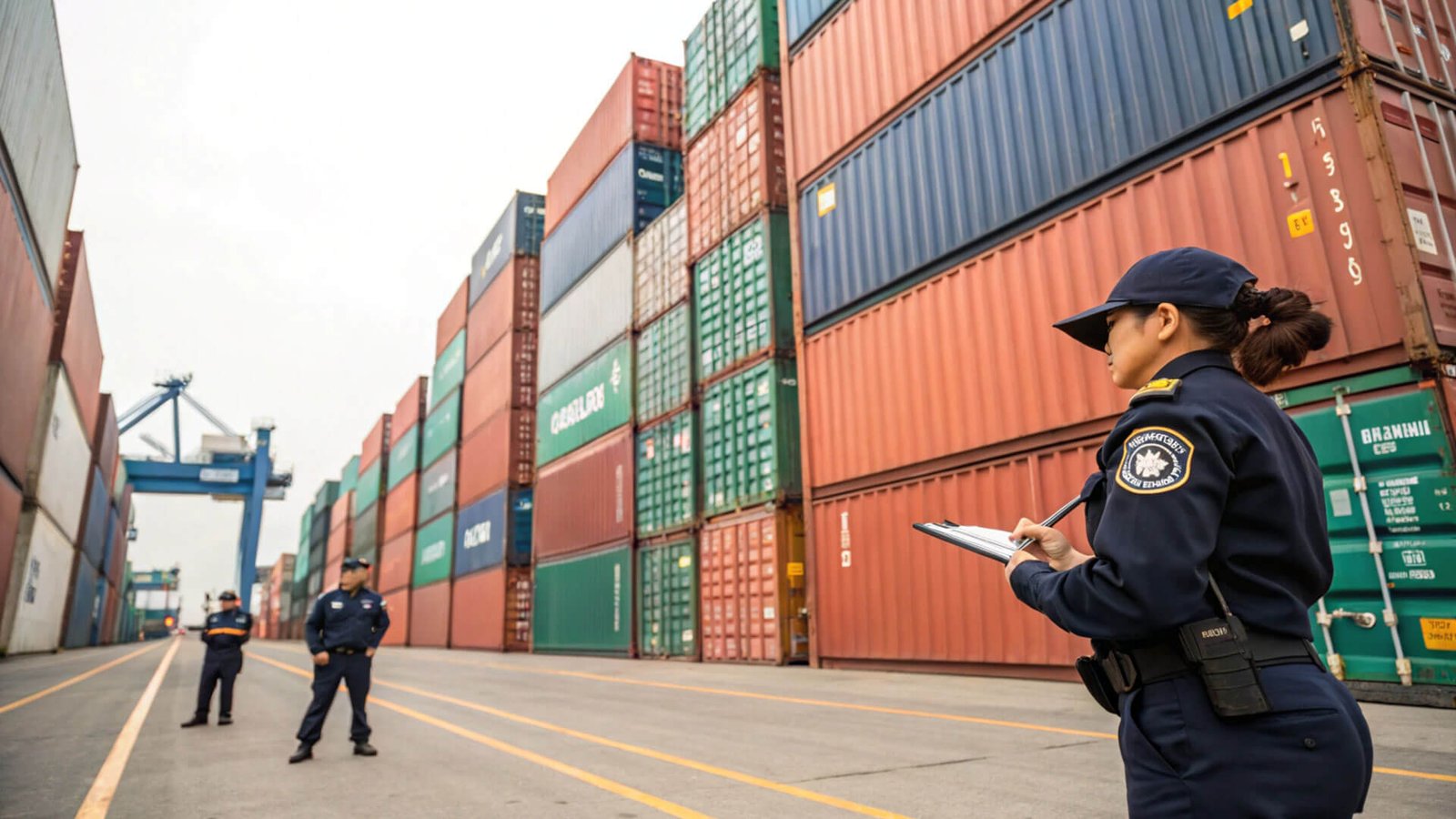
When you import LED lights, you aren't just bringing in a simple product; you're importing an electronic device. This is a key distinction many new importers miss. U.S. agencies want to ensure these products are safe and don't interfere with other electronics.
Here’s a breakdown of who regulates what:
- U.S. Customs and Border Protection (CBP)2: They are the gatekeepers. CBP ensures you've classified your products with the correct HS code, declared the right value, and paid all applicable duties, including any Section 301 tariff4fs](https://www.corporatevision-news.com/what-are-section-301-tariffs-and-how-do-they-impact-u-s-businesses/)%%%FOOTNOTE_REF_5%%% on goods from China.
- Federal Communications Commission (FCC)6: LED drivers and ballasts can create radio frequency interference. The FCC requires proof that your products won't disrupt broadcast signals or other devices.
- Nationally Recognized Testing Labs (NRTLs)7: While not a federal mandate for import, safety certifications from labs like UL or ETL are often required by retailers, building codes, and insurance companies.
The specific rules depend on the product. An LED bulb has different requirements than a large commercial light fixture or a simple LED strip.
What Is the Correct HS Code and Import Duty for LED Lights From China?
Guessing your product's HS code? This gamble can lead to overpaying duties or facing penalties for underpayment. Getting the code right is the first step to controlling costs.
The correct HS Code for LED lights, typically found under heading 9405, is critical. It determines your base import duty rate. For products from China, this code also determines if you must pay additional Section 301 tariff4fs](https://www.corporatevision-news.com/what-are-section-301-tariffs-and-how-do-they-impact-u-s-businesses/)%%%FOOTNOTE_REF_5%%%, which can be as high as 25%.

The Harmonized System (HS) code8 is a universal language for classifying goods. Getting it right is not just paperwork; it's a financial strategy. The wrong code can cause major problems. I've seen shipments delayed for weeks because an importer used a general code instead of a specific one.
Common HS Codes for LED Lighting
| Product Type | Potential HS Code | Description |
|---|---|---|
| LED Lamps/Bulbs | 8539.52.00 | LED lamps (bulbs) for replacement |
| Ceiling/Wall Fixtures | 9405.11.60 / 9405.11.80 | Chandeliers and other electric ceiling or wall lighting fittings |
| LED Flood Lights | 9405.41.60 / 9405.41.80 | Other electric lamps and lighting fittings, of base metal |
| LED Strip Lights | 9405.42.84 | Other electric lamps and lighting fittings, of plastics |
Note: These are examples. The correct code depends on the product's specific materials and function.
The most significant cost factor right now is the Section 301 tariff4. These are extra duties placed specifically on many goods made in China. Misclassifying your product to avoid this tariff is a serious compliance risk that can lead to audits and large fines down the road.
How Are U.S. Customs Duties and Taxes Calculated for LED Light Imports?
Worried about hidden import costs? Unpredictable duties can destroy your profit margins. Understanding the calculation gives you control over your final landed cost9.
U.S. Customs duties are calculated as a percentage of your shipment's declared value (ad valorem). This total includes the standard duty rate plus any applicable Section 301 tariff4fs](https://www.corporatevision-news.com/what-are-section-301-tariffs-and-how-do-they-impact-u-s-businesses/)%%%FOOTNOTE_REF_5%%%. Your commercial invoice value is the primary basis for this calculation.
Calculating your total import cost, or "landed cost9," is essential for any commercial importer. It’s not just the price you pay your supplier. The formula looks something like this:
Total Duty = ([Customs Value](https://blog.pazago.com/post/customs-value-for-documents)10 x Base Duty Rate) + ([Customs Value](https://blog.pazago.com/post/customs-value-for-documents)10 x Section 301 Duty Rate)
Here’s what goes into that calculation:
- Customs Value10: This is typically the price you paid for the goods, as shown on your commercial invoice. However, it can be more complex. If your supplier provided "assists" (like molds or tooling), their value must be added. Your shipping terms (Incoterms) also matter. For example, if you buy on EXW (Ex Works) terms, you must add the cost of inland freight in China to the customs value.
- Base Duty Rate: This is the standard tariff determined by your product's HS code. For many LED products, this can range from 0% to around 8%.
- Section 301 Duty: This is the additional tariff on Chinese goods. For most LED products, this has been a significant 25%, though rates can change.
Modeling your landed cost9 before you even place an order is a best practice. It prevents surprises and ensures your business remains profitable.
Do LED Lights Require FCC Certification for U.S. Import?
Unsure if your LED products need FCC approval? Shipping non-compliant goods can lead to seizures and outright refusal of entry. Knowing the rules is non-negotiable for electronic products.
Yes, most LED lighting products require FCC compliance because they contain digital circuitry that can emit radio frequency (RF) energy. You must prove compliance with either an FCC Supplier’s Declaration of Conformity (SDoC)11 or a full FCC certification, depending on the device.

The FCC's job is to prevent electronic "noise." The driver or ballast in an LED product operates at high frequencies, which can interfere with Wi-Fi, radio, and TV signals. Because of this, almost every LED product sold in the U.S. falls under FCC regulations.
There are two main types of authorization:
- Supplier’s Declaration of Conformity (SDoC)11: This is the most common path for LED lighting. The manufacturer or importer tests the product and issues a declaration that it meets the required standards. You must have this document ready if CBP or the FCC asks for it. The product must also have the proper FCC labeling.
- FCC Certification: This is a more rigorous process required for devices that are intentional transmitters (like a Bluetooth-enabled smart bulb). It involves testing by an FCC-accredited lab and registration with the FCC.
I often see shipments held because the importer has no SDoC on file, or the product itself lacks the required FCC mark. This is a simple mistake to avoid. Always ask your supplier for the FCC compliance documents before you finalize your order.
Is UL Certification Mandatory for LED Lights in the United States?
Confused by UL, ETL, and CE mark12s? Using the wrong safety certification can get your product rejected by customers or, worse, create a serious liability risk.
UL certification13 is not a federal requirement for importing LED lights. However, it is a critical commercial and legal requirement. Many U.S. retailers, electrical inspectors, and project contracts mandate that products be tested by a Nationally Recognized Testing Laboratory (NRTL) like UL or ETL for safety.

This is one of the most misunderstood areas of importing. While U.S. Customs won't stop your shipment for lacking a UL mark, the market might reject it.
Here’s what you need to know:
- NRTL, not just UL: The U.S. government (through OSHA) recognizes several labs as NRTLs. UL is the most famous, but others like ETL (Intertek), CSA, and TUV are also valid. The key is that the lab is an officially recognized NRTL.
- CE is Not Accepted: The CE mark12 is a self-declaration for the European market. It is not a recognized safety certification in the United States and holds no legal weight here. I've seen importers lose entire investments because they assumed a CE mark12 was sufficient.
- Verification is Key: Unfortunately, counterfeit UL marks are common. You must verify a supplier’s UL certification13 directly on the NRTL’s public database. Ask for the UL file number and look it up yourself. Don't just trust a symbol on a spec sheet.
For anyone selling to contractors or through major retail channels, having a valid NRTL certification is non-negotiable. It protects you from liability and gives your customers confidence in your product's safety.
Do LED Lights Require FDA or Other U.S. Agency Approval?
Worried about unexpected agency holds? Hearing rumors about FDA requirements for LEDs can cause unnecessary panic and planning mistakes. Let's separate fact from fiction.
No, standard LED lighting products for general illumination do not require approval from the Food and Drug Administration (FDA). The FDA's authority is limited to products that emit radiation and are intended for medical use, which does not apply to the vast majority of commercial and residential LEDs.

This is a myth I have to bust frequently. Importers sometimes hear the term "radiation-emitting device" and mistakenly think it applies to their light bulbs. While technically light is a form of radiation, the FDA is only concerned with specific types of products.
An LED product would only fall under FDA jurisdiction in very specific, rare cases, such as:
- LED lights marketed for phototherapy or other medical treatments.
- LED components that are part of a larger medical device, like a dental curing light.
For 99.9% of importers bringing in LED bulbs, fixtures, strip lights, or commercial lighting, the FDA is not an agency you need to worry about. Focusing on your FCC and NRTL compliance is a much better use of your time. Don't let misinformation cause you to prepare unnecessary paperwork or delay your shipment. Your customs broker14 can confirm which, if any, Partner Government Agencies (PGAs) apply to your specific product, but for standard LEDs, it's almost never the FDA.
What Documents Are Required to Import LED Lights From China?
Unsure about your import paperwork? Missing or inaccurate documents are the number one cause of customs delays. A complete and correct document package is your ticket to a fast clearance.
To import LED lights, you must provide a Commercial Invoice15, Packing List16, and Bill of Lading (or Air Waybill). You also need supporting compliance documents, like an FCC SDoC or proof of UL certification13, ready to present to Customs if requested.

Your customs broker14 uses these documents to file the official entry with CBP. Every detail must be accurate to avoid problems. Here is a closer look at the essential paperwork:
Core Shipping Documents
| Document | Purpose | Key Information |
|---|---|---|
| Commercial Invoice15 | The bill of sale. Used by CBP to determine the transaction value and classify the goods. | Seller/buyer details, detailed product descriptions, HS codes3, value per unit, country of origin, Incoterms. |
| Packing List16 | Details the contents, weight, and dimensions of each carton in the shipment. | Carton numbers, quantity per carton, net weight, gross weight, CBM (cubic meters). |
| Bill of Lading (B/L)17 | The contract between you and the ocean carrier. Acts as a receipt and title to the goods. | Shipper, consignee, notify party, vessel name, port of loading/discharge, container number. |
Beyond these, for ocean freight, your broker needs to file the Importer Security Filing (ISF) 10+218 at least 24 hours before the vessel sails from China. Failure to file on time results in a $5,000 penalty. Your compliance documents (FCC, UL) may not be required for every single shipment, but you must have them on file and be able to produce them immediately upon request.
How Can Importers Avoid Compliance and Duty Mistakes When Importing LED Lights?
Want to prevent costly import errors? Proactive planning is the only way to avoid customs penalties and supply chain disruptions. Let's review the most effective risk-reduction strategies.
To avoid mistakes, verify your HS code and all compliance certificates (FCC, UL) before shipping. Work with a licensed customs broker14 early in the process to plan your landed cost9 and ensure all documentation is accurate. Do not assume consumer rules apply to commercial freight.

After 15 years in this business, I've seen the same painful mistakes made over and over. They are almost always preventable with a little bit of upfront work.
Here are the most common traps and how to avoid them:
- HS Code Guesswork19: Don't rely solely on your supplier's HS code. They are not the importer of record, you are. Have your customs broker14 review the product specs to confirm the correct classification. This is the single most important step for duty management.
- Fake Certificates: As mentioned earlier, always verify UL/ETL file numbers in the official online directories. For FCC, request a copy of the SDoC or lab test report. Trust, but verify.
- The $800 De Minimis Myth: The Section 321 rule that allows shipments under $800 to enter duty-free is designed for low-value e-commerce and courier shipments. It generally does not apply to a single commercial freight shipment consolidated for one importer, even if the individual items are valued under $800. Trying to use this for freight is a major compliance red flag for CBP.
The best way to avoid these issues is to treat your customs broker as a partner, not just a service provider. Engage with us before you even ship. We can help you build a compliance plan that saves you money and keeps your supply chain moving.
Conclusion
Importing LED lights is a compliance-driven process. Your success depends on getting the HS code, certifications, and duties right from the start, ensuring your costs and timeline are predictable.
Understanding complex LED import rules can help you avoid costly delays and fines when importing LED lights into the U.S. ↩
Knowing the role of CBP ensures you comply with regulations, preventing shipment holds and additional costs. ↩
Accurate HS codes are crucial for determining duty rates and avoiding penalties during LED imports. ↩
Understanding this tariff is crucial for financial planning and compliance when importing LED lights from China. ↩
Understanding Section 301 tariffs helps in calculating the total import cost and avoiding unexpected expenses. ↩
FCC compliance prevents electronic interference issues, ensuring your LED products meet U.S. standards. ↩
NRTLs provide safety certifications, which are often required by retailers and building codes for LED products. ↩
The correct HS code is essential for determining import duties and ensuring compliance with U.S. regulations. ↩
Understanding landed cost calculation helps in financial planning and maintaining profit margins for LED imports. ↩
Knowing how Customs Value is calculated helps in determining the total duty and tax obligations for LED imports. ↩
An SDoC is necessary for proving FCC compliance, preventing shipment holds and ensuring smooth importation. ↩
Understanding the limitations of the CE mark prevents compliance issues and market rejection in the U.S. ↩
UL certification, while not federally required, is crucial for market acceptance and legal compliance in the U.S. ↩
A customs broker ensures accurate documentation and compliance, preventing costly import errors and delays. ↩
A complete Commercial Invoice is essential for customs clearance and accurate duty calculation. ↩
A detailed Packing List ensures accurate shipment details, aiding in customs clearance and inventory management. ↩
A Bill of Lading serves as a contract and receipt, crucial for legal and logistical aspects of LED imports. ↩
Timely ISF filing prevents penalties and ensures compliance with U.S. import regulations for LED lights. ↩
Avoiding HS Code Guesswork ensures accurate duty payments and compliance, preventing shipment delays and fines. ↩