
Importing copper from China seems straightforward, but it's a high-scrutiny process where small mistakes cause big delays. Many importers assume Delivered Duty Paid (DDP) shipping1 removes their risk, but that's a costly misunderstanding. You are still responsible for compliance.
Importing copper into the U.S. requires careful planning, starting with identifying your copper as either scrap or refined. You must secure an Importer of Record (IOR) number2, obtain a customs bond3, and prepare precise documentation like a commercial invoice4 and bill of lading5 before filing entry with Customs and Border Protection (CBP)6.

I've been in the U.S. customs brokerage business for over 15 years, specializing in metals shipments from China for large B2B importers. I’ve seen firsthand how high-volume copper imports get flagged by CBP. They treat it as a high-value, sensitive commodity7. Why? Because the potential for duty miscalculation8 is high, especially when distinguishing between scrap and refined copper. These two categories follow completely different customs paths. Mass-merchant importers often believe that using DDP terms absolves them of compliance headaches. This is a dangerous assumption. While your supplier handles the freight, you, the importer, are ultimately liable in the eyes of CBP. Before you even think about signing a supply contract, you need a solid import and duty strategy. This guide is built for serious, high-volume B2B importers moving copper from China to the U.S., not for personal or one-off shipments.
Copper Importing From China to the U.S.: What Mass-Merchant Buyers Need to Know First?
Importing copper from China involves more than just logistics; it requires understanding how U.S. Customs views these shipments. CBP considers copper a high-value commodity subject to intense scrutiny, especially for mass merchants whose large volumes attract more attention. DDP terms may simplify freight, but they don't transfer your legal liability.
Common copper imports from China include refined cathodes, rods, pipes, and various forms of scrap. CBP scrutinizes these shipments due to their high value and the risk of misclassification. While DDP shipping assigns commercial responsibility to the seller, the legal liability for compliance ultimately rests with the U.S. importer.

As a mass-merchant importer, your container loads of copper are on CBP's radar far more than smaller, occasional shipments. The sheer volume makes you a bigger target for audits and inspections. CBP is looking for discrepancies in valuation, classification, and origin. They know that the difference between classifying a shipment as "scrap" versus "refined" can mean thousands of dollars in duties, and they will verify your claims.
This is where the DDP issue becomes critical. Many of my clients initially come to me thinking DDP is a "set it and forget it" solution. Commercially, your Chinese supplier has agreed to pay for transport and duties. But legally, U.S. Customs holds the Importer of Record—your company—responsible for the accuracy of the customs entry. If your supplier’s agent misclassifies the copper to save on duties, you are the one who will face penalties, not the seller. I've seen it happen too many times. A simple mistake on a customs form can lead to seized cargo, unexpected bills for back-duties, and a damaged compliance record with CBP.
Importer Risk: Relying solely on your supplier for customs compliance under DDP terms is a major risk. Always work with your own U.S. customs broker to oversee the entry process.
Step-by-Step: How to Import Copper From China to the U.S. Under DDP Terms?
Navigating a copper import requires a precise, sequential process to avoid costly delays. From verifying your supplier to the final delivery, each step is crucial for a smooth customs clearance. This process ensures you remain compliant, even when your supplier manages the logistics under DDP terms.
First, confirm your copper's classification—scrap or refined—and verify your supplier. Then, set up your U.S. import credentials, including an EIN and customs bond3. Work with a broker to determine the correct HS/HTS code9, prepare all necessary documents, and oversee the DDP shipment's entry filing and duty payment upon arrival.

Here is the operational walkthrough I guide all my clients through. This is the only step-by-step part of the process; everything else is about managing risk.
- Supplier Verification & Copper Type Confirmation: Before any money changes hands, confirm exactly what you are buying. Is it copper scrap10p or refined copper](https://skylinkimports.com/the-different-grades-of-the-best-quality-copper-scrap/)%%%FOOTNOTE_REF_11%%% products like cathodes or rods? The documentation and customs treatment are completely different. Your supplier in China must provide clear specifications.
- Importer Setup: To import into the U.S., you need to be set up as the Importer of Record (IOR). This means having an Employer Identification Number (EIN) from the IRS. You will also need a customs bond3, which is essentially an insurance policy with CBP that guarantees they will get paid for duties and taxes.
- HS/HTS Classification and Landed-Cost Modeling: This is a critical step. Don't rely on the HS code your Chinese supplier gives you. Work with your U.S. customs broker to determine the correct Harmonized Tariff Schedule (HTS) code. This code determines the duty rate. Once you have it, you can model your total landed cost, including base duties and any additional tariffs like Section 232.
- Commercial Documents Preparation: You will need a complete set of documents. This includes a detailed commercial invoice4, a packing list, a bill of lading5 (B/L), and a Power of Attorney (POA)12 that authorizes your customs broker to act on your behalf.
- DDP Shipment Execution from China: Your supplier will arrange for the ocean freight and manage the shipping process to the U.S. port of entry.
- U.S. Customs Entry Filing and Duty Payment: Once the vessel arrives, your U.S. customs broker will use the documents to file the official customs entry with CBP. Even under DDP, it's crucial your broker reviews the entry for accuracy before it's filed by the seller's agent. Your supplier is responsible for paying the duties.
- CBP Review, Exam, and Release: CBP will review the entry. They may decide to conduct a document review or a physical examination of the cargo. This is more common for scrap copper. Once CBP is satisfied, they will release the shipment.
- Final Delivery: After customs release, the container is picked up from the port and delivered to your designated warehouse or facility.
Copper Scrap vs Refined Copper: The Differences That Change Classification, Duties, and Risk?
Failing to distinguish between copper scrap10 and refined copper is one of the biggest and most costly mistakes in this business. U.S. Customs treats them as entirely different commodities. This distinction impacts your HTS code, your duty rate, the documents you need, and your overall risk profile.
CBP defines refined copper (cathodes, rods) by its high purity and specific form, while scrap is valued for its recoverable metal content. This difference leads to separate HS codes and documentation. Scrap often faces higher scrutiny, requiring detailed descriptions and proof of content to avoid being classified as waste.

Let's break down why this matters so much. Refined copper, like cathodes, is a standardized product. Its purity and shape are well-defined, making classification relatively straightforward. It typically falls under Chapter 74 of the HTS.
Copper scrap, however, is a different beast. It's not a finished product. Its value is based on the copper that can be recovered from it. CBP is very particular about how you describe scrap. You can't just say "copper scrap10." You need to be specific. For example, is it "No. 1 Bare Bright Copper Wire" or "No. 2 Copper Tubing"? The ISRI (Institute of Scrap Recycling Industries) codes are often used here.
The documentation requirements reflect this difference. For refined copper, a mill test certificate showing its purity might be sufficient. For scrap, you often need more detailed specifications and sometimes even proof of what it consists of. This is because CBP is on the lookout for hazardous waste being illegally imported under the guise of scrap.
Importer Risk: A common trap is when a Chinese supplier misdescribes a low-grade scrap as a higher grade or even as a refined product to simplify their export process. When it arrives in the U.S., CBP inspects it, reclassifies it, and hits you with a bill for additional duties and penalties. You, the importer, are on the hook for that bill.
HS Code & HTS Classification for Copper: How to Get It Right Before Shipping From China?
Getting the HS/HTS code9 wrong is like building a house on a faulty foundation; everything that follows will be unstable. The classification determines your duty rate, your eligibility for trade agreements, and your compliance risk. Relying on your supplier's classification is a recipe for disaster.
Correctly classifying copper involves identifying its form (scrap vs. refined) and characteristics to assign the right HTS code under Chapter 74. Never trust the HS code from your Chinese supplier, as it often doesn't align with U.S. HTS requirements. Accurate classification is key to avoiding costly reclassifications and penalties from CBP.

Here’s my practical approach to classification. First, understand that the 6-digit HS code used in China is only the starting point. The U.S. uses a 10-digit HTS code, and those last four digits make all the difference in the duty you pay.
Let's look at the typical HTS chapters:
- Refined Copper: Unwrought refined copper, such as cathodes, typically falls under heading 7403. Specific subheadings will depend on the exact form.
- Copper Scrap: This falls under heading 7404. The subheadings get very specific, distinguishing between different types of scrap based on alloy content and form.
Why are supplier-provided codes so often wrong? Because the supplier's priority is exporting out of China, not importing into the U.S. Their local customs agent uses a code that works for them. It doesn't mean it's the correct one for U.S. customs.
I had a client who was importing what their supplier called "copper granules13" under a code that had a low duty rate. When CBP inspected the cargo, they determined it was actually a form of copper scrap10 that fell under a different HTS code with a much higher duty. The client was hit with a $50,000 bill for back-duties and fines. We now handle all their classifications.
Think of HS accuracy as a tool for optimizing your duties. By correctly classifying your product, you ensure you are paying the correct amount—no more, no less. It's the foundation of a compliant and cost-effective import strategy.
Duties, Taxes, and Section 232: What You’ll Actually Pay on China → U.S. Copper Imports?
Understanding your total landed cost goes beyond the base duty rate. For copper, you must also account for additional tariffs, like those under Section 232, which can significantly impact your final price. These costs need to be modeled precisely before you commit to a purchase.
Your total payment on copper imports includes the base duty rate determined by the HTS code plus any applicable Section 232 tariffs14. As of August 2025, a 50% tariff applies to the copper content of semi-finished and derivative copper products. The $800 de minimis rule15 does not apply to these commercial shipments.

Let's break down the costs. First, you have the base duty. This is a percentage of your shipment's value, determined by its HTS code. For many copper products, this rate can be low or even free.
However, the game changed with the introduction of Section 232 tariffs14. These are additional duties imposed on certain goods deemed a threat to national security. In 2025, the U.S. government enacted a 50% tariff on the copper content of many semi-finished and derivative copper products. It's crucial to note that this tariff does not apply to raw forms like copper scrap10 or refined cathodes.
This is another reason why the scrap vs. refined distinction is so important. If your product is a semi-finished item like a pipe or rod, it could be subject to this massive additional tariff. The tariff is calculated only on the value of the copper content in the product, not the entire value of the item.
Many importers ask about the $800 de minimis rule15, which allows low-value shipments to enter duty-free. This rule is designed for personal shipments and does not apply to the kind of large, commercial freight we are discussing.
When you're negotiating a DDP price with your supplier in China, you must be certain their price accounts for all these potential duties. If they underestimate the tariff exposure, they might try to come back to you for more money, or worse, abandon the shipment at the port. I always advise my clients to build their own landed cost model so they know exactly what the duties should be.
Documents & Proof You Need for Smooth Copper Clearance?
Your shipping documents are your passport through customs. If they are incomplete, inaccurate, or inconsistent, your shipment will be stopped. For copper, CBP requires a precise paper trail that proves the product's identity, value, and origin. Think of it as a checklist for compliance.
For a smooth copper clearance, you need a commercial invoice4 with a detailed description, a packing list, a bill of lading5, a certificate of origin16, a customs bond3, and a power of attorney for your broker. For scrap, you may need additional proof of material content and specifications.
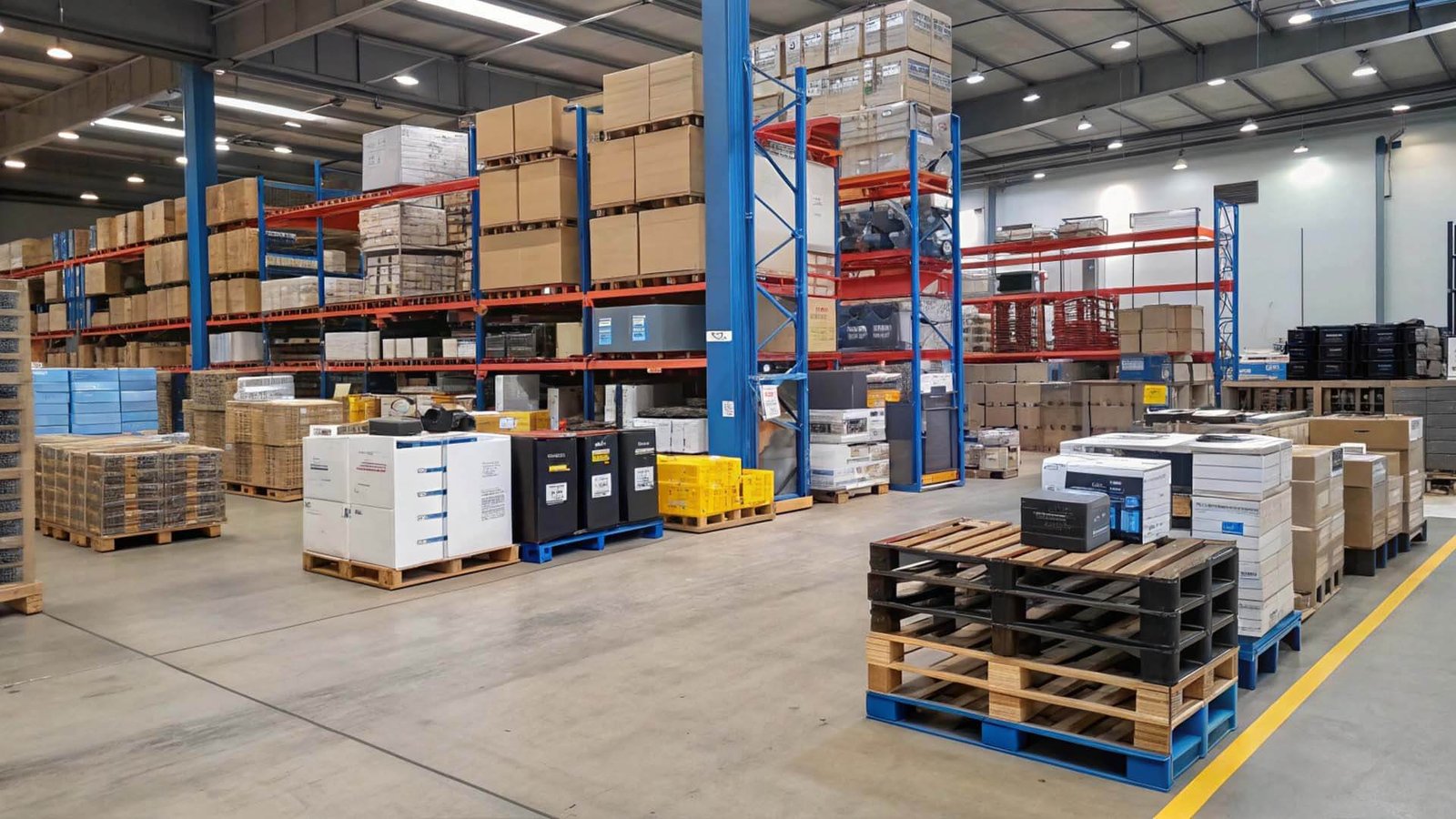
Here is the checklist I give every one of my mass-merchant clients. Getting these right from the start will prevent 90% of potential problems.
- Commercial Invoice: This is the most important document. It must include:
- A detailed description of the copper. For scrap, use ISRI codes. For refined, list the exact form (e.g., "Grade A Copper Cathodes").
- The correct HTS code.
- The dutiable value, country of origin, and the names of the seller and buyer.
- Packing List: This document must align perfectly with the commercial invoice. It details the contents, weight, and dimensions of each pallet or package in the container.
- Bill of Lading (B/L): This is the contract between you and the shipping line. It acts as a receipt for the cargo. The consignee information must be accurate.
- Certificate of Origin (COO): This document certifies the country where the copper was produced. It can be critical for determining eligibility for any trade agreements that might lower your duty rate.
- Material Proof (Especially for Scrap): For scrap copper, be prepared to provide documentation that supports its composition. This could be a supplier's specification sheet or an analysis report. For refined copper, a mill test certificate is standard.
- Customs Bond: You must have a continuous or single-entry bond on file with CBP. This is non-negotiable for commercial imports.
- Power of Attorney (POA): This legal document allows your chosen customs broker to file entries and conduct customs business on your company's behalf.
Having these documents in order before the shipment arrives is not just good practice—it's essential. When CBP flags a container for review, the first thing they ask for is the paperwork. Clean, consistent, and complete documents are your best defense against delays.
DDP vs Non-DDP for Copper Imports: Who Is the Importer of Record and Who Owns the Risk?
This is the most misunderstood area of importing for mass merchants. Many believe DDP (Delivered Duty Paid) means the supplier handles everything and assumes all risk. This is a dangerous oversimplification. The legal responsibility for the import compliance always falls on the Importer of Record.
Even under DDP, the U.S. buyer is often the legal Importer of Record and is liable for all customs compliance. While the seller pays the duties, you are responsible for the accuracy of the classification and valuation. If CBP finds an error, they will penalize you, not your foreign supplier.

Let's be very clear about who is who. The Importer of Record (IOR) is the entity legally responsible for ensuring the goods are imported in accordance with all U.S. laws and regulations. In most DDP shipments involving a U.S. buyer, your company is the IOR. The foreign seller cannot legally be the IOR unless they have a registered business presence in the U.S. and have obtained a customs bond.
So, what does this mean in practice?
- Who pays duty? Under DDP, the seller pays.
- Who controls classification? The seller's freight forwarder or agent usually prepares the customs entry. This is a huge risk. They may not have the expertise to classify copper correctly, or they might intentionally misclassify it to lower the duty payment.
- Who gets penalized? You do. CBP's legal relationship is with the IOR. If they conduct an audit and find that the copper was undervalued or misclassified, they will send the bill for back-duties and penalties directly to your company. Trying to recover that money from your supplier in China is often a lost cause.
This is why having your own customs broker oversee the process is non-negotiable, even on DDP shipments. Your broker works for you. Their job is to protect your interests by reviewing the entry documents prepared by the seller's agent before they are submitted to CBP. This simple oversight step can save you from enormous financial and legal headaches down the road. DDP is a great tool for managing logistics costs, but it is not a substitute for compliance ownership.
Conclusion
Importing copper from China is a manageable process when you focus on compliance first. The key is treating scrap and refined copper as distinct products and taking full ownership of your customs responsibilities, regardless of the shipping terms.
Understanding the risks of DDP shipping can help you avoid costly misunderstandings and ensure compliance with U.S. Customs regulations. ↩
Securing an IOR number is crucial for legal compliance when importing copper into the U.S., ensuring smooth customs processing. ↩
A customs bond guarantees payment of duties and taxes, essential for legal importation and avoiding shipment delays. ↩
A detailed commercial invoice is vital for customs clearance, preventing shipment delays and ensuring compliance with CBP. ↩
The bill of lading is a key document that outlines the shipment details, ensuring proper handling and delivery of copper imports. ↩
Understanding CBP's scrutiny can help you prepare for inspections and avoid penalties during copper importation. ↩
Recognizing copper's status helps importers understand the level of scrutiny and compliance required by CBP. ↩
Avoiding duty miscalculation is essential to prevent unexpected costs and ensure compliance with U.S. import regulations. ↩
Accurate HS/HTS classification is critical for determining duty rates and ensuring compliance with U.S. customs. ↩
Proper documentation for copper scrap is crucial to avoid misclassification and penalties during importation. ↩
Knowing the difference affects classification, duties, and compliance, crucial for cost-effective and legal copper imports. ↩
A POA authorizes your customs broker to act on your behalf, ensuring smooth and compliant customs processing. ↩
Correct classification of copper granules prevents costly reclassifications and ensures compliance with customs regulations. ↩
Understanding Section 232 tariffs is vital for calculating total landed costs and negotiating prices with suppliers. ↩
Understanding the de minimis rule helps in planning and budgeting for copper imports, especially for large shipments. ↩
A certificate of origin verifies the copper's source, crucial for compliance and determining applicable duties. ↩