Confused about your freight forwarder's true role1? This uncertainty can cause costly delays and unexpected fees. Let's clarify exactly what they do—and what they don't do for your shipments.
A freight forwarder acts as your shipment's project manager2. They book ocean freight with carriers, coordinate container pickup and delivery, manage shipping documents like the Bill of Lading3, and track your cargo's transit from China to the U.S. port. Their goal is smooth physical movement.
That sounds straightforward, but the lines get blurry fast, especially when your container hits the U.S. port. As a U.S. importer, knowing precisely where your forwarder's responsibility ends and another party's begins is critical for avoiding costly surprises. Let's break down the specifics.
What Does a Freight Forwarder Actually Do for U.S. Importers?
Are you paying for a service you don't fully understand? Vague promises can leave you exposed. Here are the four core functions a freight forwarder manages for your China-to-USA FCL shipments4.
A freight forwarder executes four primary tasks: booking container space with an ocean carrier, coordinating the physical movement of the container from the factory to the port, preparing and managing essential shipping documents, and providing tracking updates. They are the logistics coordinators for the ocean transit portion.
Let’s get into the specifics. When I work with a client like Mark, who imports machinery parts from a factory in Ningbo, my role as his forwarder starts long before the ship sails. The process isn't just about finding a spot on a vessel; it's about managing a sequence of critical steps.
The Four Pillars of Freight Forwarding
I handle the entire pre-departure and transit phase. Think of it as a checklist to get the container from Point A (the factory) to Point B (the U.S. port). This structured approach ensures nothing is missed during the complex journey from China to the USA.
| Core Function | What It Means for You |
|---|---|
| 1. Carrier Booking5 | I negotiate rates and secure space on a container ship that fits your timeline and budget. This isn't just about price; it's about carrier reliability and transit time. |
| 2. Cargo Coordination6 | I arrange for the empty container to be delivered to the supplier's factory in China, its pickup once loaded, and its delivery to the port of departure. |
| 3. Documentation Management7 | I ensure the Bill of Lading3 (B/L) is issued correctly and work with the shipper to gather the commercial invoice and packing list. Accurate documents are crucial. |
| 4. In-Transit Tracking8 | Once the vessel departs, I provide updates on its location and estimated time of arrival (ETA) at the U.S. port. |
My job is to ensure these four pillars are solid, so the physical journey of the container is seamless.
What Is a Freight Forwarder Responsible For — and What Are They Not?
Think your forwarder is responsible for everything? That assumption can lead to huge fines and delays at the border. Let's draw a clear line in the sand.
A freight forwarder is responsible for booking freight, coordinating logistics, and managing shipping documents. They are NOT responsible for U.S. Customs (CBP) decisions9, calculating import duties10, customs exams11, or any government-imposed holds. Their liability ends with the safe arrival of cargo at the destination port.
This is the most critical distinction for any U.S. importer to understand. Accountability gaps are where costs spiral out of control. I've seen importers get burned because they assumed their FOB forwarder in China was handling U.S. customs compliance. That's a dangerous mistake. The forwarder's job is logistics, not legal import compliance.
Defining the Boundaries
Let's make this crystal clear. Here’s a breakdown of what falls under our responsibility as a forwarder and what absolutely does not.
A Freight Forwarder IS Responsible For:
- Securing a booking with the steamship line.
- Arranging inland transport in the origin country (e.g., from factory to port).
- Ensuring the accuracy of the Bill of Lading3 details.
- Transmitting shipping instructions to the carrier.
- Providing arrival notices to the consignee.
A Freight Forwarder IS NOT Responsible For:
- U.S. Customs Decisions: We cannot influence whether CBP inspects your cargo.
- Duty & Tax Rates: We do not classify your products or determine your duty rate.
- Government Holds12: We have no control over holds from agencies like the FDA or USDA.
- Penalties & Fines: Any penalties for non-compliance are the importer's liability.
Under an FOB (Free On Board) agreement, the importer's responsibility starts the moment the goods are loaded onto the vessel. A DDP (Delivered Duty Paid) service blurs these lines, but you still need to know who is legally responsible for customs declarations.
Does a Freight Forwarder Handle Customs Clearance?
Does 'forwarding' include customs clearance? Many importers think so, but this misunderstanding can stop your shipment cold at the border. Here's the critical difference you need to know.
No, a standard freight forwarder does not handle U.S. customs clearance. This is the legal responsibility of a licensed U.S. Customs Broker. While some companies offer both services, they are distinct functions performed by different licensed professionals. The forwarder moves goods; the broker clears them.
This is not just a matter of company policy; it's a matter of U.S. federal law. To conduct 'customs business13' in the United States, a person or company must be a Licensed Customs Broker14 (LCB). This license is granted by U.S. Customs and Border Protection (CBP) after a rigorous exam and background check.
Two Roles, One Goal
A freight forwarder's expertise is in logistics and transportation networks. They are masters of routes, schedules, and container movements. A customs broker's expertise is in U.S. import law, product classification (HTSUS)15, and compliance.
I once had a client, Mark, who came to me after his shipment got stuck. His China-based FOB forwarder said they'd 'handle everything,' but they weren't licensed in the U.S. When CBP had a question about the product's classification, the forwarder was powerless. They couldn't legally represent him to CBP. We had to file a late ISF and take over the customs entry, which caused a week of delays and cost him thousands in demurrage fees. This is why you cannot rely on an unlicensed entity for a licensed, legal function.
Freight Forwarder vs Customs Broker16 vs Freight Broker17: What's the difference?
Forwarder, customs broker, freight broker—it's a confusing mix of terms. Using the wrong partner for the job creates delays, cost overruns, and serious compliance risks. Let's clarify who does what.
A Freight Forwarder manages international logistics. A Customs Broker is a licensed professional who handles the legal import declaration with U.S. Customs. A Freight Broker17 arranges domestic trucking within the U.S. but doesn't handle international shipping or customs. Each has a distinct, non-overlapping function.
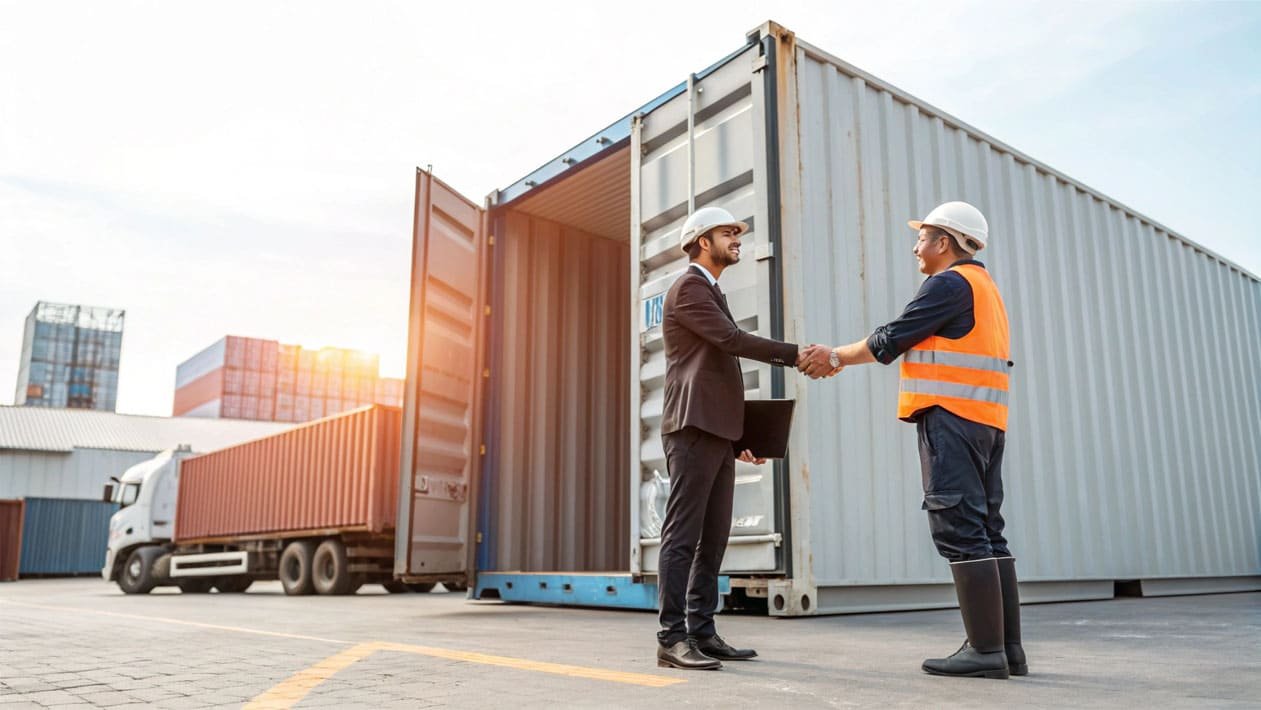
Understanding these roles is key to building a resilient supply chain. As a U.S. importer, you are ultimately responsible for what happens at each stage, so you need to know who is in control. Assigning the wrong task to the wrong partner is a recipe for disaster. For instance, asking your freight forwarder to classify your goods for customs is like asking a ship captain to file your taxes.
Who Controls What Risk?
Here’s a simple table to show the functional differences from your perspective as an importer shipping from China.
| Role | Primary Function | Controls This Risk... | Does NOT Control... |
|---|---|---|---|
| Freight Forwarder | Manages international ocean transport. | Delays in booking, vessel rollovers, incorrect Bill of Lading3. | U.S. Customs clearance, import duties10, domestic trucking. |
| Customs Broker | Legally clears goods through U.S. Customs. | Compliance penalties, incorrect duty payments, customs holds. | Ocean freight rates, vessel schedules, container loading. |
| Freight Broker17 | Arranges domestic truck transport in the U.S. | Late port pickups, high domestic trucking costs, delivery delays. | International shipping, customs compliance, ocean documentation. |
When these roles are siloed in different companies, accountability becomes a blame game during a crisis.
Where Do Importers Get Burned When Using Only a Freight Forwarder?
Hiring just a freight forwarder seems easy, right? But this approach creates a massive gap when your container arrives, leading to costly surprises. Here's where importers consistently get burned.
Importers get burned by surprise customs delays, incorrect duty bills, and steep demurrage and detention fees. Without an integrated customs broker18, there's no single point of accountability when issues arise at the U.S. port, turning logistical problems into expensive compliance failures.

The handoff between the freight forwarder and a separate customs broker is the riskiest part of any import journey. I've seen it happen time and again. The forwarder's job is done when the container is discharged from the vessel. If the customs entry isn't filed correctly and on time by a completely different company, the clock starts ticking on fees.
Common and Costly Failure Points
- Customs Holds: The forwarder provides the arrival notice, but a separate broker files the entry. If there's a data mismatch between the Bill of Lading3 and the customs entry, CBP will flag it. The forwarder and broker then point fingers while your container sits, racking up fees.
- Demurrage & Detention: These are daily storage fees charged by the port and the carrier. When clearance is delayed because your broker is waiting for documents from your forwarder (or vice-versa), these fees can exceed the value of the freight itself.
- Accountability Gaps: Who is responsible if the ISF (Importer Security Filing) is filed late? The forwarder who had the B/L data, or the broker who was supposed to file it? With separate parties, you, the importer, are caught in the middle and stuck with the $5,000 penalty.
An integrated service, where the same company handles both forwarding and customs brokerage, eliminates these gaps. We control the data from origin to final clearance, ensuring a single, accountable point of contact.
Conclusion
For predictable, lower-risk imports from China, you need absolute clarity on roles. Aligning freight forwarding with U.S. customs brokerage under one roof is the key to controlling your supply chain.
Understanding the true role of a freight forwarder can help you avoid costly delays and unexpected fees in your shipping process. ↩
Learn how a freight forwarder manages your shipment to ensure smooth transit and avoid logistical issues. ↩
The Bill of Lading is a crucial document in shipping. Discover its role and why accuracy is essential. ↩
Gain insights into the logistics and documentation required for Full Container Load shipments from China to the USA. ↩
Explore the process of carrier booking and how it impacts your shipping timeline and budget. ↩
Understand the steps involved in coordinating cargo from the factory to the port for international shipments. ↩
Learn about the importance of managing shipping documents accurately to avoid delays and fines. ↩
Discover how tracking your shipment's progress can provide peace of mind and help manage expectations. ↩
Understanding CBP decisions can help you prepare for potential inspections and avoid unexpected delays. ↩
Learn how import duties are determined to better estimate your total shipping costs. ↩
Find out what might cause your shipment to be selected for a customs exam and how to prepare. ↩
Explore the impact of government holds on your shipments and how to mitigate potential issues. ↩
Understand what activities are considered customs business and why a license is required. ↩
A Licensed Customs Broker is essential for legal import clearance. Learn about their responsibilities. ↩
Learn how accurate product classification can impact your duty rates and compliance. ↩
Clarify the distinct roles of freight forwarders and customs brokers to avoid compliance risks. ↩
Understand the role of a freight broker in arranging domestic trucking and how it differs from international shipping. ↩
Explore how an integrated customs broker can streamline your import process and reduce risks. ↩