Are returns silently draining your import business profits? The hidden costs of shipping, labor, and dead stock pile up, turning profitable products into losses. It's time to fix this.
A specialized 3PL handles returns profitably1 by implementing a strict, process-driven system. This involves rapid inspection, clear grading rules (e.g., A-Stock, B-Stock, Scrap2), and pre-defined disposition actions. This turns a chaotic cost center into a predictable, value-recovery operation, protecting your margins.
Your focus is always on getting products from China to your US customers. That's the forward journey. But what about the reverse journey? Many importers I talk to only think about returns when they start happening, and by then, it's a reactive, expensive problem. You must treat reverse logistics3 with the same strategic importance as your initial shipment. Let's break down how you can build a returns process that saves, and even makes, you money.
Uncontrolled Returns Quietly Destroy Importer Margins?
You see the return notification, but do you see the real cost? Each return secretly deducts freight, labor, and storage fees from your margin, often making the product a total loss.
Uncontrolled returns destroy margins by adding unexpected costs for shipping, handling, and storage. Without a clear process, returned products often become dead stock4, representing a total loss of the initial investment and all associated import costs. This leakage quietly ruins profitability.
I once worked with a client, Mark, who was importing consumer electronics. His 10% return rate seemed like just a normal cost of doing business. The problem was, he never calculated the full cost of each return. It's not just the lost sale. It’s a series of costs that add up. First, the cost of the return shipping label. Then, the 3PL labor fee to receive the box and open it. Then, the product would sit on a "problem" pallet, taking up valuable warehouse space and incurring storage fees. Because no one knew its condition, it was dead inventory. The original product cost, plus ocean freight and import duties, was already gone. When you add the return shipping, labor, and storage, a $100 product could easily have $130 in total costs sunk into it before being written off.
The First Step: Stop the Bleeding
The simplest solution is to establish a clear, initial receiving process with your 3PL. Their only job upon receipt is to scan the return tracking number and place the box in a designated, segregated returns area. That’s it. This stops the 3PL from spending expensive labor time on unplanned tasks and prevents returned items from getting lost in the warehouse. It contains the problem.
Why this matters to U.S. importers: You must stop thinking of returns as a single event. They are a process with multiple cost points. Controlling each point, starting with a simple receiving step, is the only way to protect your margins.
The Right 3PL Turns Returns into Recoverable Inventory?
Your warehouse has a growing pile of returned boxes. It feels like a graveyard of lost money, a mix of perfectly good products and actual junk. You just don't know which is which.
A good 3PL uses a clear inspection and grading process5 to sort this chaos. They quickly categorize items as "A-Stock" (resellable as new), "B-Stock" (sellable as open-box), or "Scrap." This turns a pile of unknowns into a clear inventory you can monetize.
A client selling on Amazon FBA is a perfect example. She had pallets of "unsellable" inventory removed from Amazon and sent to her 3PL. Her 3PL just put the pallets in a corner, and the storage bills started climbing. The inventory was a huge question mark, and the cost was very real. We implemented a dedicated grading station at her 3PL. The goal was to inspect and categorize every single unit according to a simple set of rules. This is the most crucial part of turning trash into cash. It requires a clear, simple guide for the 3PL team to follow.
The Grading Matrix
We created a simple table that left no room for guessing.
| Grade | Criteria | Action |
|---|---|---|
| A-Stock | Product is unused, in original packaging with all parts. | Clean, apply new FNSKU label, and send back to FBA. |
| B-Stock | Product has minor cosmetic flaws or a damaged box. | Photograph and list on a secondary marketplace at a discount. |
| Refurbish | Product is functional but missing a simple part, like a power cord. | Add the missing part from a spare parts kit, then list as B-Stock. |
| Scrap | Product is non-functional or heavily damaged. | Consolidate for scheduled, documented destruction. |
This process immediately revealed that over 40% of her "unsellable" inventory was actually A-Stock. It just needed a new label. Another 30% was B-Stock that could be sold. The value she recovered from this single project paid for the 3PL's labor costs for the entire year.
Why this matters to U.S. importers: Without a grading process5, every return is a 100% loss. With grading, you can often recover 50-90% of a product’s value. It’s the single most impactful step in a reverse logistics strategy6//www.inboundlogistics.com/articles/reverse-logistics/)3 strategy.
Cross-Border Returns Fail Without Clear Disposition Rules?
A customer returns a defective, high-value item. Your first thought is to send it back to your factory in China for repair. But the shipping cost and re-import duties could be more than it's worth.
Without clear rules, expensive items get stuck in limbo. Disposition rules tell your 3PL exactly what to do: restock it, liquidate it in the US, destroy it, or save it for a bulk return to China. This avoids costly case-by-case decisions.
I had an importer client who sold industrial equipment. A $2,000 unit was returned as defective. His instinct was to ship it back to the manufacturer in China. We paused and did the math. The numbers were shocking.
The True Cost of a Cross-Border Return
Shipping the heavy unit from the US to China would be about $300. The Chinese factory might face its own import duties to receive the broken unit, around $250. The repair itself was simple, maybe $100 in labor. Then, you have to ship it back to the US for another $300. And yes, you can get hit with US import duties again on the repaired item, another $150. The total cost to "fix" the unit was over $1,100, and it would be out of commission for months. It was far cheaper to scrap the unit in the US and ship the customer a brand new one.
This is why you need to automate these decisions with rules.
- Rule 1: If a product's value is less than the cost of return shipping, instruct the customer to keep or dispose of it and send them a new one.
- Rule 2: If a product is returned and graded as "Scrap," it must be destroyed.
- Rule 3: If a high-value product is defective, hold it for consolidation. Maybe you can send a pallet of 20 defective units back to China once a quarter, making the freight cost per unit much lower.
Why this matters to U.S. importers: The decision to ship a product back across the ocean is a major financial one. It should never be an emotional or automatic reaction. It must be a cold, calculated choice based on rules you set in advance.
Poor Return Visibility Creates Inventory and Duty Losses?
You paid import duties on 1,000 widgets. But 100 of them were returned and later destroyed by your 3PL. You've essentially paid taxes on goods that were never sold and generated zero revenue.
When your 3PL doesn't track returns with precision, you lose track of inventory and overpay on duties. Good visibility means detailed reports on what was returned, its condition, and its final disposition (resold, destroyed). This data is crucial for accounting and duty drawback7 claims.
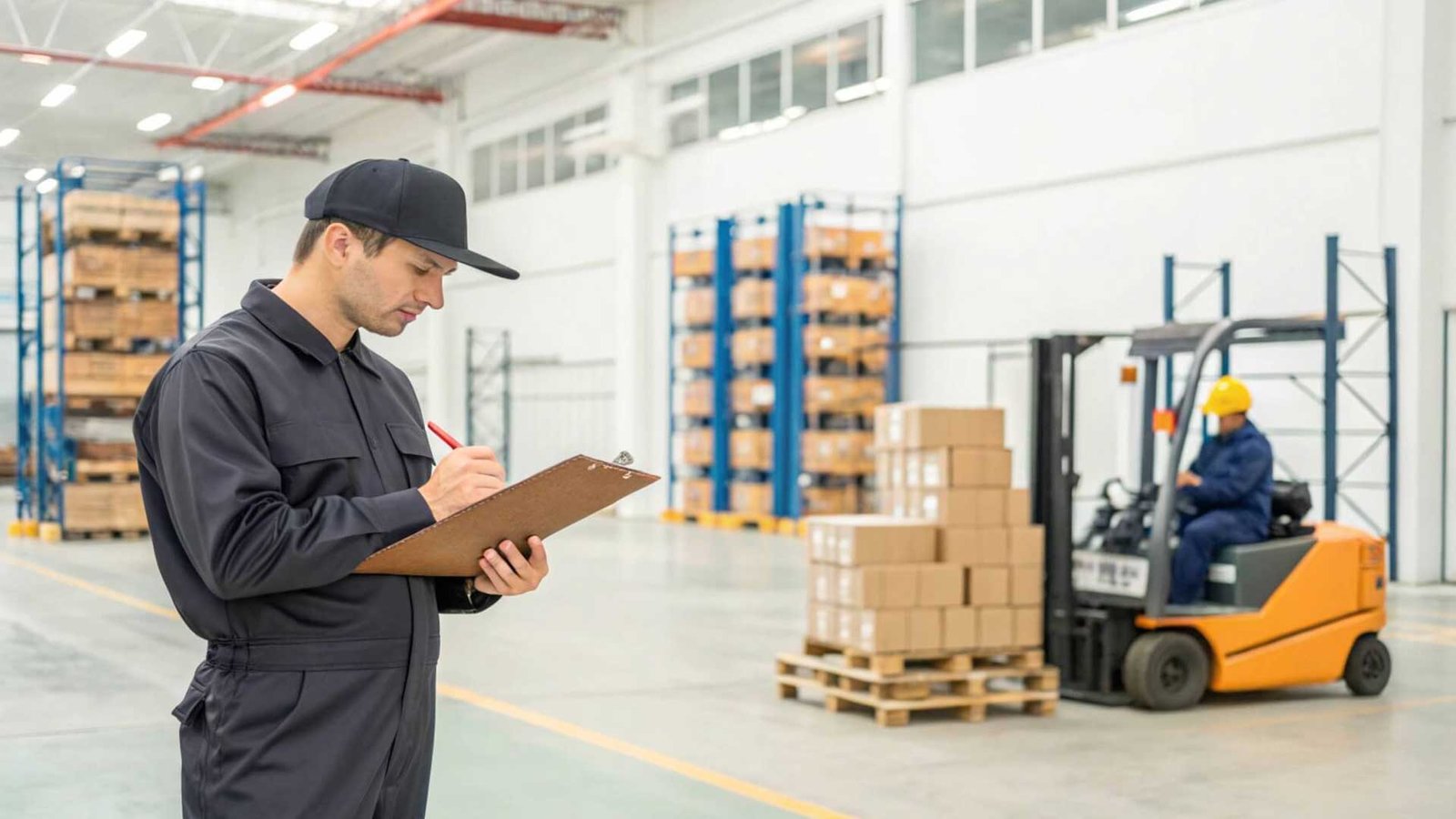
Let's go back to Mark, my electronics client. About 5% of his imports were Dead on Arrival (DOA) and had to be destroyed. He paid duties on 100% of his imported units. This means he was paying the US government for the privilege of throwing away his own broken goods. This is a common and completely avoidable loss. The solution is a program called duty drawback7, which allows you to reclaim up to 99% of duties paid on imported goods that are later destroyed or exported. But you can only claim it if you have proof.
The Documentation Trail for Duty Drawback
Your 3PL is the key to creating this proof. They must provide a clear documentation trail for every unit you intend to claim.
- Receiving Report: Proof of when the specific returned unit arrived at the warehouse.
- Inspection Report: A record showing the unit was graded as "Scrap" or "Defective" with a reason.
- Certificate of Destruction: The most important document. This is a formal report, often with photos or video, proving the unit was destroyed according to CBP regulations.
Without this level of visibility and reporting from your 3PL, claiming duty drawback7 is impossible. For my client, this documentation trail allowed him to recover thousands of dollars in duties he had already paid. For larger importers, using a bonded warehouse or Foreign-Trade Zone (FTZ)8 can be even better. It allows you to defer paying duties until after a product is sold, meaning you never pay duties on items that are returned and destroyed in the first place.
Why this matters to U S. importers: Import duties are a major part of your landed cost. Paying duty on goods you can't sell is like setting money on fire. Good 3PL data gives you the documentation you need to legally reclaim that money from the government.
Profitable Returns Are Designed Before the First Shipment Ships?
You're constantly fighting return costs after they happen. It feels like you're always reacting, trying to patch holes in a sinking ship, instead of steering it. This is a losing battle.
Yes, a profitable return process is proactive, not reactive. It begins with your supplier agreement9 in China, your choice of 3PL in the US, and the rules you set. By planning for returns from the start, you control the process.

Most importers I meet are laser-focused on the forward journey: finding a supplier, negotiating prices, and shipping from China to the USA. They only think about the return journey when the first unhappy customer sends an email. This is the fundamental mistake that makes reverse logistics3 so painful and expensive. The most successful importers I know build their returns strategy before the first container ever leaves the port. They treat the entire product lifecycle, including its end-of-life, as one integrated system.
The Upstream Reverse Logistics Checklist
You build profitability by making smart decisions upstream.
- 1. Supplier Agreement: Before you sign, does your contract include a credit or automatic replacement for a certain percentage of defective goods (e.g., 1-2%)? This is your first financial shield.
- 2. Product and Packaging Design: Is your product's packaging easy to open without destroying it? Can it be resealed? Are accessories in a separate, replaceable bag? These small details determine if a return becomes A-Stock or B-Stock.
- 3. 3PL Selection: Did you pick your 3PL based only on their per-pallet storage rate? Or did you ask for a demo of their returns management software? Vet their reverse logistics3 capabilities as thoroughly as their receiving capabilities.
- 4. System Integration: Can your 3PL's warehouse management system (WMS) connect to your Shopify or Amazon account to automate Return Merchandise Authorizations (RMAs)10? This reduces manual work and errors.
Why this matters to U.S. importers: Your final profit margin is not just your sale price minus your landed cost. It's your sale price minus your total landed cost and your total cost of returns. You manage the first part meticulously; you must do the same for the second.
Conclusion
Reverse logistics profitability is decided upstream—in product design, import terms, and 3PL alignment—not at the return dock. A proactive, process-driven approach turns this dreaded cost center into a competitive advantage.
Learn how a specialized 3PL can transform your returns process into a profitable operation, protecting your business margins. ↩
Learn about these grading categories and how they can help you manage returned inventory effectively. ↩
Discover the significance of reverse logistics and how it can impact your import business's profitability. ↩
Learn about dead stock and its impact on your business, and explore strategies to minimize its occurrence. ↩
Explore how a grading process can help you recover value from returned products and improve your bottom line. ↩
Learn how to create a reverse logistics strategy that turns returns into a competitive advantage. ↩
Learn about duty drawback and how it can help you recover duties paid on unsellable goods. ↩
Explore the benefits of using an FTZ to defer duties and manage returns more effectively. ↩
Learn what to include in your supplier agreement to protect your business from defective goods. ↩
Understand the role of RMAs in managing returns and how they can improve efficiency. ↩