Struggling with inaccurate inventory counts? Hiring more warehouse staff is expensive and isn't solving the problem. The real fix lies upstream, long before your goods even hit the warehouse.
To improve inventory accuracy1 without overstaffing, U.S. importers must fix data gaps2 between freight forwarding3, customs clearance4, and warehouse systems5. Real-time inbound shipment tracking and aligned Advanced Shipping Notice (ASN)6 data are key. This prevents errors before they happen, eliminating the need for extra labor.
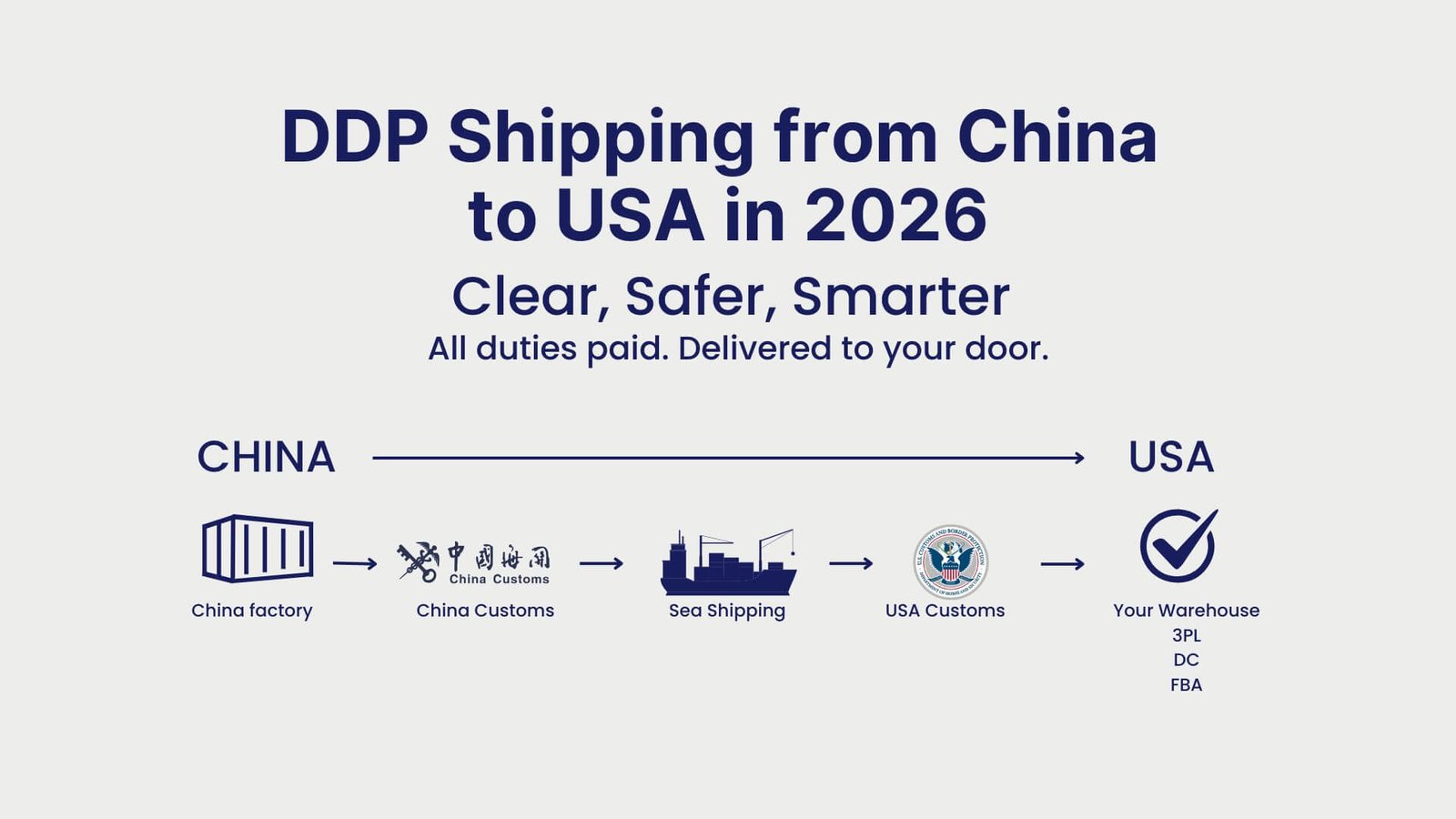
I've seen this problem countless times over my career. Brands think the inventory issue is inside their four walls, but it almost never is. The problem starts the moment your container leaves a port in China. Let's break down where the real breakdowns happen and how you can fix them for good, without adding a single person to your payroll.
Inventory Accuracy Breaks Down Most Often During Inbound Shipping, Receiving, and Customs Delays—Not Inside the Warehouse Itself?
Your warehouse team reports stock discrepancies, causing chaos and finger-pointing. You blame them for miscounts, but the root cause is invisible—happening thousands of miles away or stuck at the port.
Inventory accuracy breaks down due to unpredictable ocean transit times, customs holds7, and paperwork delays. Your system shows inventory "on the water," but it's not actually available. This mismatch between digital and physical reality is the primary source of inaccuracy, not warehouse miscounts.

I call this "phantom inventory8." It's the stock your system says you own but that you can't access, sell, or ship. This is a huge pain for importers. It ties up cash flow9 in goods that are unavailable and leads to missed sales and broken promises to customers. The operational cause is a fundamental disconnect between your logistics partners10. Your freight forwarder knows the vessel's estimated time of arrival (ETA), but not the customs release date. Your customs broker knows about a customs exam, but that critical update doesn't reach your 3PL warehouse11 in time for them to adjust the receiving schedule. This is especially true for goods in a bonded warehouse12, which adds another layer of complexity. The inventory is physically in the U.S. but is not legally entered into U.S. commerce, making it unavailable until duties are paid. Your system must be able to differentiate between "in-transit," "in-bond," and "available for sale" statuses. The solution is to stop looking at logistics in silos and create a single source of truth that tracks a shipment from the factory floor all the way to the 3PL receiving dock.
- Why this matters to U.S. importers: Knowing the actual availability date of your inventory—not just a vague ETA—is critical for managing cash flow9, making accurate sales forecasts, and keeping your customers happy.
U.S. Importers Improve Inventory Accuracy Without Overstaffing by Aligning Freight Visibility, ASN Data, and Receiving Processes Before Cargo Arrives?
Your 3PL warehouse11 is slow to receive your containers, creating backlogs and racking up fees. You consider hiring more staff to speed things up, but the real problem is missing information.
Aligning systems prevents surprises at the receiving dock. When your 3PL's system receives an accurate Advanced Shipping Notice (ASN)6 that matches the freight forwarder's real-time ETA and the customs broker's clearance status, they can plan labor effectively, receive goods faster, and eliminate data entry errors.

The pain here is all too common. Your 3PL partner either rejects a shipment or hits you with unexpected labor fees because the goods they received don't match the paperwork. Or, worse, they take days to unload a container because they weren't prepared for its arrival, delaying your time-to-market. This is a nightmare scenario for anyone shipping to Amazon FBA, where strict receiving appointments can lead to penalties. The operational cause is that the ASN is often a static document created weeks before arrival. It doesn't account for real-world events. If U.S. Customs pulls a few cartons for an exam, the ASN is now incorrect. If the vessel is delayed by a week, the 3PL's scheduled labor sits idle. To fix this, the ASN must become a living document, automatically updated by real-time events. This requires integrating your freight, customs, and warehouse data. When the 3PL knows exactly what is coming, precisely when it will arrive, and that it's legally cleared for entry, they can operate with maximum efficiency. This level of preparation completely eliminates the need for a "brute force" approach of throwing more people at the receiving dock.
- Why this matters to U.S. importers: A smooth, predictable receiving process directly reduces your 3PL fees, gets your product into sellable stock faster, and prevents the high cost of stock-outs13.
ABC Classification and the 80/20 Rule Only Work When Inventory Is Prioritized by Lead Time Risk, Import Frequency, and Customs Variability?
You diligently use ABC analysis14 to manage your inventory, but you still face crippling stock-outs13 on your most important items. Your system is prioritizing by value, ignoring the massive risks of your international supply chain.
Traditional ABC analysis14, based on sales value or volume, is flawed for imported goods. A better approach prioritizes inventory based on supply chain risk15. High-risk items are those with long lead times, frequent customs inspections, or volatile transit times, regardless of their unit cost.
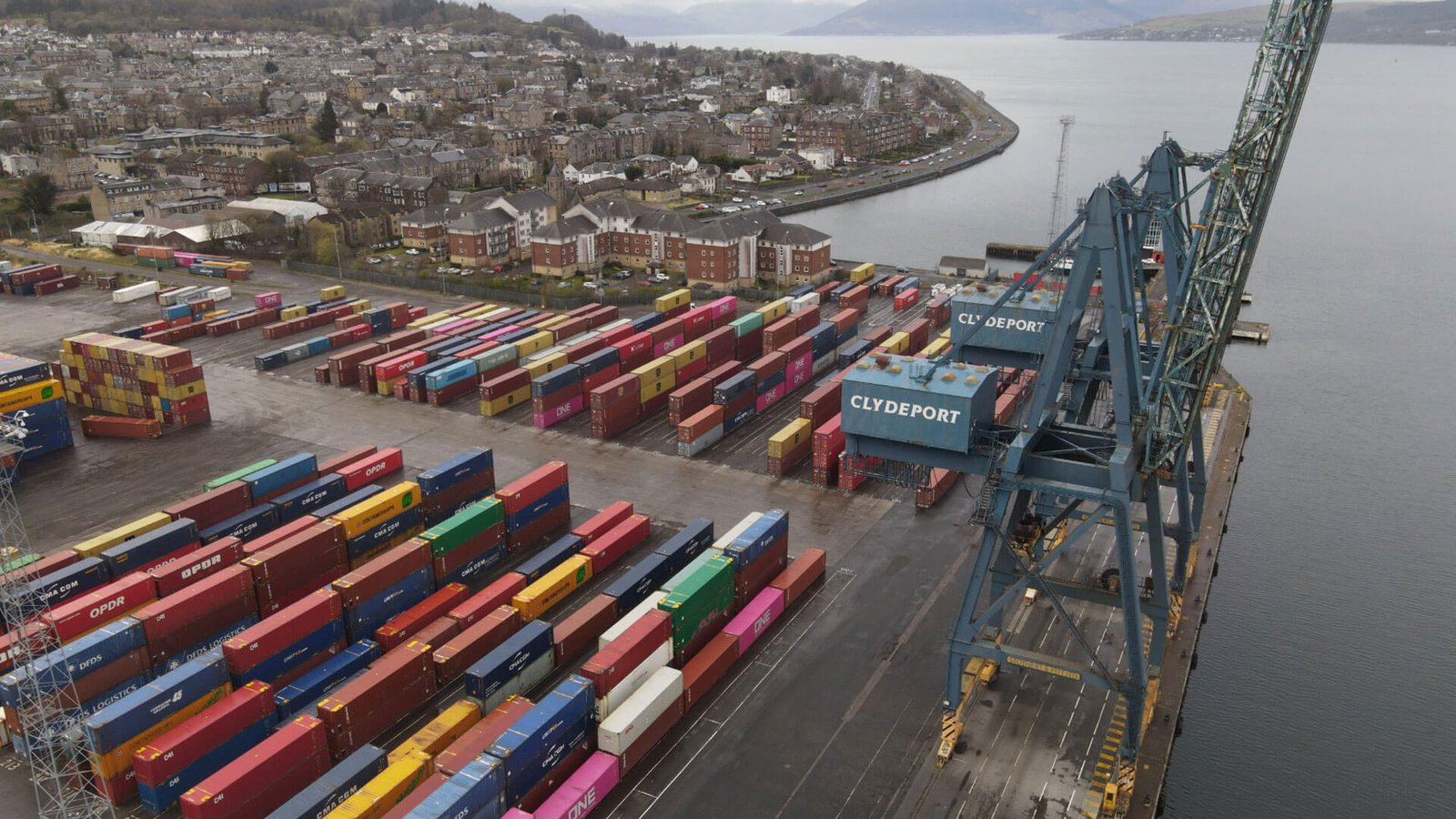
I've seen companies go under because their best-selling "A" item, sourced from a single factory in China, was suddenly out of stock for six weeks due to a port lockdown they didn't anticipate. The classic 80/20 rule failed them because it only looked at sales history, not supply chain vulnerability. Standard inventory models assume predictable lead times, but for China-to-USA imports, lead times are anything but stable. You have lead time risk16, import frequency, and customs variability to contend with. A product that is subject to FDA review is inherently riskier than a simple general good. The solution is to augment your ABC analysis14 with a risk score. Your new "A" items are not just your best sellers; they are the products with the highest risk of stocking out due to supply chain disruption.
| Priority Factor | Traditional ABC (Value-Based) | Risk-Adjusted ABC (Import-Based) |
|---|---|---|
| "A" Items | High sales value | High lead time, high customs risk |
| "B" Items | Medium sales value | Moderate lead time, stable customs |
| "C" Items | Low sales value | Short lead time, low customs risk |
By focusing on the risk of a stock-out, you can allocate your safety stock budget and your attention far more effectively.
- Why this matters to U.S. importers: This shift in thinking protects you from the inherent unpredictability of international freight and ensures your most critical, revenue-driving products are always available for your customers.
The Gold Standard for Inventory Accuracy Combines Cycle Counting, System Integration, and Real-Time Inbound Shipment Tracking?
You perform regular cycle counts and your warehouse team is diligent, but your inventory numbers in the system are still consistently off. You're counting what's on the shelf but ignoring the massive amount of inventory in transit.
The gold standard for inventory accuracy1 isn't just about counting what's in the warehouse. It's about having a single, integrated system that provides total visibility: what's on the shelf, what's at the port, and what's on the water.

The pain here is when different departments are working from different realities. Your finance team makes decisions based on an inventory valuation that includes goods stuck in a customs exam for three weeks. Your sales team promises a product to a key customer based on an ETA that changed two days ago. The numbers in your system simply don't reflect the physical world. This happens because your systems are not integrated. Your Warehouse Management System (WMS) is great at tracking on-hand inventory. Your ERP tracks purchase orders. But neither has real-time visibility into the "in-transit" leg of the journey, which for China imports, can represent 30-60 days' worth of inventory. This is your biggest blind spot. The solution is to create a single source of truth for your entire inventory picture by combining cycle counting17 (physical accuracy), system integration18 (connecting your WMS and ERP), and real-time tracking (in-transit visibility). When these three elements work together, you finally get a true picture of your total inventory position.
- Why this matters to U.S. importers: Total inventory visibility allows for smarter purchasing decisions, more accurate financial reporting, and reliable delivery promises that build trust with your customers.
The Fastest Way to Fix Overstated or Inaccurate Inventory Is to Eliminate Data Gaps Between Freight Forwarding, Customs Clearance, and Warehouse Systems?
Your inventory records are a mess, consistently showing more stock than you actually have available. You're wasting countless hours on manual reconciliations and physical counts that don't solve the core issue.
To fix inaccurate inventory fast, focus on the handoffs between your partners. The gap between your freight forwarder's data, your customs broker's clearance data, and your 3PL's receiving system is where errors multiply. Integrating these systems eliminates manual entry and time delays.

Overstated inventory is a cash flow9 killer. You can't sell it, but you've already paid for it, and it dangerously inflates your balance sheet. The operational cause is that data is still manually re-entered at each step of the import process, from the supplier's packing list to the ASN you email your 3PL. Each manual step introduces the risk of human error and time lags. A change at one step, like a container getting rolled to a later vessel, doesn't always make it to the final step in time. The solution is to automate these data handoffs. This is where your choice of Incoterms19, like DDP vs. FOB, has a huge impact. Under DDP (Delivered Duty Paid), your supplier manages the logistics, which can create a massive visibility gap. You lose control over the data. Under FOB (Free on Board), you control the forwarder and broker, giving you the power to build an integrated system where a freight event (like "Vessel Arrived") automatically triggers a notification to the customs broker, and the broker's "Customs Cleared" update automatically alerts the 3PL to schedule a delivery.
- Why this matters to U.S. importers: Eliminating data gaps2 is the single highest-leverage activity you can perform to improve inventory accuracy1. It is far cheaper than hiring more staff and infinitely more effective than endless cycle counting17.
Conclusion
Stop treating inventory accuracy1 as a warehouse problem. For U.S. importers, it's an inbound logistics problem first. Fix your upstream data flow, and you'll fix your inventory without overstaffing.
Explore this resource to learn effective strategies for enhancing inventory accuracy in your business. ↩
This resource offers strategies to eliminate data gaps, enhancing inventory accuracy. ↩
Understanding freight forwarding can help you optimize your inventory management processes. ↩
This resource provides essential insights into customs clearance, crucial for smooth inventory flow. ↩
Discover top warehouse systems that can significantly improve your inventory accuracy. ↩
Understanding ASN is vital for effective inventory management and reducing discrepancies. ↩
This resource explains customs holds and offers solutions to prevent delays in inventory. ↩
Explore this concept to understand its impact on cash flow and inventory management. ↩
Learn about the relationship between inventory management and cash flow for better financial health. ↩
This resource provides tips on selecting logistics partners to enhance your inventory processes. ↩
Understanding the role of 3PLs can help you optimize your inventory management. ↩
Learn about bonded warehouses and their implications for inventory availability. ↩
Explore this resource to learn how to prevent stock-outs and maintain inventory levels. ↩
This resource provides insights into ABC analysis and its application in inventory management. ↩
Understanding supply chain risk is crucial for maintaining inventory levels and avoiding stock-outs. ↩
Explore the impact of lead time risk on your inventory strategy and decision-making. ↩
Discover the benefits of cycle counting for maintaining accurate inventory records. ↩
Learn how system integration can streamline your inventory processes and improve accuracy. ↩
Understanding Incoterms is essential for managing logistics and inventory effectively. ↩