Are your shipments stuck in customs? Worried about surprise fees and compliance risks? The key to a smooth import process might be a credential you've never even heard of1.
The National Customs Brokers & Forwarders Association of America (NCBFAA) is the leading U.S. trade association for licensed customs broker2s and international freight forwarders. For importers, choosing an NCBFAA member3 signals you are working with a partner held to high standards of professionalism, ethics, and compliance.
You're an importer, not a logistics expert. You just want your goods to arrive on time and on budget. You hire a freight forwarder or customs broker, expecting them to handle the details. But the quality of service varies wildly, and a wrong choice can cost you dearly. Understanding what sets a great partner apart from a risky one is critical. This is where the NCBFAA comes in, and it's more important than you think. Let's break down what it really means for your business.
What Is the NCBFAA and Why Does It Matter to U.S. Importers Choosing a Freight Forwarder or Customs Broker?
Choosing a logistics partner feels like a gamble. A bad choice leads to customs holds4, unexpected bills, and angry customers. You need a clear signal of reliability and professionalism.
The NCBFAA is the main trade group for customs brokers and forwarders in the United States. It sets professional and legal standards. For importers, membership indicates your partner is accountable, credible, and serious about compliance, which directly protects your business from unnecessary risk.
So, what is the NCBFAA in simple terms? Think of it like the bar association for lawyers or the AMA for doctors. It's a professional organization that establishes a code of conduct, provides ongoing education, and advocates for best practices within the U.S. logistics industry. As an importer, you will likely never speak to the NCBFAA directly. But their influence on your broker or forwarder is huge.
Any licensed customs broker2 has passed an exam and a background check with U.S. Customs and Border Protection (CBP). That's the minimum requirement to operate legally. But being "professionally governed5" by the NCBFAA is a step beyond that. It means the broker voluntarily commits to a higher standard of operation, continuous education on changing trade laws6, and ethical business practices. It’s the difference between someone who just has a driver's license and a professional driver committed to safety and excellence. I always tell my clients that a license gets you in the game, but NCBFAA member3ship shows you're playing to win for your customers.
How Does NCBFAA Membership Set Standards for Customs Brokerage, Freight Forwarding, and Import Compliance?
You've experienced it: inconsistent service from different forwarders creates compliance headaches7 and surprise fees. You need a partner who follows a reliable, professional playbook every single time.
NCBFAA member3s are required to follow industry-wide standards8 for employee training, regulatory compliance, and ethical conduct. This ensures they are up-to-date on complex trade laws, reducing the chance of costly clearance errors, delays, and penalties for the importer.
The NCBFAA isn't just a club with a logo. It actively works to keep its members sharp and compliant. This happens in a few key ways that directly benefit you, the importer.
First, there's a huge emphasis on education. Trade regulations change constantly. The NCBFAA provides its members with constant updates, training programs, and seminars on everything from new tariff classifications to changes in CBP enforcement priorities. A non-member might miss a critical update, leading them to misclassify your goods and trigger a customs hold or an audit. An NCBFAA member3 is far more likely to be aware of the change and file your entry correctly the first time.
Second, membership promotes strong alignment with CBP9. NCBFAA works closely with government agencies, including CBP, to streamline processes and clarify rules. This means member brokers understand not just the letter of the law, but also its intent and how CBP officials enforce it. This inside track helps them anticipate potential issues with your shipment and resolve them proactively, preventing delays at the port. In my experience, this shared understanding is what separates a smooth clearance from a week-long nightmare.
What Do NCBFAA Terms and Conditions of Service Actually Mean for Importer Liability and Risk Protection?
Forwarder contracts are often full of confusing legal jargon. Misunderstanding them can leave your business exposed to huge financial liabilities when something inevitably goes wrong with a shipment.
The standard NCBFAA Terms and Conditions of Service10 provide a clear, industry-tested legal framework. They define liability limits, outline responsibilities for both the importer and the service provider, and establish a predictable process for handling claims.
Many importers I talk to are surprised to learn that a forwarder's marketing slogan11 of "we handle everything" is not a legal guarantee. The real definition of responsibility is found in the terms and conditions. This is where working with an NCBFAA member3 makes a massive difference. Their terms are standardized and well-understood. They don't try to hide risk in vague clauses.
These terms clearly state the forwarder's and broker's limits of liability. For example, they are typically not liable for acts of God or carrier negligence, but they are responsible for errors in their own paperwork. Most importantly, the terms clarify your responsibilities as the importer. You are ultimately responsible for providing accurate information about your goods and for paying duties and taxes. A common misunderstanding is that a DDP (Delivered Duty Paid) price means the forwarder takes on all legal liability. This is false. The Importer of Record12 is almost always you, the buyer. The NCBFAA terms make this relationship clear, preventing disputes later.
Importer Checklist: How to Vet an NCBBFAA Broker or Forwarder
| Vetting Question | Why It Matters |
|---|---|
| Are you an NCBFAA member3? | Indicates adherence to U.S. industry standards and a commitment to professionalism. |
| Are you a licensed U.S. customs broker? | This is legally required to file customs entries on your behalf in the USA. |
| Do you use NCBFAA Terms & Conditions? | Clarifies liability, risk, and responsibilities, protecting you from vague contracts. |
| Who files the customs entry under DDP? | Determines who is responsible for duty payments and compliance with CBP. |
| How do you handle CBP audits? | A good broker has a process to defend your filings, protecting you from long-term penalties. |
| Do you provide post-entry corrections13? | Essential for fixing errors, preventing overpayment of duties, and maintaining compliance. |
NCBFAA vs Non-Member Forwarders: Where Do Importers Face Hidden Risk in Contracts, Claims, and Compliance?
A low quote from a non-member forwarder can be very tempting. But that low price often hides vague contracts, zero accountability, and significant long-term risk for your business.
Non-member forwarders often operate without a standardized liability framework. This leads to contract ambiguity, difficult claims disputes14, and compliance shortcuts that expose the importer to unforeseen costs, delays, and government penalties. The risk almost always outweighs the initial savings.
When you work with a non-member, especially one based overseas without a strong U.S. presence, you are stepping into a gray area. Their contracts are often proprietary, written to heavily favor them. If your container is damaged, delayed, or flagged by customs, figuring out who is responsible becomes a battle. Their terms might state they have zero liability for anything, leaving you to absorb the entire loss.
Claims disputes are a nightmare. With NCBFAA terms, there is a clear process. With a non-member, you might be arguing with someone in a different time zone who has little incentive to help once they've been paid. I've seen importers waste months trying to get a resolution, with legal and administrative costs piling up. Worse, some non-members cut corners on compliance to offer a lower price. They might misclassify goods15 to get a lower duty rate, which seems great until CBP catches it and hits you, the importer, with a massive fine for fraud or negligence.
Scenario 1: The DDP Shipment That Went Wrong An electronics importer shipped a full container (FCL) from Shenzhen to Los Angeles on DDP terms with a non-NCBFAA forwarder. The forwarder’s agent filed the customs entry with incorrect product classifications. CBP flagged the entry and put the container on hold for inspection, delaying delivery by two weeks. The importer missed a key sales window with a major retailer. Because the contract was vague and the forwarder was not an NCBFAA member3, there was no clear ownership of the error. The importer had to hire a U.S. customs broker like us to fix the entry and get the container released, adding thousands in unexpected costs and lost revenue.
NCBFAA vs Non-NCBFAA Forwarders
| Factor | NCBFAA Member | Non-NCBFAA Forwarder |
|---|---|---|
| Compliance Standards | Defined & enforced by the association | Inconsistent or non-existent |
| Liability Clarity | Standardized contractual terms | Often vague, favors the forwarder |
| Audit Readiness | High, due to education and standards | Low, often unprepared for CBP scrutiny |
| DDP Risk Control | Structured process with clear roles | Fragmented, high risk of importer liability |
| Importer Protection | Strong, based on professional conduct | Limited to non-existent |
| Long-Term Reliability | High, focused on partnership | Variable, often transactional |
How Does Working With an NCBFAA-Aligned Customs Broker Improve Clearance Speed, Accuracy, and Audit Defense?
Customs delays and the threat of a CBP audit are constant fears for any importer. These issues can halt your supply chain and result in huge, unexpected financial penalties.
An NCBFAA-aligned broker actively minimizes these risks. Their commitment to ongoing education and professional standards leads to higher entry accuracy, proactive post-entry corrections13, and a disciplined process for defending you during a CBP audit.

The most important job of a customs broker is to file your entry accurately. An NCBFAA broker has access to the best training and resources to correctly classify your products and declare their value. This discipline dramatically reduces the chance of your shipment being flagged for review in the first place, ensuring faster clearance.
But nobody is perfect. When errors do happen, an NCBFAA-aligned broker knows how to fix them correctly. They can file Post-Summary Corrections (PSCs) to amend an entry, ensuring you pay the correct amount of duty and remain compliant. A less professional operator might ignore the error or not know how to fix it, leaving you exposed to future penalties.
The ultimate test is a CBP audit. If CBP decides to review your import activity from the last five years, you need a partner with meticulous records and a deep understanding of the law. NCBFAA brokers are trained in audit defense16. They maintain the required documentation and can professionally and competently respond to CBP inquiries on your behalf. This is your best defense against penalties that can reach into the hundreds of thousands of dollars.
Scenario 3: Surviving a CBP Audit A U.S. company imported specialized industrial equipment from Shanghai to Houston. Two years later, CBP initiated a post-entry audit, questioning the valuation and classification of the machinery. Because the importer had used an NCBFAA-aligned U.S. customs broker for the entries, the process was manageable. The broker had kept impeccable records of all commercial invoices, entry summaries, and communications. They professionally managed the response to CBP, providing a clear and well-documented defense of the original filings. The audit was closed with no penalties issued to the importer, saving them from potentially crippling fines and legal fees.
Why Is NCBFAA Affiliation Especially Important for China → USA DDP Shipments and Complex Import Programs?
DDP shipping17 sounds simple: one price, no hassle. But in reality, it concentrates all customs, tax, and compliance risk into a single, fragile execution chain.
With DDP, a single mistake by the forwarder can have massive consequences, and you are still legally responsible. An NCBFAA-aligned partner provides the structured rules, clear liability, and U.S.-based compliance oversight18 needed to manage this concentrated risk effectively.
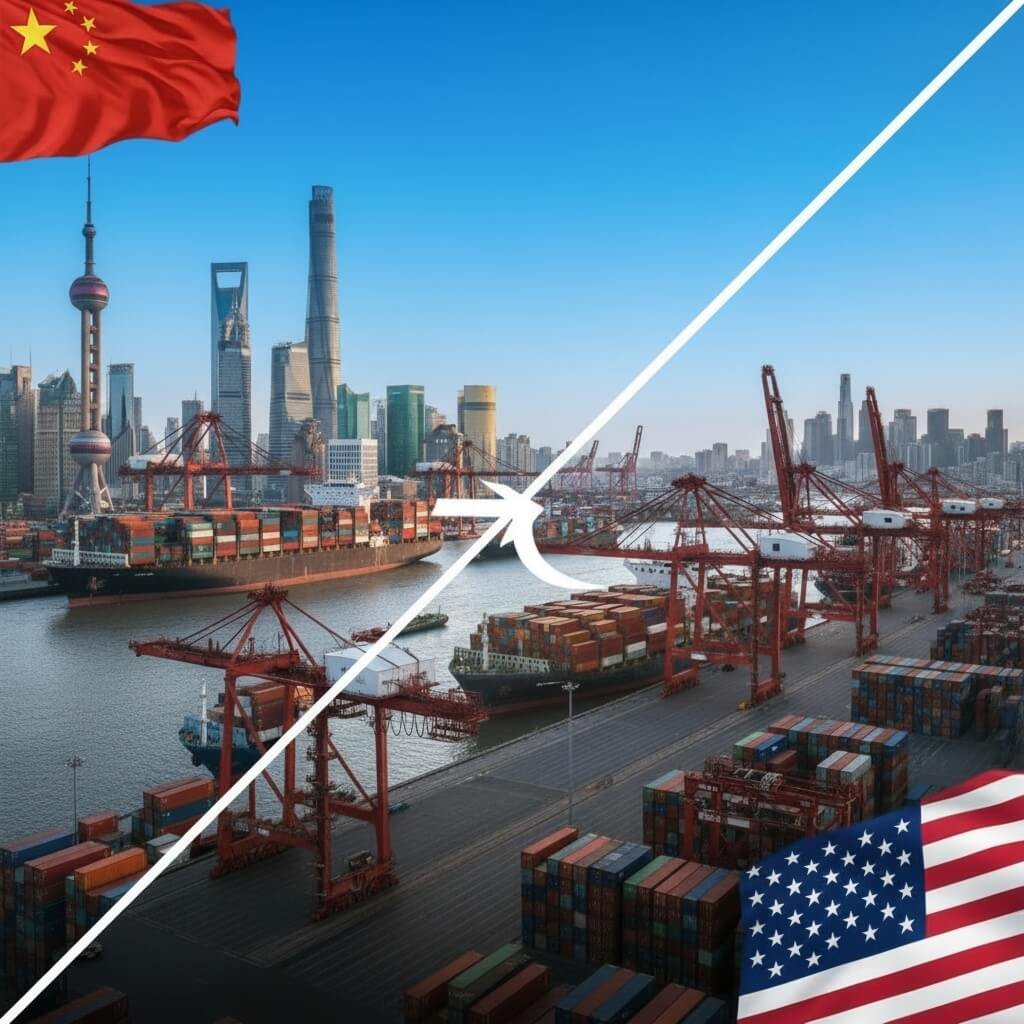
DDP shipments from China to the USA are where I see the most problems. Many overseas sellers or forwarders offer a cheap DDP rate, but they don't have a licensed U.S. customs broker controlling the entry. They rely on third-party agents who may lack the expertise or incentive to ensure compliance. When CBP finds an error, the overseas agent is nowhere to be found, and CBP comes looking for you—the Importer of Record12.
This is why our DDP service is built around our own U.S. customs brokerage. We control the process from start to finish. An NCBFAA affiliation is critical here because it provides the framework for this control. The clear terms define who is responsible for what. We ensure the customs entry is filed correctly under the right Importer of Record12, and we manage the duty payment transparently. The promise made by a salesperson in China is executed by a licensed, accountable professional in the U.S. This structure is the only way to do DDP safely and protect your business.
Scenario 2: Predictable Landed Cost with DDP An importer of consumer goods shipping an FCL from Ningbo to New Jersey chose a forwarder who was also an NCBFAA-member customs broker. The shipment was quoted as DDP. During transit, CBP issued a new ruling that increased the duty rate for one of the products in the container. Because the importer was working with an NCBFAA-aligned partner using clear terms, there was no dispute. The broker immediately notified the importer of the change and provided official documentation. The final landed cost was predictable, the entry was filed correctly, and there were no surprises or arguments over who should pay the extra duty.
Conclusion
Choosing a logistics partner is a major business decision. The NCBFAA logo isn't just marketing—it's a risk management framework that signals accountability, professionalism, and long-term reliability for your U.S. import program.
Discover a credential that could streamline your import process and avoid customs issues, potentially saving you time and money. ↩
Understand the qualifications and legal requirements for customs brokers to ensure your partner is legitimate. ↩
Learn why working with an NCBFAA member ensures professionalism and compliance, protecting your business from risks. ↩
Find strategies to prevent customs holds, ensuring timely delivery and avoiding unexpected costs. ↩
Explore how professional governance by the NCBFAA enhances service quality and compliance. ↩
Learn how ongoing education helps brokers stay updated, reducing errors and compliance issues. ↩
Discover ways to ensure your logistics partner follows industry standards, minimizing compliance issues. ↩
Understand the standards that NCBFAA members must follow, ensuring reliable and ethical service. ↩
Learn how strong alignment with CBP helps brokers anticipate and resolve potential shipment issues. ↩
Explore how these terms provide a clear legal framework, protecting importers from liability and risk. ↩
Understand the difference between marketing promises and legal guarantees in logistics contracts. ↩
Learn about the responsibilities and liabilities of being the Importer of Record in global trade. ↩
Discover how post-entry corrections can fix errors and prevent overpayment of duties. ↩
Find strategies to resolve claims disputes efficiently, minimizing financial and operational impact. ↩
Learn about the risks and penalties associated with incorrect product classification in customs. ↩
Explore how brokers can protect you during audits, ensuring compliance and avoiding penalties. ↩
Understand the complexities and potential pitfalls of Delivered Duty Paid shipping arrangements. ↩
Learn how U.S.-based oversight ensures adherence to regulations, reducing risk in international trade. ↩