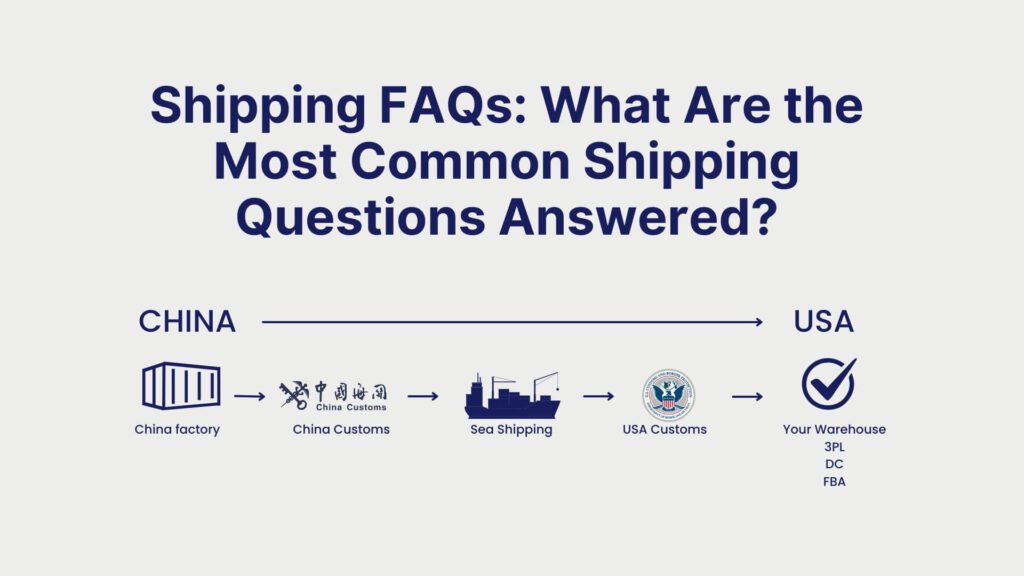
Are you tired of the confusing world of international shipping1? The endless questions and hidden risks can feel overwhelming. Getting clear, straight answers is the first step to taking control.
The most common shipping questions for U.S. importers cover five key areas: choosing the right shipping method2, preparing the correct documents, understanding costs, predicting transit times, and knowing who is responsible at each stage. Answering these questions upfront prevents costly delays and protects your supply chain.
As an importer, you have a lot on your plate. You need to source products, manage inventory, and grow your business. The last thing you need is a shipping headache. I've spent my career helping importers navigate these challenges. In this guide, I'll walk you through the most frequent questions I hear from clients just like you. We will break down each topic so you can ship with confidence. Let's get started.
What Shipping Methods and Modes Should U.S. Importers Choose for Cost, Speed, and Reliability?
Choosing the wrong shipping mode can destroy your profit margins or cause you to miss a critical deadline. You need a method that fits your budget and your timeline.
U.S. importers typically choose between ocean freight3, air freight4, and inland trucking based on shipment urgency, cargo value, and cost tolerance. Ocean freight offers the lowest cost for bulk shipments, while air freight4 prioritizes speed for time-sensitive goods. The right choice balances cost, transit time, and supply-chain reliability.
When my clients ask for the "best" shipping method, I always tell them it depends on their specific situation. There is no one-size-fits-all answer. We need to look at the details of your cargo and your business needs. Let's break down the main options so you can see how they compare.
Ocean Freight: The Cost-Effective Workhorse
For most importers, especially those shipping from China, ocean freight3 is the default choice. It's the most economical way to move large quantities of goods. You have two primary options here: Full Container Load (FCL) and Less than Container Load (LCL). With FCL, you rent an entire container for your goods alone. This is ideal for larger shipments and offers better security and faster handling at the port. LCL is for smaller shipments where you share container space with other importers. It's cheaper for low volumes but can have slightly longer transit times due to the consolidation and deconsolidation process at both ends. The main drawback of ocean freight3 is speed; it takes weeks, not days.
Air Freight: When Speed is Everything
What if you have a high-value product launch or need to restock a popular item urgently? This is where air freight4 shines. It is significantly faster than ocean, cutting transit times from weeks to just a few days. I recommend it for time-sensitive, high-value, or lightweight cargo. However, this speed comes at a much higher cost. The price can be 5 to 10 times more expensive than an equivalent ocean shipment. You are paying a premium for speed and reliability. For many businesses, using a mix of ocean for regular stock and air for urgent needs provides the best balance for their supply chain.
What Documents and Information Are Required to Ship and Import Goods Into the United States?
A simple paperwork mistake can be disastrous. It can lead to your shipment getting stuck at the port for weeks, racking up fees and delaying your access to your own goods.
International shipments into the U.S. require core documents such as a commercial invoice5, packing list6, bill of lading or air waybill, and customs entry filings7. Additional licenses or certificates may apply depending on product type, origin, and regulatory agencies, making document accuracy critical for smooth customs clearance.
I have seen importers lose thousands of dollars because of a typo on a commercial invoice5. U.S. Customs and Border Protection (CBP) is very strict about documentation. Getting it right the first time is not just a suggestion; it's a necessity. Let's review the essential paperwork you'll need to manage for every single import shipment.
Core Shipping Documents
These three documents are the foundation of every international shipment.
- Commercial Invoice: This is the bill for the goods from the seller to the buyer. It must include a detailed description of the goods, their value, currency, country of origin, and the full names and addresses of the shipper and consignee. CBP uses this to determine the duties owed.
- Packing List: This document details the contents of your shipment, including how it is packed, the dimensions and weight of each carton, and the total volume. It's used by freight handlers and customs to identify and check the cargo without unpacking everything.
- Bill of Lading (BOL) or Air Waybill (AWB): This is the contract between you and the carrier. For ocean freight3, it's a BOL; for air, it's an AWB. It acts as a receipt for your goods and contains the shipping details.
U.S. Customs and Other Agency Requirements
Beyond the core three, you'll need specific documents for U.S. customs clearance. The most critical is the ISF (10+2) filing for ocean shipments, which must be submitted 24 hours before the cargo is loaded onto the vessel. Failing to file it on time results in a $5,000 penalty. Depending on your product, other agencies like the FDA, USDA, or FCC may require additional permits or certificates. This is where having an experienced U.S. customs broker8 is invaluable. We handle these filings to ensure you are compliant and avoid penalties.
How Are Shipping Costs Calculated and What Charges Most Commonly Surprise Importers?
You received a freight quote that seemed great, but the final bill was 30% higher. This common and frustrating experience is often due to a misunderstanding of how shipping costs9 are calculated.
Shipping costs are calculated using base freight rates plus surcharges such as fuel, peak season, port fees, and inland delivery. Importers are often surprised by accessorial charges10, customs duties, and unexpected surcharges, which can significantly increase landed cost if not planned and quoted upfront.

To truly control your costs, you need to understand every line item on your freight invoice. A cheap "port-to-port" quote can be misleading because it leaves out many necessary charges that will appear later. I always advise my clients to get an "all-in" quote that covers the entire journey from the factory to their warehouse door.
Understanding Your Freight Quote
A typical international freight quote is broken into several parts.
- Base Freight Rate: This is the fundamental cost of moving a container from Port A to Port B. It fluctuates based on supply and demand.
- Surcharges: Carriers add many surcharges. Common ones include the Bunker Adjustment Factor (BAF) for fuel price changes and the Peak Season Surcharge (PSS) during high-demand periods.
- Origin/Destination Charges: These are fees for handling at the ports. They include Terminal Handling Charges (THC) and documentation fees.
- Customs and Duties: This includes the customs broker8age fee for filing your entry and the actual duties and taxes owed to the government based on your product's value and classification.
Hidden Costs to Watch For
The most painful charges are the ones you don't see coming.
- Demurrage and Detention11: If your container sits at the port for too long after arrival (demurrage) or you take too long to return the empty container after unloading (detention), the carrier will charge you a daily penalty. These fees can be hundreds of dollars per day.
- Customs Exams: CBP can randomly select your shipment for an exam. You are responsible for all costs associated with this, including moving the container to an exam site and labor, which can easily add up to over $1,000.
- DDP (Delivered Duty Paid) shipping is a great way to avoid these surprises, as the seller's freight forwarder handles all costs and risks until the goods arrive at your door.
How Long Does International Shipping Take and What Factors Cause Delays or Disruptions?
Your inventory plan depends on your shipment arriving on time. But when you hear the word "delay," your entire production schedule and cash flow can be thrown into chaos.
International shipping timeline12s vary by mode, origin, and destination, ranging from days by air to weeks by ocean freight3. Delays are commonly caused by port congestion13, customs inspections, documentation errors, weather disruptions, or capacity shortages, making proactive planning essential for reliable delivery schedules.
"Where is my shipment?" is a question I get every day. While we can provide estimates, international shipping1 is not an exact science. Many factors are outside of anyone's control. The key is to understand the potential for delays and build a buffer into your supply chain timeline. Don't plan for your goods to arrive the day before you need them.
Typical Transit Times
Let's use shipping from China to the U.S. West Coast as an example.
- Ocean Freight: A typical port-to-port transit time is about 14-20 days. However, you must add time on both ends for trucking, port handling, and customs clearance. A realistic door-to-door timeline is closer to 30-40 days.
- Air Freight: The flight itself might only take a day, but the total door-to-door time is usually around 5-10 days. This accounts for getting the cargo to the airport, consolidation, customs clearance, and final delivery.
Common Causes of Delays
Delays are a fact of life in logistics, but knowing the causes can help you prepare.
- Port Congestion: When too many ships arrive at once, it creates a traffic jam. Containers can wait days or even weeks to be unloaded.
- Customs Holds: If your paperwork has errors or your shipment is flagged for an exam, it will be held by CBP until the issue is resolved. This can take anywhere from a few days to several weeks.
- Carrier Issues: Sometimes shipping lines "roll" a container to a later vessel due to overbooking. They also announce "blank sailings," where they cancel a scheduled voyage entirely, forcing your cargo to wait for the next one.
- Weather and External Events: Typhoons in Asia, labor strikes at U.S. ports, or global pandemics can all cause massive, unpredictable disruptions across the entire shipping network.
Who Is Responsible for Risk, Customs Clearance, and Delivery at Each Stage of the Shipping Process?
When a problem occurs, the first question is always, "Whose fault is it?" If you don't clearly define responsibility before the shipment starts, you can get caught in a costly dispute between you, your supplier, and the carrier.
Responsibility for shipping risk, customs clearance, and delivery depends on Incoterms14 and contractual agreements. In many cases, U.S. importers assume responsibility once goods depart origin, making clear role definition and coordination with freight and customs partners essential to avoid delays, disputes, and unexpected costs.
Defining roles is one of the most critical and overlooked parts of importing. You must agree with your supplier on a specific Incoterm. This set of global trade terms dictates exactly who is responsible for what, and at which point the risk transfers from the seller to you, the buyer.
What Are Incoterms14?
Incoterms14 are three-letter codes (like FOB, EXW, DDP) that define the obligations of sellers and buyers. For example, with FOB (Free On Board)15, the seller is responsible for getting the goods loaded onto the vessel at the origin port. From that moment on, you, the importer, are responsible for the main ocean freight3, insurance, and all costs and risks to get it to your door. With DDP (Delivered Duty Paid), the seller is responsible for everything, including U.S. customs clearance and final delivery. As a U.S. importer, working with a reliable partner who can handle DDP shipping from China is a huge advantage, as it simplifies your role immensely.
Who Handles Customs Clearance?
Unless you are using a DDP Incoterm, you as the Importer of Record16 are ultimately responsible for customs clearance. This means you are legally responsible for ensuring the goods are declared correctly and all duties and taxes are paid. While you are responsible, you hire a licensed customs broker8 to act as your agent and file the entry on your behalf. Choosing a proactive and knowledgeable broker is critical. A good broker doesn't just file paperwork; they review your documents, ask questions, and help you navigate the complex web of U.S. import regulations to keep you compliant and avoid costly penalties.
| Shipping Stage | Common Importer Questions | Risk If Mismanaged |
|---|---|---|
| Before Shipping | What mode should I choose? What documents are required? | Cost overruns, booking delays |
| In-Transit | How long will it take? Why is it delayed? | Inventory shortages, production stops |
| Customs | Who clears customs? What duties apply? | Holds, penalties, audits |
| Delivery | Who pays final charges? When is delivery complete? | Disputes, surprise invoices |
Conclusion
Understanding shipping methods, documents, costs, timelines, and responsibilities transforms you from a worried importer into a confident one. These answers are your foundation for building a smooth and predictable supply chain.
Explore this link to understand the complexities and challenges involved in international shipping, helping you navigate the process more effectively. ↩
Learn how to select the most suitable shipping method for your business needs, balancing cost, speed, and reliability. ↩
Discover why ocean freight is a cost-effective option for bulk shipments and how it can benefit your business. ↩
Find out when air freight is the best choice for your shipping needs, especially for time-sensitive and high-value goods. ↩
Ensure your commercial invoice is accurate and complete to avoid costly delays and penalties during customs clearance. ↩
Understand the role of a packing list in international shipping and how it aids in cargo identification and customs checks. ↩
Explore the importance of customs entry filings in ensuring smooth customs clearance and compliance with regulations. ↩
Discover the benefits of working with a customs broker to navigate complex import regulations and avoid penalties. ↩
Gain insights into the components of shipping costs and how to avoid unexpected charges in your freight invoice. ↩
Learn about additional charges that can impact your shipping costs and how to plan for them effectively. ↩
Understand these common penalties and how to avoid them to prevent unnecessary costs in your shipping process. ↩
Explore the various factors that affect shipping timelines and how to plan for potential delays in your supply chain. ↩
Learn about the impact of port congestion on shipping schedules and how to mitigate delays in your supply chain. ↩
Understand the role of Incoterms in defining shipping responsibilities and risk transfer between buyers and sellers. ↩
Explore the FOB Incoterm and how it defines the responsibilities of buyers and sellers in the shipping process. ↩
Learn about the responsibilities of the Importer of Record in customs clearance and compliance with import regulations. ↩